The right keyboard stand can make a home studio more comfortable, organized, and reliable. A stable frame helps protect your instrument while giving you better playing height, legroom, and access to pedals or a second keyboard.
These 10 options cover common studio needs, from compact single-keyboard setups to heavy-duty, wheeled, and multi-tier designs. Use the guide below to narrow your choice by stability, portability, capacity, and available space.
Best 10 Keyboard Stands for Home Studio Picks for 2026
Heavy-Duty Z-Style Pick
Liquid Stands Adjustable Keyboard Stand

- 250-pound load capacity
- Seated-to-standing adjustment
- Straps, pads, feet, and headphone hook included
Best For: Home studios using heavy keyboards or multiple types of gear
Quick-Setup Double-X Pick
RockJam Xfinity Keyboard Stand
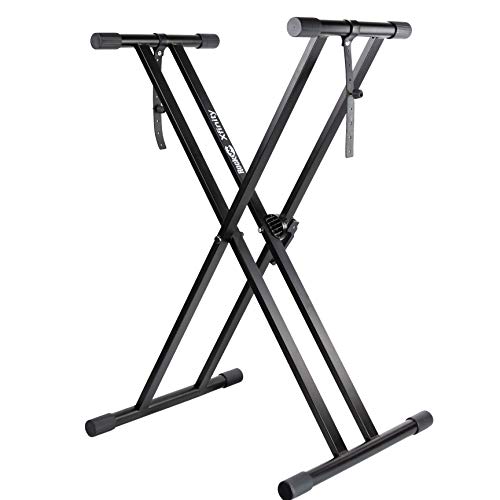
- Arrives pre-assembled
- Adjusts from about 4 to 38 inches
- Safety lock, straps, and nonslip caps
Best For: Flexible seated or standing use with lighter full-size keyboards
Compact Fixed-Height Pick

- Fixed height for seated playing
- Z-shaped design with foam bottom
- Compact footprint and extra legroom
Best For: Dedicated seated setups in compact home studio spaces
High-Capacity Double-X Pick
AODSK Adjustable Keyboard Stand

- 132-pound load capacity
- Tool-free snap-lock adjustment
- Rotating nonslip pads for uneven floors
Best For: Studios supporting heavier 61- to 88-key keyboards
Most Customizable

- 250-pound load capacity
- 26–36.5-inch height adjustment
- Mounting points for accessories
Best For: Expandable home production workstations
Best Compact Dual-Tier
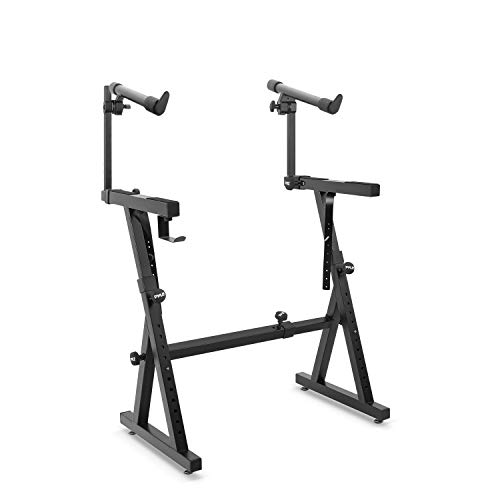
- Removable second tier
- Folds for storage and transport
- Up to 400-pound capacity
Best For: Compact two-keyboard home studios
Best for Layered Setups

- Adjustable width and height
- 60-pound second-tier capacity
- Accessories support stable setups
Best For: Two-tier keyboard and laptop arrangements
Studio Starter Set
Adjustable Keyboard Stand & Bench

- Stand-and-bench bundle for practice or recording
- Seven stand and four bench height settings
- Folding double-X frame with locking straps
Best For: Home studios needing a complete stand-and-seat setup
Layered Setup Pick

- Adds a second keyboard to an X-style stand
- 60-pound capacity with adjustable 16–30-inch length
- Lockable tilt and non-slip instrument supports
Best For: Compact multi-keyboard home studios
Universal Stability Choice

- Fits 61-key through full 88-key keyboards
- Seven height and width adjustment positions
- Leveling feet and anti-slip rubber supports
Best For: Flexible home studios using different keyboard sizes
Heavy-Duty Z-Style Pick – Liquid Stands Adjustable Keyboard Stand
For keyboard stands for home studio use, the Liquid Stands Z-style model offers broad adjustment, substantial support, and useful stability features. Its height and width adjust for seated or standing play and for a range of keyboards and related gear.
Best For: Home studios needing a highly adjustable stand for heavy keyboards, synths, mixers, or turntables.
Pros:
- Supports up to 250 pounds with a reinforced Z-style frame.
- Adjusts from 22.5 to 33.5 inches in height and width.
- Includes anchoring straps, anti-skid pads, adjustable feet, and a headphone hook.
- Sets up in under a minute and packs flat for transport.
Cons:
- Its 6.35 kg weight may be more than some portable users want.
- The adjustment ranges may not suit every keyboard or workspace.
This is a strong choice when stability and flexibility matter more than having the lightest possible stand. The seated-to-standing range also makes it practical for a changing studio setup.
Quick-Setup Double-X Pick – RockJam Xfinity Keyboard Stand
Among keyboard stands for home studio setups, the RockJam Xfinity emphasizes convenience and broad height adjustment. It arrives pre-assembled, so you can unfold it, choose a height, and lock it without screws or complicated assembly.
Best For: Home studios, lessons, and players who want a straightforward stand that can accommodate seated or standing use.
Pros:
- Pre-assembled design simplifies setup.
- Adjusts from approximately 4 to 38 inches.
- Double-X steel frame is designed for stability.
- Includes an anti-collapse safety lock, straps, and nonslip rubber caps.
Cons:
- Its 45-pound load capacity is lower than some heavy-duty alternatives.
- Double-X stands may provide less under-keyboard legroom than Z-style designs.
The Xfinity is a practical pick for users who prioritize fast setup and a wide height range. Check your keyboard’s weight before buying, particularly if you use a heavier digital piano.
Compact Fixed-Height Pick – Amazon Basics Z-Shape Stand
This Amazon Basics model takes a simpler approach to keyboard stands for home studio use: a fixed-height Z-shaped frame intended for seated playing. Its compact footprint and foam bottom are suited to users who want a stable, uncomplicated stand for an indoor setup.
Best For: Seated players with a compact space and a keyboard setup that does not require height adjustment.
Pros:
- Z-shaped steel-and-plastic construction is designed for stability.
- Fixed height keeps the setup simple and consistent.
- Foam bottom can help with carpet stability and floor contact.
- Compact dimensions provide extra legroom compared with some designs.
Cons:
- Fixed height is not suitable for standing play or varied player heights.
- It offers fewer adjustment options than the other stands in this roundup.
- At 14.2 pounds, it is not the lightest option for transport.
Choose this stand when your playing position is settled and you value a straightforward, space-conscious design. It is less versatile, but that simplicity can work well in a dedicated seated workstation.
High-Capacity Double-X Pick – AODSK Adjustable Keyboard Stand
For keyboard stands for home studio applications involving heavier equipment, the AODSK double-X stand combines a 132-pound capacity with tool-free adjustment. Its snap-lock mechanism, adjustable width, and rotating nonslip pads support quick setup across different studio or performance spaces.
Best For: Home and professional studios needing a sturdy adjustable stand for 61- to 88-key keyboards.
Pros:
- Supports up to 132 pounds.
- Height adjusts from 20.47 to 36.6 inches and width from 15.75 to 34.5 inches.
- Snap-lock adjustment avoids tools and screw removal.
- Rotating nonslip pads help accommodate uneven floors.
Cons:
- Its double-X design may provide less legroom than a Z-style stand.
- The listed adjustment range may not fit every keyboard size or desk arrangement.
The AODSK is a balanced option for a studio that needs meaningful load capacity without giving up adjustability. Its leveling pads are especially useful when the floor is not perfectly even.
Most Customizable – Rolling Studio Workstation
The Liquid Stands MS1111 is a flexible choice among keyboard stands for home studio setups. Its adjustable height, locking wheels, accessory mounting points, and 250-pound capacity make it suitable for keyboards, synths, MIDI controllers, mixers, and broader production gear.
Best For: Home producers who want a rolling workstation that can expand with mounted accessories.
Pros:
- Height adjusts from 26 to 36.5 inches for seated or standing use.
- Supports up to 250 pounds and includes 3-inch locking wheels.
- Compatible with multiple Liquid Stands attachments and third-party clamp-on accessories.
- Includes security straps, a headphone hook, and a 10-year warranty.
Cons:
- Its 27-pound weight makes it less convenient to move without using the wheels.
- Accessory attachments and a tabletop are not all included as standard.
Choose this model when expandability matters as much as keyboard support. The mounting holes and rivnuts give it workstation potential, while the wheels make repositioning practical in a home studio.
Best Compact Dual-Tier – Folding Z-Style Stand
The Pyle PKST2TZ is a practical option among keyboard stands for home studio use when you need two tiers without a permanent installation. Its removable second tier, independent adjustments, and folding Z-style frame support compact setups and easier storage.
Best For: Home studios and mobile musicians needing a foldable stand for two keyboards or layered gear.
Pros:
- Removable second tier provides a configurable two-keyboard layout.
- Second tier adjusts in height, depth, and tilt.
- Folds into a compact Z shape for transport and storage.
- Heavy-duty construction is rated for up to 400 pounds.
Cons:
- It has no wheels, so repositioning requires lifting.
- The supplied notes do not specify a warranty.
This stand is appealing when floor space and packability are priorities. Its independent tier adjustments add flexibility, while the folding frame helps it fit into a home studio that must serve multiple purposes.
Best for Layered Setups – Rolling Dual-Tier Stand
The Liquid Stands dual keyboard stand is designed for layered home studio rigs. It combines adjustable width and height, a second tier for another keyboard or laptop, and a 250-pound base capacity with accessories aimed at stability and ergonomic positioning.
Best For: Musicians who want two-tier support for keyboards, synths, a laptop, or other production equipment.
Pros:
- Width adjusts from 19.5 to 35.5 inches and height from 22.5 to 35.5 inches.
- Supports up to 250 pounds on the base and 60 pounds on the top tier.
- Allows seated or standing use and includes angle adjustment.
- Includes adjustable feet, anti-skid pads, a headphone hook, and anchoring straps.
Cons:
- The top tier is intended for stands with 1.25-inch square tubing, which may limit compatibility.
- Its 13.81-kilogram weight is substantial for frequent carrying.
For a home studio built around multiple instruments or a keyboard-plus-laptop workflow, this model offers useful vertical organization. Confirm tubing compatibility before relying on the second tier with a non-Liquid Stands base.
Studio Starter Set – Adjustable Keyboard Stand & Bench
For keyboard stands for home studio use, this stand-and-bench set is a practical all-in-one option. Its double-X steel frame offers adjustable positioning, while the included padded bench supports longer practice sessions.
Best For: Home-studio musicians who need both a keyboard stand and an adjustable bench in one portable package.
Pros:
- Includes a folding keyboard stand and PU leather bench.
- Seven stand-height settings and four bench-height settings support ergonomic positioning.
- Locking straps, non-slip caps, and double-X construction help keep the instrument stable.
- Folds flat for storage and transport and fits 54- to 61-key electric pianos.
Cons:
- Its stated fit is limited to 54- to 61-key electric pianos.
- The two-piece set takes more storage space than a stand alone.
This is a convenient choice when your home studio also needs a matching seat. The adjustable design and foldable construction make it flexible, though players with larger 88-key instruments should look elsewhere.
Layered Setup Pick – OnStage KSA7500 Second Tier
Among keyboard stands for home studio setups, the OnStage KSA7500 is designed to expand an existing X-style stand rather than replace it. Its adjustable second tier adds room for another keyboard, synthesizer, MIDI controller, or similar instrument without requiring a separate stand.
Best For: Home-studio players building a compact two-keyboard or multi-tier arrangement.
Pros:
- Supports an additional instrument with a 60-pound capacity.
- Adjusts from 16 to 30 inches and offers lockable tilt positioning.
- Non-slip arm sleeves and bumpers help hold instruments securely.
- Fits X-style stands with round or square tubing and includes tube plugs.
Cons:
- It is an add-on tier, so a compatible X-style main stand is required.
- It adds one additional level rather than functioning as a complete stand by itself.
This tier is a space-efficient way to keep multiple keyboards within reach in a home studio. Confirm that your existing stand is X-style and compatible before purchasing.
Universal Stability Choice – Single X Keyboard Stand
GLEAM Keyboard Stand - Digital Piano Stand, Single X Style, Black (Capacity: 100 lb)
Check Price On AmazonThis single-X model is a versatile option for keyboard stands for home studio use, supporting instruments from 61-key models through full 88-key keyboards. Its seven-position adjustment and leveling foot sleeves are designed to provide a stable playing surface across different floor types.
Best For: Home studios that need one adjustable stand for keyboards of varying sizes.
Pros:
- Accommodates 61-key through full 88-key keyboards.
- Offers seven height settings from 23.5 to 38.5 inches and width settings from 12 to 33 inches.
- Rotating foot sleeves help level the stand on carpeted, uneven, or slick surfaces.
- Rubber sleeves and rear barriers help prevent the keyboard from sliding backward.
Cons:
- The product notes list a 50-pound supported-keyboard figure alongside a 100-pound maximum capacity, so users should verify the intended load.
- It is a single-level stand without a second-tier expansion included.
With broad size compatibility and detailed adjustment points, this stand suits a changing home-studio setup. Its leveling feet are especially useful when the studio floor is not perfectly even.
How We Picked the Best Keyboard Stands for Home Studio
We compared these Keyboard Stands for Home Studio use based on frame design, stated weight capacity, adjustability, footprint, portability, and useful studio features. The list includes single-X stands for basic setups, Z-style frames for improved legroom and compact placement, and double-X models for added support. We also considered tiered stands, locking straps, wheels, included benches, and compatibility with different keyboard sizes.
Because stand stability depends on the instrument’s weight, floor surface, setup height, and playing style, always confirm the manufacturer’s specifications before buying. A stand that works well for a lightweight controller may not be appropriate for a weighted digital piano.
Quick Comparison
| Stand Type | Best For | Main Advantage | Potential Trade-Off |
|---|---|---|---|
| Single-X | Basic or portable setups | Simple, lightweight, and usually easy to fold | Less legroom and fewer expansion options |
| Double-X | Heavier keyboards and frequent playing | Broader support and improved rigidity | Can be bulkier to transport |
| Z-style | Home studios and compact rooms | Good legroom and useful floor stability | Typically less compact when folded |
| Tiered | Two-keyboard rigs | Expands your playing and monitoring options | Requires careful weight and balance checks |
| Wheeled | Flexible studio layouts | Easy repositioning between sessions | Locks and wheel quality matter |
Key Buying Factors for Keyboard Stands for Home Studio
Stability and Weight Capacity
Choose a stand rated comfortably above your keyboard’s weight, especially if you play with force or use a weighted digital piano. Locking mechanisms, wide bases, non-slip feet, and locking straps can further reduce movement.
Height and Ergonomics
Look for enough adjustment range to keep your elbows relaxed and your wrists level. Check the lowest height as well as the maximum height, particularly when using an adjustable bench or standing workstation.
Footprint and Legroom
Measure the available floor space, including room for a bench, pedals, cables, and your chair. Z-style stands often provide better knee clearance, while X-style models may be easier to fold and store.
Portability and Expansion
If you move equipment regularly, prioritize folding construction and manageable weight. For layered arrangements, verify that a second tier is compatible with your frame and that its stated capacity suits the upper keyboard.
Who Should Buy Which Keyboard Stands for Home Studio?
- Choose a single-X stand if you need an affordable, straightforward stand for a lighter keyboard or controller.
- Choose a double-X stand if stability and support matter more than the smallest folded footprint.
- Choose a Z-style stand if your home studio needs better legroom, carpet stability, or a more furniture-like base.
- Choose a tiered stand if you play two keyboards, synths, or modules and want both instruments within reach.
- Choose a wheeled model if you frequently rearrange your room or need to move a larger setup between locations.
- Choose a stand-and-bench set if you are building a complete playing station and want coordinated seating in one purchase.
Before ordering, compare the stand’s dimensions with your keyboard, confirm the capacity for every tier, and check whether the required bench, pedal clearance, and cable space fit your room.