The best channel strips for recording combine the tone-shaping tools you need before the signal reaches your interface or console. The right model can add character, control dynamics, and make tracking vocals, instruments, and voiceover more efficient.
Our selection spans affordable vocal processors, tube-based designs, 500 Series modules, and premium Neve- and Rupert Neve Designs-inspired hardware, so you can match features and sound to your studio workflow.
Best 10 Channel Strips for Recording Picks for 2026
Best All-Rounder
dbx 286s Channel Strip Processor

- Mic and instrument preamp
- Compression, de-esser, enhancer, and gate
- Loop-out plus LED metering
Best For: Flexible vocal and instrument front-end processing
Best Digital-Ready Option
ART VoiceChannel Tube Channel Strip

- Tube preamp for warmth and definition
- Compressor, expander, de-esser, and gate
- USB plus multiple digital outputs
Best For: Computer studios needing flexible digital connectivity
Best for Simple Tone Shaping

- Mic, line, and instrument preamp
- Three-band EQ
- Class A, warm, punchy profile
Best For: Single-channel recording with focused EQ control
Best Tube Processing Value

- 12AX7 tube preamp with tube drive
- VCA compressor and three-band EQ
- Mic, line, and instrument inputs
Best For: Flexible tube-based processing in project studios
Classic Transformer Control

- Up to 80dB of preamp gain
- Transformer-balanced Class A circuitry
- High-pass filter and three-band EQ
Best For: Vocals, instruments, and DI recording
Compact 500-Series Workflow
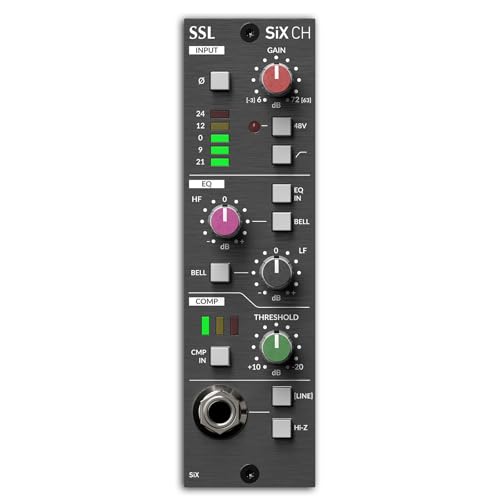
- Mic pre, EQ, and compressor in one module
- +48V phantom power and 75Hz high-pass filter
- Front-panel TRS line and Hi-Z input
Best For: 500 Series rack-based recording setups
Tube-Based Recording Chain
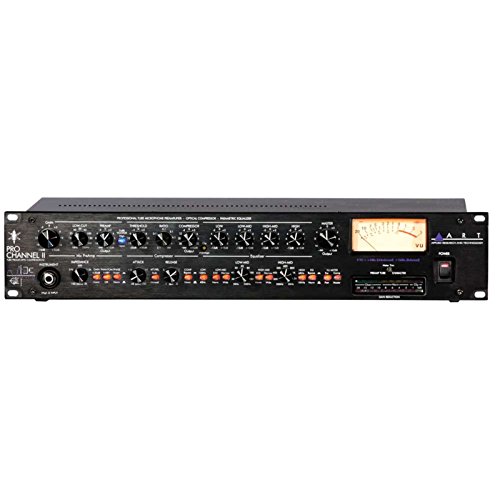
- Tube mic preamp, compressor, and EQ
- Selectable optical or tube compression
- Three selectable VU metering points
Best For: Tube-flavored voice and instrument recording
Class-A Character

- Class A mic/line preamp
- Transformer outputs and Silk enhancement
- Compressor with 8-segment metering
Best For: Single-channel recording with tonal shaping and compression
Classic Dual-Channel Control

- Two mic/line/DI preamp channels
- Up to 80dB of gain with EQ
- Inserts, filters, polarity reverse, and headphone amp
Best For: Two-channel analog recording and source shaping
Integrated Digital Workflow

- USB preamp/EQ channel strip
- 24-bit/192kHz AD/DA support
- ADAT, inserts, and headphone amp
Best For: Computer-based recording with digital expansion
Best All-Rounder – dbx 286s Channel Strip Processor
The dbx 286s is a practical choice among channel strips for recording when you want microphone or instrument preamplification plus several dedicated processing stages. Its compressor, de-esser, enhancer, and expander/gate can help shape vocals and other sources before they reach your recording setup.
Best For: Home studios, vocal recording, and users who want multiple hands-on processors in a rack-mountable unit.
Pros:
- Combines mic and instrument preamp functions with four independent processing sections.
- Includes compression, de-essing, enhancement, and expander/gate control.
- Offers loop-out and insert connectivity for integrating additional processors.
- Status LEDs provide at-a-glance level and processor monitoring.
Cons:
- Provides one channel rather than a stereo recording path.
- Its digital connectivity is not specified in the supplied details.
The 286s stands out for flexible analog front-end processing and straightforward visual monitoring. It is a strong fit when you prefer to handle core vocal cleanup and dynamics before recording.
Best Digital-Ready Option – ART VoiceChannel Tube Channel Strip
The ART VoiceChannel is aimed at recording setups that need tube preamp character, dynamics control, and broad digital connectivity. It combines a tube preamp with compressor, expander, de-esser, and gate sections, then adds USB and multiple digital output formats.
Best For: Project and computer-based studios that need a versatile single-channel recording front end with digital routing options.
Pros:
- Uses an ART Tube Preamp design for warmth and definition.
- Provides compressor, expander, de-esser, and gate processing.
- Supports ADAT, AES/EBU, S/PDIF, TOSLink, and USB connectivity.
- Supports sample rates up to 192 kHz.
Cons:
- It is a single-channel unit.
- Its 5.5 kg weight may be a consideration for portable setups.
With tube preamplification and unusually extensive digital connection options, the VoiceChannel is well suited to studios that want one integrated recording path to connect with different interfaces and systems.
Best for Simple Tone Shaping – Warm Audio WA73-EQ
The Warm Audio WA73-EQ is a focused option among channel strips for recording, pairing a single-channel mic, line, and instrument preamp with a three-band EQ. Its warm and punchy sound profile makes it a straightforward choice for adding preamp character and basic tonal shaping.
Best For: Recordists who prioritize a dedicated preamp and three-band EQ for vocals, instruments, and other single-channel sources.
Pros:
- Accepts microphone, line, and instrument sources.
- Includes a three-band EQ for practical tonal adjustment.
- Uses a Class A amplifier design.
- Offers a warm and punchy sound profile.
Cons:
- Does not list compression, gating, or de-essing in the supplied specifications.
- Provides one channel.
- Digital connectivity is not specified.
The WA73-EQ keeps its feature set centered on preamplification and EQ rather than multiple dynamics processors. Choose it when direct, characterful tone shaping is more important than an all-in-one processing chain.
Best Tube Processing Value – PreSonus StudioChannel
The PreSonus StudioChannel combines a high-voltage Class A 12AX7 tube preamplifier, VCA compressor, and three-band EQ in a rack-mountable channel strip. For recording, it provides a broad set of controls for shaping microphones, instruments, keyboards, and synths through one analog signal path.
Best For: Project and professional studios seeking tube preamp character with integrated compression and parametric EQ.
Pros:
- Combines tube preamplification, VCA compression, and three-band EQ.
- Includes tube drive, high-pass filtering, pad, phantom power, and polarity reverse.
- Offers variable-Q mid EQ plus shelving or peak options for the low and high bands.
- Accepts instrument, line, and microphone inputs in a 1U steel chassis.
Cons:
- It is a single-channel unit.
- Digital connectivity is not listed in the supplied details.
- Its 10.5-pound weight may matter in mobile rigs.
The StudioChannel is a versatile analog front end for users who want more than basic preamp gain. Its combination of tube drive, flexible EQ, and automatic or adjustable compression makes it adaptable across many recording sources.
Classic Transformer Control – Neve 1073SPX
For engineers seeking channel strips for recording with a classic feature set, the Neve 1073SPX combines a microphone, line, and DI preamp with transformer-balanced Class A circuitry, high-pass filtering, polarity reverse, and a three-band EQ.
Best For: Recording vocals, guitars, bass, keyboards, and other sources where substantial preamp gain and dedicated EQ control are useful.
Pros:
- Offers up to 80dB of gain for microphone, line, and DI sources.
- Includes transformer-balanced Class A circuitry.
- Provides polarity reverse, high-pass filtering, and a three-band EQ.
- Supports XLR and 6.35mm connections and includes an external power supply.
Cons:
- At 15.8 pounds, it is less convenient to move than a compact desktop unit.
- Its corded-electric design requires dedicated power and rack-oriented setup.
The 1073SPX is a substantial option for buyers who prioritize a broad input range, high gain, and hands-on preamp and EQ shaping in a rack-style format.
Compact 500-Series Workflow – SSL SiX Channel Strip
The SSL SiX Channel Strip is a focused choice among channel strips for recording, combining a mic preamp, EQ, and single-knob compressor in a 500 Series format with front-panel connectivity and practical input controls.
Best For: Engineers building a 500 Series rack who want a compact channel with phantom power, filtering, EQ shaping, and straightforward compression.
Pros:
- Combines mic preamp, EQ, and single-knob compressor functions.
- Provides +48V phantom power for compatible microphones.
- Includes a switched 12dB/octave, 75Hz high-pass filter.
- Offers a front-panel TRS line input with a 1MΩ Hi-Z switch.
Cons:
- It is a single-channel module, so stereo recording requires additional hardware.
- The compressor uses a single-knob control rather than a more extensive parameter set.
- It requires a compatible 500 Series enclosure.
This module suits users who value a streamlined recording path and 500 Series flexibility over a larger, fully featured standalone channel strip.
Tube-Based Recording Chain – ART Pro Channel II
ART Pro Channel II Microphone Preamp/Compressor/EQ Professional Tube Based Selectable VU Metering
Check Price On AmazonThe ART Pro Channel II brings three tube-based processing stages to the recording path: a microphone preamp, a selectable optical or tube compressor, and a tube EQ. That makes it a versatile option for channel strips for recording when integrated processing is a priority.
Best For: Voice and instrument recording setups that need tube-based preamp, compression, and EQ stages with selectable VU metering.
Pros:
- Combines tube mic preamp, compressor, and EQ modules.
- Offers selectable optical or tube compression.
- Provides selectable VU metering for mic preamp, compressor, or main output.
- Uses precision detented potentiometers for repeatable adjustments.
Cons:
- Its 13.4-pound chassis is less portable than a lightweight module.
- The supplied signal-to-noise ratio is 80dB, which may be less attractive for users prioritizing very low noise.
- It uses a corded-electric power design.
With independent tube-oriented modules and flexible metering, the Pro Channel II is a practical all-in-one choice for users who want to shape a source before it reaches the recorder or interface.
Class-A Character – Newton Channel Strip
For channel strips for recording, the Rupert Neve Designs Newton combines a Class A mic/line preamp with custom transformer outputs, Silk harmonic enhancement, metering, and compression. It is a focused mono front end for shaping one source before it reaches your recorder or interface.
Best For: Recording engineers who want transformer color, harmonic enhancement, and onboard compression on a single channel.
Pros:
- Class A mic/line preamp with custom transformer outputs
- Silk harmonic enhancement for additional tonal shaping
- Includes an onboard compressor and 8-segment LED meters
Cons:
- Mono design limits simultaneous channel processing
- The supplied details do not specify compressor controls or connectivity beyond the listed preamp functions
The Newton is a practical choice when one recording channel needs preamp character, harmonic enhancement, compression, and clear level monitoring in one unit.
Classic Dual-Channel Control – Neve 1073DPX
The Neve 1073DPX is a two-channel option for channel strips for recording, pairing mic, line, and DI preamps with EQ, highpass filters, polarity reverse, and up to 80dB of gain. Rear-panel inserts and a headphone amp add useful routing and monitoring flexibility.
Best For: Engineers recording two sources who want substantial preamp gain, integrated EQ, and flexible channel utility.
Pros:
- Two mic/line/DI preamp and EQ channels
- Up to 80dB of gain for demanding input sources
- Includes rear-panel inserts, highpass filters, polarity reverse, and a headphone amp
Cons:
- It is a relatively heavy 26.5-pound unit
- The supplied details do not list digital conversion or USB connectivity
Choose the 1073DPX when two-channel analog recording control matters more than built-in computer connectivity or conversion.
Integrated Digital Workflow – 1073SPX-D USB Channel Strip
The Neve 1073SPX-D combines a preamp/EQ channel strip with a USB audio interface, making it a versatile pick among channel strips for recording directly into a computer. It supports 24-bit/192kHz AD/DA, insert send/return, headphone monitoring, and ADAT I/O.
Best For: Computer-based studios that want Neve-style preamp and EQ functionality alongside USB and ADAT connectivity.
Pros:
- Combines a preamp/EQ channel strip with USB audio interfacing
- Supports up to 24-bit/192kHz AD/DA conversion
- Offers insert send/return, a headphone amp, and ADAT I/O
Cons:
- The supplied details specify two channels but do not describe the full I/O count
- Computer compatibility is listed for Windows and macOS, while software support depends on the named DAWs
The 1073SPX-D is the most workflow-oriented option here, especially if you want analog preamp and EQ features without giving up direct USB recording and ADAT expansion.
How We Picked the Best Channel Strips for Recording
We focused on signal chains that combine a microphone preamp with useful processing such as EQ, compression, de-essing, gating, or enhancement. We also considered the quality and flexibility of the controls, expected studio applications, connectivity, format, and value for different budgets.
Because a channel strip can be either a complete desktop unit or a rack, 500 Series, or multi-channel studio component, there is no single best design for everyone. The strongest choice is the one that fits your microphones, recording interface, available space, and preferred way of working.
Quick Comparison
| Best For | What to Prioritize | Useful Format |
|---|---|---|
| Vocals and voiceover | Compression, de-essing, and flexible input gain | Desktop or rackmount |
| Classic microphone tone | Transformer-coupled preamp and musical EQ | Rackmount or 500 Series |
| Hybrid studios | Digital outputs and interface compatibility | Rackmount |
| Multi-microphone tracking | Multiple channels and consistent controls | Dual-channel or modular |
| Compact setups | Small footprint and direct connectivity | 500 Series or desktop |
Key Buying Factors for Channel Strips for Recording
Preamp Character and Gain
Decide whether you want clean headroom, tube warmth, transformer color, or a classic console-style response. Check the available gain range and input options if you record quiet dynamic microphones, passive ribbon microphones, or line-level sources.
Processing Controls
Compression is useful for controlling peaks while tracking, but the ratio, attack, release, and threshold controls determine how adaptable the unit is. A de-esser helps with vocal sibilance, while an expander or gate can reduce room noise. EQ bands, sweepable frequencies, and high-pass filtering matter when you want to shape a sound before conversion.
Connections and Studio Format
Confirm whether the unit uses XLR, TRS, insert, line, digital, USB, ADAT, or 500 Series connections. A digital output can simplify routing, but it may require compatible clocking or expansion hardware. Also check rack depth, power requirements, and whether the device needs a 500 Series chassis.
Tracking Workflow
Look for metering that is easy to read, controls that are accessible, and a bypass or insert arrangement that suits your process. If you record several sources at once, a two-channel unit may be more practical than buying multiple single-channel processors.
Who Should Buy Which Channel Strips for Recording?
Choose an all-in-one vocal processor if you want compression, de-essing, gating, and enhancement in one straightforward signal path. These models are particularly practical for voiceover, podcasting, and home-studio vocal tracking.
Choose a classic-style preamp and EQ if microphone tone is your priority and you want broad, musical shaping at the recording stage. This approach suits engineers who prefer committing to a sound before it reaches the DAW.
Choose a tube channel strip if you want harmonic color and a softer, more rounded character. Tube designs can be appealing for vocals, bass, and sources that benefit from added density, though they may require more careful gain staging.
Choose a 500 Series unit if you already own a compatible chassis and value modular expansion. It is a space-efficient route, but remember to account for the chassis cost and available power.
Choose a multi-channel or digitally equipped model if you run a larger tracking setup or hybrid studio. Extra channels and digital connectivity can reduce patching and make the hardware easier to integrate into a modern interface-based workflow.