Choosing the best DJ mixer for turntables means balancing phono connectivity, mixer layout, crossfader feel, and the features you actually use during a set. The right model can make vinyl playback, scratching, blending, and microphone work feel more controlled and reliable.
This roundup compares 10 options spanning compact two-channel mixers, scratch-oriented designs, controller-style setups, and budget-friendly Bluetooth models. Use the guide below to narrow your choice by setup, experience level, and performance priorities.
Best 10 Dj Mixer for Turntables Picks for 2026
Best Club-Style Pick

- Two-channel club-style workflow
- Dedicated filters and Magvel Fader
- Includes rekordbox DVS unlock
Best For: Beginners building a turntable-based separates setup
Best Value Scratch Mixer

- Phono/line-switchable turntable inputs
- Replaceable, adjustable crossfader
- Three-band EQs and mic input
Best For: Home practice, scratch setups, and smaller DJ events
Best Controller Alternative

- Battle-style, turntable-inspired layout
- Serato DJ Lite included
- Compact two-deck USB controller
Best For: Computer-based scratch and open-format beginners
Best Full-Kill EQ Option
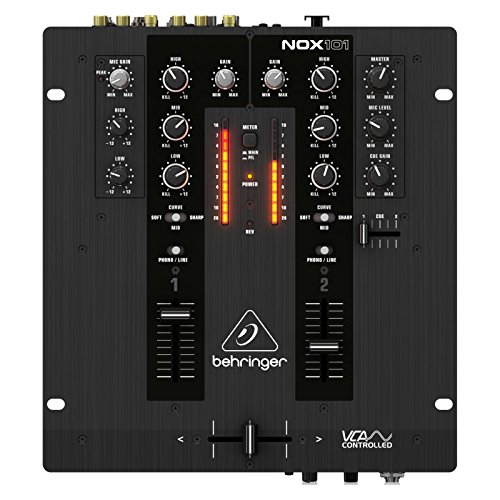
- Two-channel mixer with full-kill EQs
- VCA control and Ultraglide crossfader
- RCA, TRS, and XLR outputs
Best For: Hands-on two-channel mixing with flexible outputs
Best Beginner Controller
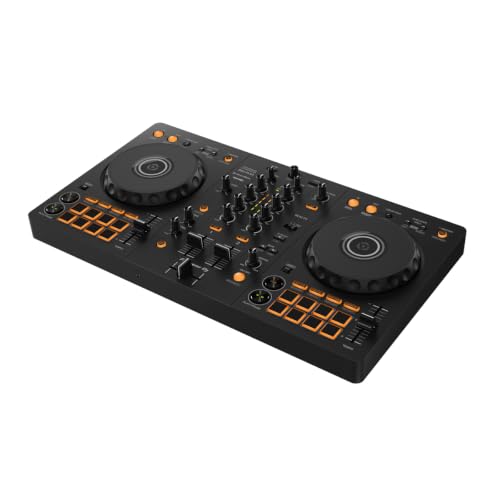
- Beginner-friendly two-deck layout
- Smart Fader eases transitions
- Portable, streaming-ready design
Best For: Beginners mixing with DJ software and streaming platforms
Best Three-Channel Mixer

- Three dual-input stereo channels
- Auto-BPM counter for tempo matching
- Kill EQ and microphone input
Best For: Multi-source DJ setups needing flexible channel control
Best Compact Turntable Mixer
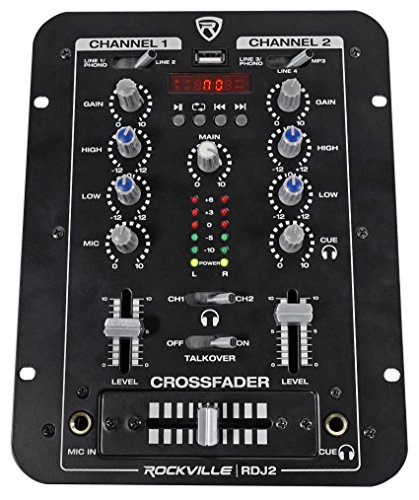
- Four RCA line inputs in a compact design
- Built-in USB MP3 player
- Cue monitoring and three-band EQ
Best For: Home and mobile DJs using simple RCA-based setups
Best Portable Controller

- Compact, organized two-channel layout
- Supports rekordbox, Serato DJ Lite, and djay
- Includes carrying case and polishing cloth
Best For: Beginners and mobile DJs using a computer-based setup
Best for Scratching
Gemini MXR-01BT 2-Channel Mixer

- Adjustable, reversible 40mm crossfader
- Bluetooth, RCA, and balanced connectivity
- All-metal chassis with mic and headphone controls
Best For: Scratch practice, compact turntable rigs, and small live sets
Best Versatile Input Mix

- Switchable phono/line input for turntables
- Bluetooth and USB playback support
- Mic talk-over controls and three channels
Best For: Home DJs, parties, karaoke, and mixed-source setups
Best Club-Style Pick – Pioneer DJM-250MK2
If you want a dj mixer for turntables that teaches a familiar club workflow, the Pioneer DJM-250MK2 is a focused two-channel option. It supports turntable setups, includes a dedicated filter on each channel, and unlocks rekordbox DVS for mixing digital files with compatible turntables or media players.
Best For: Beginners building a separates setup who want a straightforward, club-style mixer with DVS support.
Pros:
- Two-channel layout mirrors a standard professional booth workflow.
- Dedicated Sound Color FX Filter on each channel.
- Magvel Fader is designed for smooth blending and light scratching.
- Includes a free rekordbox DVS unlock.
Cons:
- Two channels may feel limiting for larger or more complex setups.
- Its feature set is intentionally focused rather than expansive.
The DJM-250MK2 is a sensible learning-focused choice when hands-on controls and a familiar club layout matter more than extra channels or advanced effects.
Best Value Scratch Mixer – Numark M2
The Numark M2 is a practical dj mixer for turntables when you need essential routing and scratch controls without a complicated layout. Its two phono/line-switchable inputs, three-band EQs, replaceable crossfader, and mic input make it suitable for practice, parties, and smaller performance setups.
Best For: Beginners and mobile or home DJs who need flexible inputs and basic scratch-focused controls.
Pros:
- Two phono/line-switchable RCA inputs support turntables or line-level sources.
- Replaceable crossfader includes reverse and slope controls.
- Three-band EQs are provided on both channels.
- Rack-mountable design with mic, record, master, and headphone connections.
Cons:
- Only two channels are available.
- RCA-focused connectivity may not suit every professional setup.
With its approachable controls and broad basic connectivity, the M2 is a flexible low-complexity mixer for turntable practice, scratching, and everyday DJ use.
Best Controller Alternative – Pioneer DJ DDJ-REV1
The Pioneer DJ DDJ-REV1 is not a traditional dj mixer for turntables, but it is a useful alternative for beginners who want a turntable-inspired battle layout without separate decks. This compact two-deck Serato controller includes Serato DJ Lite access and places pitch faders and effects controls within easy reach for scratch and open-format practice.
Best For: Beginners learning scratch techniques digitally on a PC or Mac.
Pros:
- Open battle-style layout is inspired by turntable and battle-mixer setups.
- Includes access to Serato DJ Lite for immediate computer-based use.
- Tall pitch faders and quick effect controls support scratch practice.
- Compact and relatively affordable for a first controller.
Cons:
- It is a USB DJ controller, not a standalone mixer for turntables.
- Requires a compatible PC or Mac.
- Offers two software-controlled decks rather than separate turntable inputs.
Choose the DDJ-REV1 if your priority is learning battle-style techniques affordably with a computer; choose a conventional mixer instead if you need direct phono connections for turntables.
Best Full-Kill EQ Option – Behringer NOX101
The Behringer PRO MIXER NOX101 is a straightforward dj mixer for turntables with two channels, three-band full-kill EQ filters, and broad output connectivity. Its VCA-controlled design and Ultraglide crossfader make it worth considering for DJs who want direct, tactile control in a compact two-channel mixer.
Best For: DJs who want full-kill EQ filtering and flexible RCA, TRS, and XLR output options.
Pros:
- Two-channel layout keeps the mixer easy to understand.
- Three-band EQs include full-kill filters.
- VCA control and an Ultraglide crossfader support hands-on mixing.
- Provides RCA, TRS, and XLR connectivity.
Cons:
- It has only two channels.
- The supplied notes do not specify detailed turntable input configuration.
The NOX101 is a focused option for basic two-channel mixing when filter control and varied output connections are more important than software integration or extra channels.
Best Beginner Controller – Pioneer DJ DDJ-FLX4
The Pioneer DJ DDJ-FLX4 is a beginner-friendly alternative to a traditional dj mixer for turntables, especially for users who want software-based mixing, streaming support, and room to develop their skills. Its two-deck layout, built-in sound card, and Smart Fader make initial mixes more approachable.
Best For: Beginners and home DJs who want portable, software-based mixing rather than direct turntable control.
Pros:
- Simple two-channel layout with 16 performance pads for cues, effects, beat jumps, and sampling.
- Smart Fader can automatically adjust volume, bass, and BPM for easier transitions.
- Supports PC, Mac, iPhone, iPad, and Android, with streaming and livestreaming features.
Cons:
- It is a DJ controller, not a traditional mixer with turntable inputs.
- Its two-channel design may be limiting for larger setups.
The DDJ-FLX4 is a strong learning and streaming platform, but shoppers specifically building a turntable-based system should choose a mixer with suitable phono connectivity instead.
Best Three-Channel Mixer – Behringer Pro Mixer DX626
Behringer Pro Mixer Dx626 Professional 3-Channel Dj Mixer With Bpm Counter, Black
Check Price On AmazonThe Behringer Pro Mixer DX626 is a practical dj mixer for turntables and other RCA-connected sources, with three stereo channels, channel switching, and a dedicated microphone option. Its auto-BPM counter and kill EQ controls add useful tools for hands-on mixing.
Best For: DJs who need multiple stereo inputs, tactile EQ control, and a microphone-ready channel.
Pros:
- Three dual-input stereo channels provide flexible source connections.
- Dual auto-BPM counters help with tempo matching.
- Includes three-band kill EQ, PFL monitoring, and a durable Ultraglide crossfader.
Cons:
- Its listed connections and RCA output design may require careful system matching.
- The unit is larger and heavier than the compact two-channel option in this roundup.
With multiple stereo channels and a switchable microphone input, the DX626 suits more involved home or performance setups, provided the rest of the system is compatible with its connections.
Best Compact Turntable Mixer – Rockville RDJ2
The Rockville RDJ2 is a compact dj mixer for turntables, CD players, and other RCA sources. It combines four RCA line inputs with a built-in USB MP3 player, cue monitoring, talkover functionality, and straightforward channel controls for home or mobile use.
Best For: Home DJs and mobile users who want a lightweight two-channel mixer with USB playback.
Pros:
- Four RCA line inputs and selectable switches accommodate multiple audio sources.
- Separate gain, bass, and treble controls provide basic sound shaping on each channel.
- Compact metal housing includes USB MP3 playback, cue monitoring, and microphone/headphone jacks.
Cons:
- It has only two channels, limiting more complex mixes.
- The supplied notes identify RCA line inputs but do not specify dedicated phono inputs.
The RDJ2 is an accessible, portable choice for simple RCA-based setups, while turntable owners should verify that their decks have the required line-level output or external phono preamps.
Best Portable Controller – Pioneer DJ DDJ-FLX4 Bundle
The Pioneer DJ DDJ-FLX4 is a compact, beginner-friendly option for anyone looking for a dj mixer for turntables-style practice and performance workflows. Its organized controls, broad software compatibility, and included carrying case make it convenient for home use or mobile sessions, although it is a controller rather than a traditional turntable mixer.
Best For: Beginners and mobile DJs who want an easy-to-carry controller with software support and bundled protection.
Pros:
- Simple layout inspired by professional Pioneer DJ products.
- Works with rekordbox, Serato DJ Lite, and djay.
- Smart Fader and Smart CFX assist with transitions and effects.
- Includes a carrying case and polishing cloth.
Cons:
- Designed as a two-channel controller, not a standalone turntable mixer.
- Requires a PC or Mac to connect with the listed DJ software.
The DDJ-FLX4 stands out when portability and ease of use matter more than traditional phono-mixer connectivity. Its bundled case adds practical value for transporting the lightweight unit.
Best for Scratching – Gemini MXR-01BT 2-Channel Mixer
The Gemini MXR-01BT is a focused dj mixer for turntables setups that prioritizes hands-on mixing, scratching, and cueing. It combines RCA and balanced outputs with Bluetooth streaming, dedicated microphone controls, and an adjustable crossfader in a compact all-metal chassis.
Best For: DJs who want a compact two-channel mixer for scratching, practice routines, and small live sets.
Pros:
- 40mm crossfader includes curve adjustment and a reverse switch.
- RCA and balanced outputs support flexible connections.
- Bluetooth allows streaming from a smartphone or tablet.
- Dedicated microphone EQ, volume, and headphone controls.
Cons:
- Only two channels are available.
- Bluetooth is useful for streaming but does not replace wired turntable connections.
- Its compact footprint may limit controls compared with larger mixers.
With its adjustable crossfader and sturdy metal construction, the MXR-01BT is particularly appealing for scratch practice and compact DJ booths. It is a practical choice when direct control matters more than extensive channel count.
Best Versatile Input Mix – Pyle PMX7BU 3-Channel Mixer
The Pyle PMX7BU is a flexible dj mixer for turntables and mixed-source setups, with switchable phono/line inputs, Bluetooth streaming, and a USB reader. Its three channels, microphone inputs, talk-over controls, and headphone output make it suited to parties, karaoke-style use, and basic recording applications.
Best For: Home DJs and entertainers who need turntable, wireless, USB, and microphone inputs in one compact mixer.
Pros:
- Three channels provide independent volume controls and crossfader mixing.
- Channel 2 supports switchable phono and line input for turntables or other sources.
- Bluetooth and USB reader add convenient playback options.
- Includes microphone gain and talk-over controls plus a headphone jack.
Cons:
- The listed warranty is limited to 90 days.
- Its feature set is oriented toward general entertainment rather than advanced DJ performance.
- The supplied notes do not specify included turntable cables or accessories beyond the listed components.
The PMX7BU offers the broadest input flexibility of these options, especially for users combining a turntable with wireless or USB playback. It makes the most sense for casual DJing, parties, and vocal-focused applications.
How We Picked the Best Dj Mixer for Turntables
We focused on the features that matter most in a turntable-based setup: phono and line inputs, channel count, crossfader control, output options, microphone support, build quality, and ease of use. We also considered whether each product is a traditional mixer or a DJ controller, since controllers require a computer or compatible software and are not direct substitutes for a phono mixer.
Models were selected to cover different use cases, including vinyl mixing, scratching, beginner practice, portable setups, and affordable home systems. Product positioning and specifications can vary by seller, so confirm the current input layout and included accessories before ordering.
Quick Comparison
| Best For | Look For |
|---|---|
| Traditional vinyl mixing | Dedicated phono inputs, two or more channels, and a familiar EQ layout |
| Scratching | A responsive crossfader, adjustable curve, and sturdy controls |
| Software-based DJing | A compatible controller, performance pads, and included or supported DJ software |
| Home practice | Compact dimensions, straightforward connections, and useful headphone monitoring |
| Microphone or party use | Mic input, talkover, Bluetooth, USB, or flexible auxiliary connectivity |
Key Buying Factors for a Dj Mixer for Turntables
Phono Inputs and Grounding
Turntables with conventional cartridges need phono inputs and, in many cases, a ground connection. Do not assume every DJ controller or mixer accepts a turntable directly. If your turntable has a built-in preamp, it may connect to a line input instead, but the output mode must be set correctly.
Channel Count and Input Flexibility
A two-channel mixer is enough for two turntables and is usually the simplest choice. Three-channel models provide room for an additional deck, media player, microphone, or auxiliary source. Check whether each channel supports phono, line, or both, as labels and switching arrangements differ.
Crossfader and Controls
Scratch DJs should prioritize a smooth, durable crossfader with an adjustable curve. For beatmatching and long blends, channel faders, EQ knobs, cue controls, and a clear level meter may matter more than advanced effects.
Controller Versus Standalone Mixer
Products such as the DDJ-FLX4 and DDJ-REV1 are controllers rather than traditional turntable mixers. They are better suited to digital decks and software workflows. Choose a standalone mixer when you want to connect phono turntables directly without relying on a laptop.
Outputs, Headphones, and Extra Features
Verify the master output matches your speakers or amplifier. A dedicated headphone cue section is essential for pre-listening. USB, Bluetooth, talkover, and microphone inputs can be useful, but they should not replace the core phono, fader, and monitoring features you need.
Who Should Buy Which Dj Mixer for Turntables?
Vinyl-first DJs: Choose a conventional mixer with clearly labeled phono inputs, dependable cueing, and a layout that matches your turntables.
Scratch beginners: Focus on a responsive crossfader, adjustable curve, and a compact two-channel design that leaves controls easy to reach.
Digital beginners: A controller with performance pads and supported software may be more useful than a standalone mixer, especially if your setup is laptop-based.
Party hosts and casual users: Models with Bluetooth, USB playback, microphone support, or talkover can simplify mixed-source entertainment setups.
Growing setups: Consider a three-channel mixer or a model with flexible line inputs if you expect to add another deck, media player, or external audio source later.