Choosing the right power amplifier can transform a capable audio system into a more dynamic, controlled, and engaging listening setup. The best match depends on your speakers, room, source equipment, and preferred sound.
We selected 10 options spanning stereo, integrated, tube, Class D, wireless, and multi-channel designs so you can compare output, connectivity, features, and system compatibility before buying.
Best 10 Power Amplifier for Audiophiles Picks for 2026
Hybrid Power Specialist
Class A/AB 200W Stereo Amplifier

- 30W Class A and up to 200W Class AB per channel
- XLR/RCA connectivity with support for low-impedance loads
- Dual toroidal transformers and 21 kg aluminum chassis
Best For: Audiophiles wanting warm sound and substantial speaker-driving power
French Hi-Fi Showpiece
Advance Paris A12 Classic Integrated Amplifier

- 190W per channel at 8 ohms; 280W at 4 ohms
- XLR, RCA, digital, USB-B, and phono connectivity
- Hybrid Class A/AB design with dual VU meters
Best For: Audiophiles building a versatile all-source integrated hi-fi system
Modular Class D Power
Fosi Audio V3 Mono Amplifier Pair

- Up to 240W at 4 ohms per monoblock
- Balanced XLR/TRS and RCA inputs
- Expandable design with PFFB and op-amp rolling
Best For: Audiophiles building compact, scalable stereo or theater systems
Trusted Everyday Hi-Fi
Yamaha A-S501 Natural Sound Amplifier
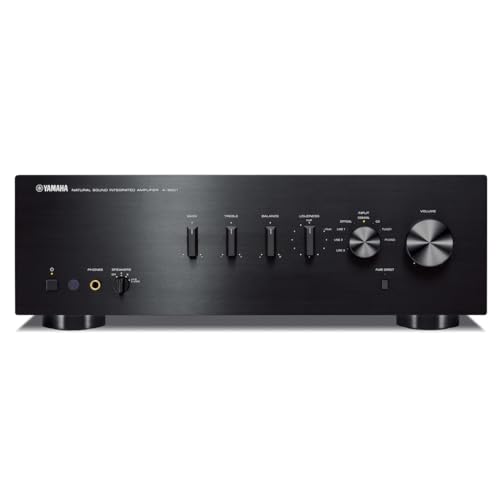
- 85W per channel with 0.019% THD
- Optical, coaxial, analog, and phono inputs
- Speaker A, B, and A+B selection
Best For: Listeners wanting simple, versatile stereo amplification for home use
Warmth & Craftsmanship

- 10W-per-channel single-ended Class A tube design
- Hand-wired point-to-point circuitry
- Best with 88dB-or-higher sensitivity speakers
Best For: Jazz, classical, acoustic music, and traditional tube enthusiasts
Connected Powerhouse

- 100W per channel in stereo
- BluOS high-resolution streaming and multi-room support
- HDMI eARC, Dirac Live readiness, and THX AAA headphone output
Best For: Streaming-focused stereo systems and compact home theaters
Hybrid Versatility
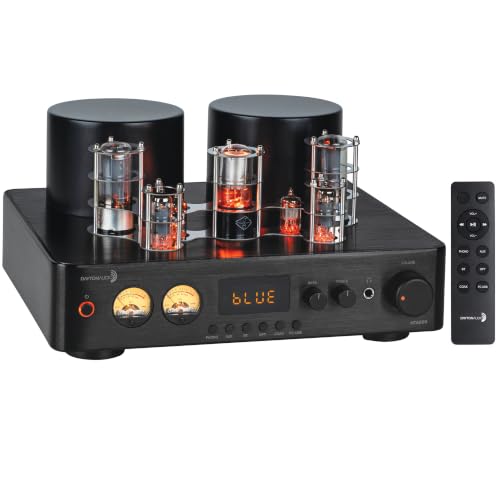
- 100W RMS per channel at 4 ohms
- Tube preamp paired with Class A/B amplification
- Bluetooth, USB DAC, phono, optical, and coaxial inputs
Best For: Powerful mixed-source stereo systems with vinyl and digital playback
Balanced Power Choice
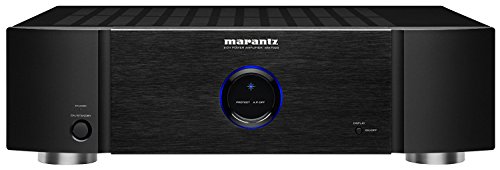
- 140 watts per channel into 8 ohms
- RCA and balanced XLR inputs
- Two-channel or two-zone flexibility
Best For: Stereo systems and compact home theater setups
Five-Channel Theater Drive
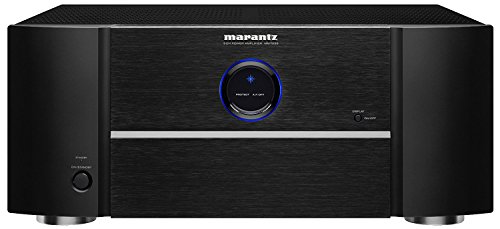
- Five channels at 140 watts each
- RCA and XLR inputs
- Current-feedback design with HDAM circuitry
Best For: Five-channel home theater systems
Flexible Six-Channel Powerhouse

- Six channels rated at 200 watts each
- Bi-amp and bridged modes available
- Slim Class D design with quiet fans
Best For: Expandable, high-output home theater installations
Hybrid Power Specialist – Class A/AB 200W Stereo Amplifier
For audiophiles seeking a powerful, flexible power amplifier, this hybrid design combines Class A warmth at lower listening levels with Class AB output for demanding peaks. Its balanced inputs, high output rating, and substantial chassis suit serious home hi-fi systems.
Best For: Audiophiles who want rich, smooth sound, high-current speaker control, and balanced connectivity.
Pros:
- Switches from 30W Class A operation to up to 200W per channel in Class AB.
- Supports 2-ohm loads and includes XLR balanced plus RCA inputs.
- Uses dual toroidal transformers, extensive filtering, and a 21 kg aluminum chassis.
- Offers a stated 125dB signal-to-noise ratio and 480 damping factor.
Cons:
- Its 21 kg chassis requires substantial shelf space and support.
- This is a power-focused amplifier rather than an all-in-one source component.
- The supplied warranty is listed as one year.
With its hybrid operating modes and robust power supply, this amplifier is aimed at listeners who prioritize scale, speaker control, and a smooth presentation over compact size.
French Hi-Fi Showpiece – Advance Paris A12 Classic Integrated Amplifier
The Advance Paris A12 Classic is a strong choice for audiophiles who want a power amplifier with broad source support built into one substantial integrated unit. Its hybrid Class A/AB architecture combines a warm analog character with high output for demanding speakers.
Best For: Complete hi-fi systems using digital sources, vinyl, balanced connections, and full-size loudspeakers.
Pros:
- Delivers up to 190W per channel into 8 ohms and 280W into 4 ohms.
- Includes XLR, RCA, optical, coaxial, USB-B, and phono inputs.
- Oversized toroidal transformers support stable, dynamic operation.
- Brushed aluminum styling and dual VU meters provide a distinctive centerpiece.
Cons:
- At 21 kg, it is a substantial component to position.
- Its integrated design may offer more source functionality than users needing only a power stage require.
- The supplied notes do not specify detailed distortion or signal-to-noise figures.
This model makes sense when the goal is a versatile, high-output control center rather than a minimalist standalone power amplifier.
Modular Class D Power – Fosi Audio V3 Mono Amplifier Pair
For audiophiles building a flexible multi-channel setup, the Fosi Audio V3 Mono pair provides one dedicated amplifier per passive speaker. Its Class D TPA3255 platform, balanced inputs, and compact monoblock format make it suitable for stereo, home theater, or expandable systems.
Best For: Listeners who want compact monoblocks for stereo upgrades, bi-amping experiments, or multi-channel home theater.
Pros:
- Provides up to 240W at 4 ohms per monoblock.
- Supports XLR/TRS balanced and RCA single-ended inputs with gain selection.
- PFFB technology is designed to reduce load-related Class D distortion and frequency-response variation.
- Offers auto signal sensing and replaceable DIP8 op-amps for customization.
Cons:
- Each unit drives a single passive speaker, so the pair is required for conventional stereo.
- Its compact modular approach may be less convenient than one integrated stereo chassis.
- The supplied notes do not include speaker cables or additional source features.
These monoblocks are especially appealing when system expansion and efficient power matter more than a traditional full-width amplifier design.
Trusted Everyday Hi-Fi – Yamaha A-S501 Natural Sound Amplifier
The Yamaha A-S501BL is a practical option for audiophiles who want a straightforward integrated amplifier with dependable stereo output and both digital and analog inputs. Its 85W-per-channel rating and phono input cover common home listening needs without excessive complexity.
Best For: Home listeners wanting a reliable, conventional stereo amplifier for digital sources, vinyl, and two speaker pairs.
Pros:
- Rated at 85W per channel from 20 Hz to 20 kHz with 0.019% THD.
- Includes coaxial and optical digital inputs alongside gold-plated analog inputs.
- Built-in phono input supports a turntable-based system.
- Speaker A, B, and A+B selection adds placement flexibility.
Cons:
- Its output is lower than the high-power amplifiers in this roundup.
- The supplied notes do not mention balanced XLR inputs.
- Auto standby activates after eight hours, which may not suit every listening routine.
Choose the Yamaha when you value familiar operation, broad everyday connectivity, and moderate stereo power more than extreme output or advanced customization.
Warmth & Craftsmanship – Oldchen EL34 Tube Amp
For audiophiles who prioritize a warm, detailed presentation, this 10W single-ended Class A tube amplifier pairs EL34C power tubes with hand-wired point-to-point circuitry. It is a particularly compelling power amplifier for audiophiles using efficient bookshelf or floor-standing speakers.
Best For: Jazz, classical, acoustic music, and listeners seeking traditional tube sound with carefully selected components.
Pros:
- Warm, rich, detailed Class A tube presentation with mellow vocals and transparent highs.
- Hand-wired point-to-point construction with Teflon silver-plated wiring.
- Supports 4Ω and 8Ω speakers and can drive speakers rated at 88dB sensitivity or higher.
- Custom transformers, ALPS potentiometer, and CLC filtering support a clean, quiet background.
Cons:
- Its 10W-per-channel output is less suited to inefficient speakers or very large rooms.
- Tube amplification requires more care than a fully solid-state design.
This Oldchen is best viewed as a focused two-channel listening amplifier rather than an all-in-one streaming system. Match it with appropriately sensitive speakers and it offers a distinctly hands-on, classic audiophile experience.
Connected Powerhouse – Bluesound POWERNODE (2025)
The Bluesound POWERNODE (2025) is a power amplifier for audiophiles who want serious stereo output without giving up streaming, room correction, or home-theater flexibility. Its DirectDigital GaN amplification delivers 100W per channel in stereo, while BluOS brings a broad selection of high-resolution sources together.
Best For: Modern music systems, multi-room listeners, and compact home theaters that need streaming, TV connectivity, and strong amplification in one unit.
Pros:
- Provides 100W per channel in stereo and supports 80W per channel in 3-channel LCR mode.
- BluOS supports services including Spotify Connect, Tidal Connect, Qobuz, and internet radio.
- HDMI eARC, USB-C, optical, RCA, Bluetooth 5.2, AirPlay 2, and turntable-compatible connectivity cover varied setups.
- Includes Dirac Live room-correction readiness and a dedicated 6.3mm THX AAA headphone output.
Cons:
- Its feature-rich platform may be more than needed for a simple analog-only system.
- Some advanced features depend on the BluOS ecosystem and compatible add-on components.
Choose the POWERNODE when convenience and system integration matter as much as amplification. It can serve as a capable stereo hub today and expand toward a wireless multi-room or compact 3.1 setup later.
Hybrid Versatility – Dayton Audio HTA200
The Dayton Audio HTA200 blends amber vacuum tubes in its preamp stage with a 100W-per-channel Class A/B amplifier. For shoppers comparing a power amplifier for audiophiles, it offers a practical middle ground: tube-inspired character, substantial speaker power, and extensive wired and wireless connectivity.
Best For: Larger stereo systems, vinyl listeners, and buyers who want modern inputs alongside a vintage-inspired amplifier design.
Pros:
- Delivers 100W RMS per channel at 4 ohms for demanding speaker setups.
- Combines tube preamp warmth with Class A/B amplifier power.
- Includes Bluetooth 5.0, USB DAC, phono, AUX, optical, and coaxial inputs.
- Supports a powered subwoofer, headphone listening, tone controls, and remote operation.
Cons:
- It is an integrated amplifier rather than a dedicated power amplifier.
- The hybrid design may appeal less to listeners seeking a fully tube-driven signal path.
The HTA200 is a flexible choice for a system that needs to accommodate vinyl, digital sources, Bluetooth, and a subwoofer without adding multiple components. Its high output also makes it a practical match for larger or more demanding passive-speaker systems.
Balanced Power Choice – Marantz MM7025
The Marantz MM7025 is a practical power amplifier for audiophiles who want a strong two-channel foundation for stereo listening or a flexible home theater setup. It delivers 140 watts per channel into 8 ohms and includes both RCA and balanced XLR inputs.
Best For: Stereo systems, two-zone configurations, and compact home theater cabinets.
Pros:
- 140 watts per channel into 8 ohms provides substantial power.
- RCA and balanced XLR inputs support multiple system configurations.
- Two-channel operation can also support speakers in separate zones.
- Quiet cooling fan and less-than-14-inch depth suit shelf or cabinet placement.
Cons:
- Limited to two amplifier channels.
- Its 23.8-pound weight may make installation less convenient.
The MM7025 is a well-rounded option when clean, detailed playback and flexible connectivity matter more than adding a large number of channels.
Five-Channel Theater Drive – Marantz MM7055
The Marantz MM7055 is a power amplifier for audiophiles building a dedicated multichannel home theater. Its five channels are rated at 140 watts each into 8 ohms, with RCA and XLR inputs for integration with compatible separates.
Best For: Five-channel home theater systems that need consistent high-power amplification.
Pros:
- Five 140-watt channels support a full multichannel setup.
- Current-feedback amplification and Marantz HDAM circuitry are designed for detailed playback.
- Both XLR and RCA inputs accommodate different source components.
- Gold-plated terminals and a detachable power cord support a polished installation.
Cons:
- Five channels may be more than a simple stereo system requires.
- At 37 pounds, it is relatively heavy to position.
- The supplied notes do not indicate bi-amp or bridged operating modes.
Choose the MM7055 when your system specifically calls for five powered channels and you want Marantz connectivity and high-power capability in one chassis.
Flexible Six-Channel Powerhouse – Marantz AMP 30
Marantz AMP 30 6-Channel Power Amplifier | 6 Channel | 200 Watts per Channel | Black
Check Price On AmazonThe Marantz AMP 30 is a power amplifier for audiophiles who need scalable, high-output home theater amplification. It provides six independent 200-watt channels, with bi-amp and bridged modes that can raise output to 400 watts per channel into 8 ohms.
Best For: Advanced home theaters, rack installations, and systems that may expand over time.
Pros:
- Six 200-watt channels offer substantial system-building flexibility.
- Bi-amp and bridged modes support different speaker and output requirements.
- Class D amplification, separate power supplies, and HDAM-SA2 technology target efficient, clean operation.
- Whisper-quiet fans and a slimline design suit rack-mounted theaters.
Cons:
- Its advanced channel and operating-mode options may be excessive for basic stereo systems.
- The supplied notes do not specify the input connector types.
- Adding multiple AMP units can increase system complexity and cost.
The AMP 30 is the most adaptable choice here for demanding, expandable installations, particularly when bi-amping, bridging, or six-channel operation is part of the plan.
How We Picked the Best Power Amplifier for Audiophiles
We compared these amplifiers by looking at power output, amplifier topology, channel count, connectivity, system flexibility, and the type of listener each model is designed to serve. We considered dedicated power amplifiers alongside integrated models because many audiophiles want a simpler system with source control built in.
Special attention went to speaker compatibility. Rated wattage matters, but so do impedance handling, sensitivity, available headroom, and whether the amplifier offers balanced XLR connections. We also considered practical features such as Bluetooth, network streaming, multi-room support, and compact form factors.
Quick Comparison
- Best for traditional stereo power: Marantz MM7025 and high-output Class A/AB designs.
- Best for modern efficiency: Fosi Audio V3 Mono amplifiers with Class D operation.
- Best for tube character: Oldchen EL34 and hybrid tube models.
- Best for streaming systems: Bluesound Powernode.
- Best for home theater: Marantz MM7055 and AMP 30 multi-channel amplifiers.
- Best for an all-in-one setup: Yamaha A-S501, Advance Paris A12, or Dayton Audio HTA200.
Key Buying Factors for a Power Amplifier for Audiophiles
Power and Speaker Matching
Check your speakers’ recommended amplifier range, nominal impedance, and sensitivity. Higher power is useful for inefficient speakers, larger rooms, and demanding music, while sensitive bookshelf speakers may need far less. Extra headroom can improve dynamics, but excessive power does not automatically mean better sound.
Amplifier Design
Class A and Class A/AB amplifiers are often chosen for their traditional operating characteristics and robust current delivery. Class D models can provide substantial power in a cooler, more compact chassis. Tube and hybrid amplifiers appeal to listeners who prefer a warmer presentation and distinctive harmonic character, but tube designs may require more maintenance.
Inputs and System Expansion
RCA inputs suit most home audio systems, while balanced XLR connections can help in longer cable runs or systems with compatible preamps. Integrated amplifiers reduce component count. Dedicated power amplifiers make more sense when you already own a quality preamp, AV processor, or network streamer.
Channels and Placement
Choose two channels for conventional stereo, five or more for surround systems, and six-channel models for distributed audio or larger custom installations. Confirm ventilation requirements, rack or shelf space, and whether the amplifier’s controls fit your intended setup.
Who Should Buy Which Power Amplifier for Audiophiles?
Choose a dedicated stereo amplifier if your priority is focused two-channel listening and you already have source control. Pick an integrated amplifier if you want a clean, cost-effective system with fewer boxes. Tube enthusiasts should look for compatible speakers and accept lower output or additional upkeep in exchange for the desired presentation.
For apartment or desktop systems, compact Class D amplification is practical and efficient. Streaming-focused listeners should consider a network-enabled amplifier such as the Powernode. Finally, home theater owners should prioritize channel count, processor compatibility, and consistent power across all channels rather than stereo output alone.