Choosing among the best laptops for music production means balancing processor performance, memory, storage, portability, and the demands of your digital audio workstation. A good system should handle multitrack recording, software instruments, effects, and low-latency monitoring without becoming a bottleneck.
These 10 picks cover a wide range of budgets and workflows, including Windows laptops, Apple hardware, refurbished workstations, and large-screen creator models. Use the guide below to match specifications with your recording, mixing, and live-production needs.
Best 10 Laptops for Music Production Picks for 2026
Power User Pick

- 10-core Core i7 processor
- 32GB DDR5 RAM and 1TB NVMe SSD
- 15.6-inch FHD display with RTX A500
Best For: Multitasking-heavy Windows music production
Portable Mac Pick

- A18 Pro chip with macOS
- Up to 16 hours of stated battery life
- 2.71-pound aluminum design
Best For: Mobile Apple-based production and everyday creative work
Studio Desktop Value

- 32GB DDR4 RAM
- 512GB SSD plus 2TB HDD
- HDMI, dual DisplayPort, and up to 10 USB ports
Best For: Stationary home studios needing abundant storage
Best for Large-Project Creators

- 32GB RAM and 1TB SSD for substantial project headroom
- 8-core Intel Ultra 7 processor for demanding multitasking
- Thunderbolt 4 plus USB-C, USB-A, and HDMI connectivity
Best For: Producers building complex sessions at a stationary home studio
Best Large-Screen Value Pick

- 17.3-inch FHD anti-glare display for arranging tracks
- Ryzen 5 processor handles everyday multitasking
- 512GB SSD with USB-C, USB-A, HDMI, and Wi-Fi 6
Best For: Beginners producing lighter sessions at home
Best Portable Starter Option

- 16GB RAM supports everyday audio multitasking
- Lightweight 3.9-pound design for mobile work
- FHD IPS display and broad everyday port selection
Best For: Students and beginners handling light production projects
Best Big-Screen Value
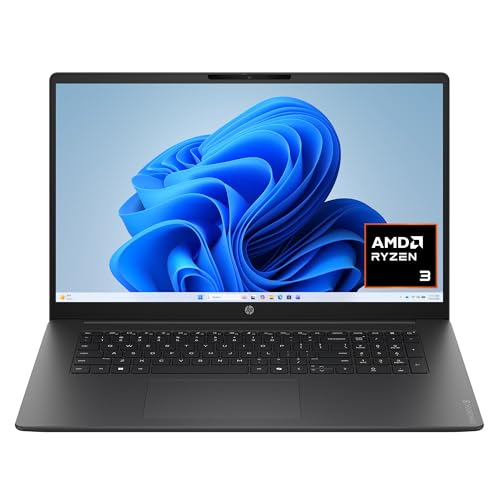
- 17.3-inch FHD IPS display
- 512GB NVMe SSD
- 8GB RAM for lighter sessions
Best For: Home producers who want a large display for arranging and editing
Best Budget Starter

- 16GB dual-channel RAM
- 512GB M.2 SATA SSD
- Wide selection of USB and HDMI ports
Best For: Beginners and students working on simple music projects
Best Performance Pick

- 6-core, 12-thread Ryzen 5 5500U
- 16GB RAM for multitasking
- 512GB PCIe NVMe SSD
Best For: Producers seeking stronger multitasking for home and mobile setups
Power User Pick – Dell Precision 3570
For demanding laptops for music production workflows, the renewed Dell Precision 3570 combines a 10-core Intel processor, 32GB of fast DDR5 memory, and a 1TB NVMe SSD. Its business-workstation design makes it a strong choice for multitasking across a DAW, plug-ins, browsers, and project files.
Best For: Producers who need substantial memory, fast storage, and strong multitasking performance in a Windows workstation laptop.
Pros:
- 10-core Core i7-1265U processor boosts up to 4.8GHz.
- 32GB DDR5 RAM supports large sessions and simultaneous applications.
- 1TB PCIe NVMe SSD provides fast startup and generous project storage.
- Windows 11 Pro, Wi-Fi, Bluetooth, and a 15.6-inch FHD display are included.
Cons:
- It is a renewed product rather than a new laptop.
- The display is limited to 1920×1080 resolution.
- At about 8 pounds, it is relatively heavy for portable production.
The Precision 3570 is the most capable laptop-style option here for heavier production workloads. Its ample RAM and storage are particularly useful for large sample libraries, though buyers should account for its weight and renewed condition.
Portable Mac Pick – Apple MacBook Neo 13-inch
The Apple MacBook Neo is a compact option among laptops for music production, featuring an A18 Pro chip, 8GB unified memory, and a 256GB SSD. Its aluminum construction, 13-inch Liquid Retina display, and claimed battery life of up to 16 hours make it well suited to mobile work.
Best For: Apple users who prioritize portability, long battery life, and macOS integration for lighter production and everyday creative tasks.
Pros:
- A18 Pro chip is designed for fast everyday performance and Apple Intelligence features.
- Lightweight 2.71-pound aluminum design is easy to carry.
- Up to 16 hours of stated battery life supports extended mobile use.
- Liquid Retina display supports 1 billion colors.
Cons:
- 8GB unified memory may be limiting for very large sessions.
- 256GB storage can fill quickly with sample libraries and recordings.
- The 13-inch screen provides less workspace than a 15.6-inch model.
The MacBook Neo is attractive for producers who work away from a studio and value Apple’s ecosystem. Its modest memory and storage configuration make it better suited to streamlined projects unless external storage is added.
Studio Desktop Value – Dell Precision T3620
Although it is a desktop rather than a laptop, the renewed Dell Precision T3620 deserves consideration alongside laptops for music production when a fixed studio setup works better. It pairs a Core i7-6700 processor with 32GB RAM, a 512GB SSD, and a 2TB hard drive for substantial project storage.
Best For: Home studios that want a budget-friendly Windows production workstation with large internal storage and multiple display outputs.
Pros:
- 32GB DDR4 RAM is suitable for multitasking in a studio environment.
- Combines a 512GB SSD for boot duties with a 2TB HDD for storage.
- Offers HDMI and two DisplayPort outputs.
- Includes Windows 11 Pro and up to 10 USB ports.
Cons:
- It is not portable and requires a separate monitor, keyboard, and mouse.
- The i7-6700 is an older four-core processor.
- Integrated Intel HD Graphics 530 are basic.
The T3620 makes the most sense as a stationary studio computer rather than a travel-ready production machine. Its plentiful RAM and combined SSD/HDD storage are useful, but the older processor and desktop-only format limit its flexibility.
Budget Student Choice – NIMO 15.6-inch Ryzen 5 Laptop
The NIMO 15.6-inch model is a practical entry-level choice among laptops for music production, with a Ryzen 5 3501U processor, 16GB DDR4 RAM, and a 256GB PCIe SSD. It also includes a backlit keyboard, fingerprint reader, and a 2-year warranty, making it appealing for students and general-purpose users.
Best For: Students and beginners who need an affordable Windows laptop for basic production, coursework, and everyday multitasking.
Pros:
- 16GB RAM supports multiple applications and browser tabs.
- 256GB PCIe SSD provides quick boot and file-transfer performance.
- 15.6-inch IPS FHD screen offers a practical workspace.
- Includes a 2-year warranty, 90-day returns, and a 65W USB-C charger.
Cons:
- The 256GB drive may be restrictive for large sample libraries.
- Ryzen 5 3501U is an older four-core processor.
- Integrated AMD graphics use shared memory rather than dedicated VRAM.
The NIMO is a sensible starting point for basic arrangements, recording, and schoolwork. Producers planning large projects or extensive virtual-instrument libraries should expect to add storage and may eventually need a more powerful computer.
Best for Large-Project Creators – HP OmniBook 7 17.3-inch
For demanding music production sessions, the HP OmniBook 7 combines 32GB of DDR5 RAM, a 1TB SSD, and Intel’s 8-core Ultra 7 258V processor. Its large 17.3-inch FHD touchscreen and extensive port selection make it a practical desktop-replacement option for producers working with large projects and multiple peripherals.
Best For: Music producers who need substantial memory, storage, and connectivity for complex sessions.
Pros:
- 32GB DDR5 RAM supports multitasking with demanding audio software.
- 1TB SSD provides generous space for projects, samples, and recordings.
- Thunderbolt 4, USB-C, USB-A, and HDMI offer flexible peripheral connectivity.
- 17.3-inch FHD IPS touchscreen offers a spacious workspace with 400-nit brightness.
Cons:
- At 5.2 pounds, it is less convenient for frequent travel.
- Integrated graphics are not intended for dedicated high-end visual workloads.
- The 60Hz display is functional rather than optimized for high-refresh use.
The OmniBook 7 is the strongest fit here for producers who prioritize headroom and a large working area over portability. Its integrated graphics and 1080p display keep it focused on general creator and business use, but the memory, storage, and I/O are well suited to a capable home studio setup.
Best Large-Screen Value Pick – HP 17 Laptop with Ryzen 5
The HP 17 offers a spacious 17.3-inch FHD display and an AMD Ryzen 5 7520U processor for everyday music production tasks. With 8GB of LPDDR5 RAM and a 512GB SSD, it is better suited to lighter sessions, recording, and general multitasking than very large sample-heavy projects.
Best For: Beginners and home users who want a large display for basic production, recording, and music-related work.
Pros:
- 17.3-inch FHD anti-glare display provides a broad workspace for arranging tracks.
- 512GB SSD offers quicker storage access and room for essential software and projects.
- Ryzen 5 7520U has 4 cores and 8 threads for everyday multitasking.
- Wi-Fi 6, USB-C, USB-A, and HDMI support common accessories and displays.
Cons:
- 8GB RAM provides less headroom for large sessions and many software instruments.
- The integrated AMD Radeon graphics are not a dedicated graphics solution.
- The 17.3-inch chassis is less portable than smaller music-production laptops.
This HP is a reasonable entry-level choice if a large screen matters more than maximum session capacity. Producers planning extensive virtual instruments or large sample libraries may find the 8GB memory configuration limiting, while beginners and lighter users can benefit from its accessible layout and SSD storage.
Best Portable Starter Option – Acer Aspire Lite 15
The Acer Aspire Lite 15 is a lightweight option for basic music production, study, and mobile work. Its 3.9-pound design, 16GB of RAM, and 256GB NVMe SSD provide a practical foundation for recording, editing, and lighter projects, though the Intel N150 processor is aimed at everyday computing rather than intensive production.
Best For: Students, beginners, and mobile users handling light recording and music-production tasks.
Pros:
- 16GB RAM is a useful amount for multitasking with audio software and other apps.
- Lightweight 3.9-pound design is convenient for commuting and mobile work.
- 15.6-inch FHD IPS anti-glare display offers a comfortable workspace.
- USB-C, dual USB-A, HDMI 2.1, Wi-Fi 6, and Bluetooth 5.2 support common accessories.
Cons:
- The 256GB SSD may fill quickly with large sample libraries and recordings.
- Intel N150 is intended for efficient daily computing, not demanding production workloads.
- Integrated Intel UHD Graphics are suitable for basic display tasks rather than advanced graphics.
The Aspire Lite 15 makes the most sense as an affordable, travel-friendly starting point for music production. Its 16GB memory is helpful, but users with extensive libraries should plan for external storage or a larger-capacity drive.
Best Big-Screen Value – HP OmniBook 3 17.3-inch
The HP OmniBook 3 is a practical option among laptops for music production if you want a large screen for arranging tracks, editing, and general multitasking. Its 17.3-inch FHD IPS display, 512GB SSD, and modern connectivity are useful, though the 8GB of onboard memory is better suited to lighter projects than large, sample-heavy sessions.
Best For: Home producers who prioritize a spacious display and everyday music-production tasks.
Pros:
- Large 17.3-inch FHD IPS display with wide viewing angles.
- 512GB PCIe NVMe SSD provides fast storage for software and projects.
- Two USB-C ports support USB Power Delivery, DisplayPort, and Sleep and Charge.
- Up to 14 hours and 15 minutes of stated battery life, plus HP Fast Charge.
Cons:
- 8GB of onboard RAM may limit larger music-production projects.
- Integrated Radeon 610M graphics are intended for everyday use rather than demanding creative workloads.
- The 17.3-inch chassis is less portable than a smaller laptop.
The OmniBook 3 makes the most sense when screen size and portability-free home use matter more than maximum session headroom. For heavier virtual-instrument work, consider a model with more memory.
Best Budget Starter – 15.6-inch Laptop Computer
This 15.6-inch laptop is a budget-oriented choice among laptops for music production, offering 16GB of RAM and a 512GB SSD for multitasking and project storage. Its Intel 8100Y processor and integrated Intel HD Graphics 615 make it more appropriate for basic recording, editing, and learning than demanding production sessions.
Best For: Beginners and students building simple music projects on a limited budget.
Pros:
- 16GB dual-channel RAM supports multiple applications and browser tabs.
- 512GB M.2 SATA SSD provides useful project and media storage.
- 15.6-inch FHD IPS display offers sharp resolution and wide viewing angles.
- Three USB 3.0 ports, USB-C, HDMI, and a Micro SD reader provide flexible connectivity.
Cons:
- Intel 8100Y processor is an older, low-power chip that may struggle with complex sessions.
- Integrated Intel HD Graphics 615 is not designed for demanding creative workloads.
- The supplied notes do not specify dedicated audio-production features or ports.
The main advantage here is the 16GB memory capacity at an entry-level price point. Keep expectations focused on modest track counts and lighter plug-in use rather than large virtual-instrument templates.
Best Performance Pick – Lenovo V15 Ryzen 5
The Lenovo V15 is the strongest all-around option here for laptops for music production, pairing a six-core, 12-thread Ryzen 5 5500U with 16GB of RAM and a 512GB PCIe NVMe SSD. That combination offers more practical headroom for multitasking, recording, editing, and running production software than the other listed models, although it still uses integrated graphics.
Best For: Producers who want the best multitasking performance in this group for home and mobile setups.
Pros:
- Ryzen 5 5500U provides 6 cores, 12 threads, and boost speeds up to 4.0GHz.
- 16GB RAM supports multiple applications and browser tabs.
- 512GB PCIe NVMe SSD enables fast bootups and data transfers.
- Includes USB, USB-C, HDMI, Ethernet, Wi-Fi 6, and Bluetooth 5.3 connectivity.
Cons:
- Integrated AMD Radeon graphics are not intended for demanding graphics workloads.
- 512GB may fill quickly with large sample libraries and recorded projects.
- The supplied notes do not identify a dedicated audio interface or specialized production feature.
For most buyers comparing these three laptops, the V15 offers the most balanced foundation for music software thanks to its six-core processor and 16GB memory. Pair it with external storage if your projects rely on extensive sample libraries.
How We Picked the Best Laptops for Music Production
We compared these systems by focusing on the hardware that most directly affects music-production performance: CPU capability, RAM, solid-state storage, display usability, operating system compatibility, and overall value. We also considered whether each computer is better suited to portable recording, home-studio mixing, live performance, education, or heavier production workloads.
For audio work, advertised processor speed is only one part of the picture. Core count, sustained performance, thermal design, and compatibility with your DAW and plug-ins matter just as much. Product listings can also vary by configuration, so verify the exact RAM, storage, operating system, ports, and warranty before buying.
Quick Comparison
- Best for demanding workloads: The Dell Precision 3570 combines workstation positioning with generous RAM, fast storage, and dedicated graphics.
- Best for Apple users: The 2026 MacBook Neo offers Apple silicon performance and macOS integration in a compact design.
- Best for a fixed studio: The Dell Precision 3620 desktop provides substantial memory and mixed SSD/HDD storage, but it is not portable.
- Best creator-focused option: The HP OmniBook 7 pairs a modern processor with 32GB of RAM, a 1TB SSD, and a color-accurate display.
- Best value category: The NIMO, Lenovo, Acer, and entry-level HP models provide practical specifications for beginners and lighter projects.
Key Buying Factors for Laptops for Music Production
Processor and Real-Time Performance
Prioritize a modern multi-core processor with strong sustained performance. More cores can help with large sessions and software instruments, while efficient single-core performance is important for low-latency audio processing. Avoid judging a computer only by its “up to” clock speed.
RAM Capacity
Choose at least 16GB for serious home recording and mixing. Eight gigabytes can work for basic tracks and light plug-in use, but it leaves less room for sample libraries, virtual instruments, and multitasking. If you use orchestral libraries or large sessions, 32GB is a safer target.
SSD Storage and Expansion
An SSD improves startup times, project loading, and sample-library access. A 512GB drive is a reasonable minimum, while 1TB is more comfortable for DAWs, plug-ins, recordings, and sample content. External SSDs can expand capacity, but check USB speed and port availability.
Ports, Display, and Noise
Look for USB-A or USB-C ports that match your audio interface, MIDI devices, controllers, and external drives. A larger, bright display helps with arranging and mixing. Fan noise also matters in microphone recording, so a quieter design or careful microphone placement may be worthwhile.
Operating System and Compatibility
Confirm that your DAW, plug-ins, drivers, and preferred interface support Windows or macOS. Apple hardware can be attractive for users already invested in macOS, while Windows offers broader hardware variety and compatibility with many studio accessories.
Who Should Buy Which Laptops for Music Production?
Beginners and students should look for 16GB of RAM, a 512GB SSD, and a current Ryzen 5 or Core-class processor. These specifications provide a comfortable starting point without overspending.
Home-studio producers should consider 16GB to 32GB of RAM and at least 1TB of SSD storage, especially if they use virtual instruments, vocal effects, or high-track-count sessions.
Professional producers and composers benefit from workstation-class construction, 32GB or more of memory, a powerful modern processor, and easy external-storage support. The Dell Precision and HP OmniBook 7 are the most aligned with this use case among these selections.
Mobile musicians and live performers should prioritize reliable battery life, manageable weight, a bright display, and the ports required by their interface and controllers. Before purchase, confirm dimensions, charger requirements, and driver support for your complete setup.