A good pop filter helps tame harsh plosive sounds—especially the bursts created by “P” and “B” consonants—before they reach your microphone. The right design can also keep moisture away from the capsule and make close-mic recording more consistent.
We selected 10 microphone pop filters spanning affordable dual-layer screens, metal studio models, foam-based shields, and multi-layer options. Use the guide below to match the filter’s construction, mounting system, and size to your recording setup.
Best 10 Microphone Pop Filters Picks for 2026
Best All-Around Protection
Dual-Layer Gooseneck Pop Filter

- Dual-layer screen disperses air blasts
- 360° adjustable gooseneck
- Clamp fits various stands and booms
Best For: Vocal recording, streaming, and general-purpose setups
Best Simple Studio Pick
Samson PS04 Dual-Layer Pop Filter

- 4.75-inch dual-layer nylon screen
- Flexible 8-inch gooseneck
- Universal mic stand adapter
Best For: Studio vocal recording with standard microphone stands
Best Metal Mesh Design
512-POP Professional Metal Pop Filter

- Metal mesh helps disperse plosives
- Sturdy flexible gooseneck
- Swivel c-clamp fits stands and boom arms
Best For: Podcasts, livestreams, voice-overs, and singing
Best Enclosed Noise Control
Microphone Isolation Ball Pop Filter

- Five-sided foam reduces noise and reflections
- Double-layered opening controls plosives
- Fits many 50–75 mm microphone jackets
Best For: Personal recording, studios, radio, and outdoor performance
Best Adjustable Clamp-On Pick
Dual-Layer Gooseneck Pop Filter

- Dual-layer mesh helps reduce plosives
- 360° gooseneck supports precise positioning
- Clamp fits surfaces up to 1.57 inches
Best For: Streaming, podcasts, and home recording setups
Best Classic Studio Shield

- Dual-layer screen helps contain air blasts
- Steel gooseneck supports angle adjustments
- Rotating clamp fits compatible stands and booms
Best For: Singers, actors, streamers, and vocal recording
Best Microphone-Mounted Option
PEMOTech Three-Layer Mic Shield

- Three layers target plosives and breath noise
- Mounts to compatible 45–61 mm microphones
- Not compatible with Blue Yeti
Best For: Compatible handheld and studio microphones
Flexible Studio Shield

- Dual-layer screen reduces plosives and “S” sounds
- Flexible 360-degree gooseneck for easy positioning
- Adjustable clamp helps secure it to a mic stand
Best For: Studio users who want adjustable stand-mounted placement
Three-Layer Mic Cover
Metal Mesh and Foam Pop Filter
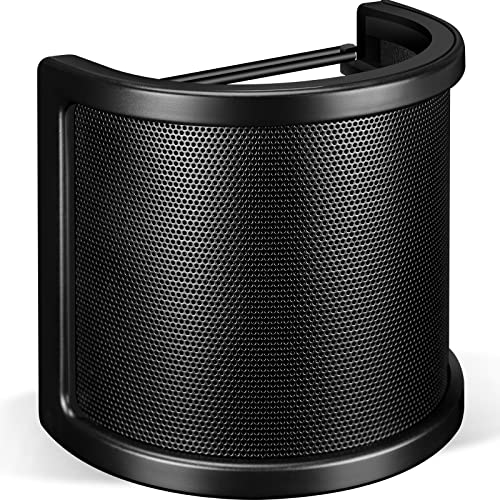
- Three-layer construction targets plosives and breath sounds
- Fits compatible microphones from 45–63 mm
- Quick installation with elastic bands and rubber ring
Best For: Compatible vocal, streaming, and video microphones
Heavy-Duty Positioning
Double-Layer Flexible Pop Filter

- Six filtering layers target plosives and sibilance
- 360-degree arm supports customized positioning
- Clamp fits tubes up to 1.38 inches and includes EVA padding
Best For: Flexible recording, broadcasting, and streaming setups
Best All-Around Protection – Dual-Layer Gooseneck Pop Filter
For singers, streamers, and actors comparing microphone pop filters, this dual-layer design offers broad compatibility and flexible positioning. Its two screens help disperse bursts of air before they reach the microphone.
Best For: Vocal recording, streaming, and general-purpose microphone setups.
Pros:
- Dual-layer screen helps reduce plosives and air blasts.
- Adjustable 360° gooseneck supports flexible placement.
- Clamp is designed for various microphone stands and boom mounts.
- Helps reduce hissing, lisping, and saliva exposure.
Cons:
- The clamp-and-gooseneck design may take some adjustment to position.
- Its 6.4-ounce weight and metal construction may be more than needed for very compact setups.
This is a versatile choice when you want microphone pop filters with adjustable placement and two-stage plosive control. The included clamp and gooseneck make it practical for changing recording positions.
Best Simple Studio Pick – Samson PS04 Dual-Layer Pop Filter
The Samson PS04 is a straightforward option among microphone pop filters for studio vocal work. Its 4.75-inch dual-layer nylon screen is designed to reduce p-pops, while the flexible gooseneck makes positioning easy.
Best For: Studio vocal recording with a conventional microphone stand.
Pros:
- Dual-layer nylon mesh helps reduce p-pops.
- Flexible 8-inch gooseneck allows position adjustment.
- Universal mic stand adapter supports use with most microphones in a studio setting.
- Steel construction is designed for durability.
Cons:
- The 4.75-inch screen is smaller than some larger pop filters.
- The notes specify studio use, so it may be less suited to unusual mounting arrangements.
Choose this model if you want a compact, familiar pop-filter format without extra design complexity. Its dual-layer screen and 8-inch gooseneck cover the core needs of studio vocal recording.
Best Metal Mesh Design – 512-POP Professional Metal Pop Filter
512 Audio by Warm Audio 512-POP Professional Metal Pop Filter w Gooseneck Clamp
Check Price On AmazonThe 512 Audio 512-POP stands out among microphone pop filters for its metal mesh construction and secure swivel clamp. It is designed to disperse plosives from close-range speech and singing while staying set in position.
Best For: Podcasts, livestreams, voice-overs, and singers who prefer a metal filter.
Pros:
- Metal mesh is designed to disperse plosives effectively.
- Flexible, sturdy gooseneck supports set-and-forget placement.
- Adjustable swivel c-clamp attaches to mic stands, boom arms, and desk stands.
- Suitable for close-range speech and singing.
Cons:
- Its 7.36-ounce weight may require a stable mounting surface.
- The clamp-based design needs an available stand, arm, or desk edge for attachment.
This is a strong fit for users who want microphone pop filters with a durable metal mesh and a versatile mounting clamp. It emphasizes secure placement for broadcast and vocal applications.
Best Enclosed Noise Control – Microphone Isolation Ball Pop Filter
This microphone isolation ball takes a different approach from conventional microphone pop filters by surrounding much of the microphone with sound-absorbing foam. Its five-sided seal and double-layered opening are designed to reduce plosives, wind interference, noise, and reflections.
Best For: Personal recording, live recording, studios, radio work, and outdoor performance.
Pros:
- Five-sided foam design helps reduce noise from multiple directions.
- Double-layered opening helps limit divergent sound during recording.
- Designed for many XLR and USB microphones with removable jackets measuring 50–75 mm.
- Lightweight 120-gram design can mount on desktop stands, tripods, arms, and floor stands.
Cons:
- Compatibility depends on the microphone’s removable jacket diameter.
- The enclosed form factor may be less convenient than a simple screen for quick microphone access.
- Its noise-reduction approach is more specialized than standard nylon pop filters.
Consider this model when reducing surrounding reflections and wind is as important as controlling plosives. Check your microphone dimensions first, since the 50–75 mm compatibility range is central to fit.
Best Adjustable Clamp-On Pick – Dual-Layer Gooseneck Pop Filter
This dual-layer microphone pop filter is a practical choice for home studios, streaming, and voice recording. Its flexible gooseneck lets you position the screen between your mouth and microphone, while the two-layer design helps reduce bursts from plosive sounds such as P and B.
Best For: Streamers, podcasters, and vocalists who want flexible positioning with a desk- or stand-mounted filter.
Pros:
- Dual-layer mesh helps disperse plosive airflow.
- 360° gooseneck adjusts angle, distance, and placement.
- Clamp fits surfaces up to 1.57 inches thick.
- Compatible with Blue Yeti setups when used with a suitable mount.
Cons:
- Requires a compatible stand, boom arm, or mounting surface.
- Its clamp-on format may not suit handheld microphones.
Choose this model when easy repositioning and broad mounting flexibility matter most. The approximately 6.1-by-6.3-inch screen also creates a useful barrier for breath and direct airflow.
Best Classic Studio Shield – NEEWER Dual-Layer Pop Filter
The NEEWER Professional Microphone Pop Filter Shield uses a dual-layer screen and adjustable steel gooseneck to help manage plosives, breath bursts, hissing, and lisping. It is a straightforward microphone pop filter for singers, streamers, actors, and other vocal recording applications.
Best For: Users who want a sturdy, adjustable filter for tubular microphone stands or boom arms.
Pros:
- Dual-layer construction disperses and contains remaining air pressure.
- Steel gooseneck supports angle and distance adjustments.
- Rotating clamp accommodates compatible booms and microphone stands.
- Swivel mount makes installation, removal, and repositioning simple.
Cons:
- Microphone is not included.
- Compatibility depends on the mounting tube or stand being suitable for its clamp.
This is a sensible pick for a conventional vocal setup where a metal gooseneck and swivel clamp are more important than a compact, microphone-mounted design.
Best Microphone-Mounted Option – PEMOTech Three-Layer Mic Shield
The PEMOTech three-layer microphone pop filter combines foam, metal mesh, and etamine layers in a compact shield that attaches directly to compatible microphones. It is designed to reduce plosives, crackles, wind interference, and breath sounds while also helping keep saliva away from the microphone.
Best For: Owners of compatible 45–61 mm diameter microphones who prefer a directly mounted windscreen-style shield.
Pros:
- Three-layer design combines foam, metal mesh, and etamine.
- Elastic bands and an inner rubber ring support quick installation.
- Fits many microphones measuring 45–61 mm in diameter.
- Metal mesh and frame help protect microphone cleanliness from saliva.
Cons:
- Not compatible with Blue Yeti microphones.
- Limited to microphones within the stated 45–61 mm diameter range.
- Microphone is not included.
Consider this model when your microphone fits the specified diameter range and you want a neat, mic-mounted solution rather than a clamp-on gooseneck filter. Check the microphone dimensions carefully before buying.
Flexible Studio Shield – 360° Gooseneck Pop Filter
This microphone pop filter is a practical choice for studio recording and voice work when you need adjustable positioning. Its dual-layer screen helps reduce “S” hissing and “B” and “P” plosives while also helping protect the microphone from saliva.
Best For: Recording setups that need a securely clamped, repositionable pop filter for a Blue Yeti or other microphone.
Pros:
- 360-degree flexible gooseneck makes positioning convenient.
- Adjustable clamp attaches securely to a microphone stand.
- Dual-layer screen helps reduce sibilance and plosive sounds.
- Helps prevent saliva from accumulating on the microphone.
Cons:
- Microphone is not included.
- Uses a stand clamp, so it requires a compatible mounting point.
Choose this model if flexible placement and stand-mounted stability matter most in your recording setup. The swivel mount also keeps installation straightforward.
Three-Layer Mic Cover – Metal Mesh and Foam Pop Filter
This microphone pop filter uses a compact three-layer design to reduce plosives, breath sounds, crackles, and wind interference during vocals, streaming, and video recording. Its elastic-band and rubber-ring mounting system is designed for compatible microphones measuring 45 mm to 63 mm in diameter.
Best For: Owners of compatible 45–63 mm microphones who want a quick-install filter for vocal recording, streaming, or YouTube production.
Pros:
- Three layers combine foam, metal mesh, and etamine material.
- Helps reduce plosives, breath sounds, crackles, and wind interference.
- Elastic bands and an inner rubber ring make installation and removal convenient.
- Helps keep saliva away from the microphone.
Cons:
- Not compatible with the Blue Yeti.
- Fit is limited to microphones approximately 45–63 mm in diameter.
- Mounts directly around the microphone rather than using a gooseneck arm.
This is a sensible option when your microphone falls within the stated size range and you prefer a direct, low-fuss installation. Confirm compatibility before ordering, especially for Blue Yeti users.
Heavy-Duty Positioning – Double-Layer Flexible Pop Filter
This microphone pop filter is built for users who want broad positioning control and multiple layers of sound filtering. Its dual metal mesh and high-density foam construction helps reduce plosives, sibilance, and unwanted noise, while the flexible arm and rotating clamp support a range of studio and desk-mounted setups.
Best For: Recording, broadcasting, karaoke, and streaming setups that need a firmly positioned filter with a long flexible arm.
Pros:
- Six filtering layers use dual metal mesh and high-density foam.
- 360-degree carbon-steel arm can be shaped to the preferred angle.
- Rotating clamp fits many boom arms and stands with tubes up to 1.38 inches.
- EVA padding helps protect mounted equipment from scratches.
Cons:
- The clamp may not fit stands or boom arms with tubes wider than 1.38 inches.
- The 21.06-inch total extended length may be more than compact setups require.
- Microphone and stand are not listed as included.
Consider this filter if you regularly reposition your microphone setup or need an arm that holds its shape. Its larger dimensions and clamp range are worth checking against your available desk or boom stand.
How We Picked These Microphone Pop Filters
We focused on the features that matter most in everyday recording: effective plosive control, secure mounting, flexible positioning, material quality, and compatibility with common microphones and boom arms. The selection includes traditional fabric or mesh filters, metal screens, foam-and-mesh combinations, and more enclosed acoustic designs.
Because microphone setups vary, we also considered adjustment range and installation style. Clamp-on models are convenient for desks and stands, while gooseneck arms make it easier to maintain a consistent distance from the microphone. Models advertised for the Blue Yeti and similar microphones may work well with other mics, but always confirm clamp clearance and dimensions before buying.
Quick Comparison
| Filter Type | Best For | Main Advantage | Potential Trade-Off |
|---|---|---|---|
| Dual-layer mesh | Podcasts, streaming, vocals | Balanced plosive reduction and airflow | Fabric may need occasional cleaning |
| Metal screen | Frequent studio use | Durability and easy maintenance | Can be less forgiving if positioned poorly |
| Three-layer designs | Strong plosive control | Multiple barriers for breath bursts | May be bulkier |
| Foam or isolation shields | Close-mic recording | Broader wind and room-noise management | Requires more space around the microphone |
Key Buying Factors for Microphone Pop Filters
Filter Construction
Dual-layer mesh is a reliable choice for most spoken-word and vocal applications. Metal filters are durable and easy to wipe clean, while multi-layer metal, foam, and fabric designs may provide stronger protection against breath noise. A pop filter should reduce plosives without noticeably dulling the high end.
Arm and Clamp Quality
Look for a flexible arm that stays in position rather than slowly sagging. The clamp should grip securely without damaging the desk or stand. Check the stated clamp range if you use a thick desktop, unusual boom arm, or compact microphone stand.
Size and Positioning
A larger screen gives you more freedom to move while recording, but it can obstruct controls or camera views. Position the filter a few inches from the microphone and keep it between your mouth and the capsule. For USB microphones, verify that the filter can clear the body, controls, and mounting yoke.
Cleaning and Long-Term Use
Metal screens are generally the simplest to maintain. Fabric and foam surfaces should be kept dry and cleaned according to the manufacturer’s instructions. Replace damaged or stretched filtering material, since gaps can reduce plosive protection.
Who Should Buy Which Microphone Pop Filters?
- Podcasters and streamers: Choose a dual-layer clamp-on filter with a flexible arm for simple desk positioning.
- Vocalists and home studios: Consider a durable metal or three-layer model, particularly if the microphone is used frequently.
- Blue Yeti owners: Select a filter specifically sized for the Yeti or confirm that the clamp and arm can clear its body.
- Handheld microphone users: Look for a multi-layer windscreen or handheld shield designed to fit the microphone securely.
- Close-mic or untreated-room setups: An isolation-ball or foam enclosure may offer broader coverage, but make sure it does not restrict microphone placement or make the recording sound overly enclosed.
For most buyers, a well-mounted dual-layer filter is the best starting point. Prioritize stable positioning and correct placement over the number of layers alone: even the most elaborate screen cannot compensate for poor microphone technique or an unsuitable recording distance.