Electronic drums make it easy to build polished performances, but the right recorder determines how much control you have over separate drum sounds, backing tracks, vocals, and instruments. A good multitrack recorder should offer enough inputs, dependable monitoring, and a workflow that keeps ideas moving.
We selected 10 portable and tabletop options ranging from compact songwriting tools to larger recorders with multiple XLR inputs. The best choice depends on whether you need isolated channels, quick stereo capture, built-in effects, battery operation, or computer-free recording.
Best 10 Multitrack Recorder for Electronic Drums Picks for 2026
Best All-in-One Choice
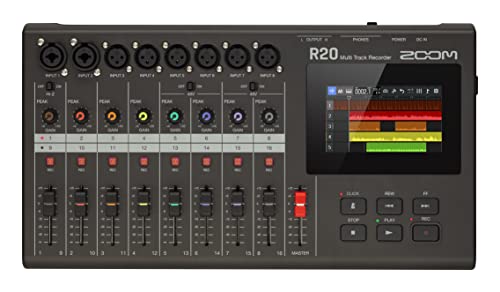
- Up to 16 tracks and eight simultaneous tracks
- Six XLR inputs with touchscreen editing
- Built-in effects, rhythms, and synth sounds
Best For: Complete computer-free electronic drum projects
Best Pocketstudio Simplicity

- Eight-track WAV recording
- Built-in stereo microphones
- Battery-operated portable design
Best For: Simple portable recording and songwriting
Best Portable Electronic Drum Companion

- Eight tracks with touchscreen editing
- 150 drum loops and 18 FM synth instruments
- Up to five hours on four AA batteries
Best For: Mobile electronic music creation
Best Traditional Portastudio Workflow

- Eight-track recording with two-channel input
- XLR, TRS, and built-in stereo microphones
- Onboard mastering, tuner, and metronome
Best For: Hands-on hardware-based recording
Best Portable Pick
Zoom R12 Multitrack Recorder Bundle

- Eight-track, 24-bit/44.1kHz recording
- Battery-powered with touchscreen editing
- Built-in loops, synth, effects, and USB-C interface
Best For: Mobile electronic-drums recording and flexible song production
Best Simple Pocketstudio
Tascam DP-006 6-Track Digital Pocketstudio

- Six-track recording and playback
- Built-in stereo condenser microphones
- Compact, WAV-based, and AA-battery operated
Best For: Quick electronic-drums sketches and songwriting demos
Best Feature-Rich Legacy Option
Boss BR-600 Digital Multitrack Recorder

- Eight-track playback with 64 V-Tracks
- Built-in drum machine with velocity-sensitive pads
- Stereo mic, effects, and battery-powered recording
Best For: Portable rhythm-focused recording with built-in effects
Best All-Arounder

- Records up to eight tracks at once
- Built-in microphones, sampler, and rhythm machine
- USB interface with SD/SDHC WAV recording
Best For: Layered electronic-drum sessions and versatile home recording
Best for Input Flexibility
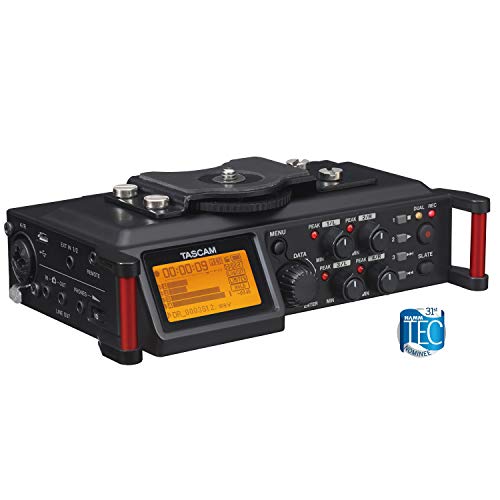
- Four balanced XLR/TRS inputs
- Individual gain controls and phantom power
- Dual Recording safety-copy mode
Best For: Portable multi-input capture with recording safeguards
Best Portable Layering Tool

- Four-track recording with bouncing
- 32-bit float recording for clip resistance
- 80-plus built-in rhythm patterns
Best For: Portable layering, practice, and quick electronic-drum ideas
Best All-in-One Choice – Zoom R20
The Zoom R20 is a strong multitrack recorder for electronic drums when you want computer-free recording with room for a larger project. It records up to 16 tracks, with up to eight tracks simultaneously, and provides six XLR inputs plus touchscreen editing, built-in effects, rhythms, and synth sounds.
Best For: Electronic drummers and musicians building complete arrangements without relying on a computer.
Pros:
- Up to 16 tracks and eight simultaneous recording tracks
- Six XLR inputs, including XLR/TRS connectivity
- Touchscreen editing, built-in effects, rhythms, and synth sounds
- Works as a USB interface with Windows and macOS
Cons:
- At 4.3 pounds, it is less lightweight than the portable R12
- Maximum sample rate is listed as 44.1 kHz
The R20 stands out for electronic drum setups that may expand into full songs. Its high track count and hands-on touchscreen workflow make it the most capable option here for arranging, editing, and mixing directly on the recorder.
Best Pocketstudio Simplicity – TASCAM DP-008EX
The TASCAM DP-008EX is a compact multitrack recorder for electronic drums and songwriting setups that favor straightforward operation. It offers eight-track recording, built-in stereo microphones, WAV recording, a headphone output, and battery operation for portable sessions.
Best For: Musicians who want a simple, battery-operated eight-track recorder for sketches and portable recording.
Pros:
- Eight-track digital recording in a compact 610-gram body
- Built-in stereo microphones for convenient capture
- Runs on four AA batteries and includes a 2GB SD card
- Records in WAV format and includes a USB connection
Cons:
- Its eight-track capacity is lower than the Zoom R20
- Supplied details do not specify dedicated electronic-drum features such as drum loops or synth sounds
The DP-008EX is a practical choice when portability and uncomplicated recording matter more than a touchscreen workflow or extensive onboard production tools. Its built-in microphones and battery operation make it convenient for capturing ideas away from the studio.
Best Portable Electronic Drum Companion – Zoom R12
The Zoom R12 is a portable multitrack recorder for electronic drums with an eight-track workflow, touchscreen editing, and two XLR/TRS inputs. Its built-in drum loops, FM synths, MIDI support, effects, and USB-C interface make it useful for creating and developing electronic music away from a computer.
Best For: Mobile musicians who want built-in rhythms, synth options, and battery-powered recording.
Pros:
- Eight-track recording with DAW-style touchscreen editing
- Includes 150 drum loops and 18 FM synth instruments
- Both inputs provide 48V phantom power; input 1 also offers Hi-Z
- Runs for up to five hours on four AA batteries
Cons:
- Only two XLR/TRS inputs are provided
- Eight tracks offer less project capacity than the R20
The R12 is particularly appealing for electronic drum creators who value mobility and built-in musical tools. It balances hands-on editing with USB-C connectivity, while its battery operation makes it easy to take to rehearsals, practice spaces, or travel sessions.
Best Traditional Portastudio Workflow – TASCAM DP-03SD
The TASCAM DP-03SD is a practical multitrack recorder for electronic drums when you prefer a traditional Portastudio-style workflow. It records eight tracks, supports two-channel simultaneous input, includes XLR and TRS connections, and adds onboard mastering effects, editing, a tuner, and a metronome.
Best For: Musicians who want dedicated hardware controls and basic onboard production tools for eight-track projects.
Pros:
- Eight-track recording with two-channel simultaneous input
- XLR support for condenser microphones and TRS inputs for instruments
- Built-in stereo condenser microphones
- Includes mastering effects, editing functions, tuner, and metronome
Cons:
- Heavier at 5.3 pounds than the DP-008EX and R12
- Its eight-track capacity is below the R20’s 16 tracks
- Supplied details do not mention dedicated drum loops or MIDI features
The DP-03SD favors a familiar, self-contained recording approach rather than a touchscreen-centered design. It is a sensible fit for electronic drummers who want straightforward hardware operation, instrument connectivity, and basic mixing and timing tools in one unit.
Best Portable Pick – Zoom R12 Multitrack Recorder Bundle
If you want a multitrack recorder for electronic drums that can also handle complete mobile music production, the Zoom R12 is a flexible choice. It records up to eight tracks at 24-bit/44.1kHz and includes two XLR-1/4-inch combo inputs with phantom power, onboard mixing, and touchscreen editing without requiring a computer.
Best For: Mobile producers, electronic-drums players, and creators who want recording, mixing, built-in sounds, and battery-powered portability.
Pros:
- Eight-track recording with 24-bit/44.1kHz audio and onboard mixing.
- USB-C audio interface and control-surface functionality for computer-based workflows.
- Includes drum loops, an FM synth, effects, customizable click track, and sample importing.
- Can run on four AA batteries, USB-C, or the included power adapter.
Cons:
- Its two combo inputs may limit larger multi-output electronic drum setups.
- The bundle is more feature-rich than necessary for simple recording tasks.
The R12 stands out when portability and creative flexibility matter as much as multitrack recording. It is especially useful for building demos, rehearsing with backing tracks, or combining electronic drums with loops and synthesized parts.
Best Simple Pocketstudio – Tascam DP-006 6-Track Digital Pocketstudio
The Tascam DP-006 is a compact multitrack recorder for electronic drums and songwriting when straightforward operation is the priority. It offers up to six tracks, two-track simultaneous recording, six-track playback, CD-quality 16-bit/44.1kHz audio, and built-in stereo condenser microphones.
Best For: Songwriters and musicians who want a lightweight, battery-operated recorder for basic electronic-drums ideas and demos.
Pros:
- Supports up to six tracks with a dedicated stereo master track.
- Records two tracks simultaneously and plays back all six tracks.
- Built-in omnidirectional condenser microphones support quick stereo capture.
- Uses four included AA batteries and stores recordings in WAV format.
Cons:
- Its 16-bit/44.1kHz recording is less detailed than higher-resolution options.
- The supplied notes do not list dedicated electronic-drum inputs or onboard effects.
- The 2.5mm headphone jack may require an adapter for some headphones.
The DP-006 is best viewed as a focused sketchpad rather than a full production workstation. Its small size, built-in microphones, and six-track layout make it practical for capturing arrangements and rehearsals with minimal setup.
Best Feature-Rich Legacy Option – Boss BR-600 Digital Multitrack Recorder
The Boss BR-600 is a multitrack recorder for electronic drums that combines eight-track playback with a built-in drum machine and effects processing. Its stereo microphone, velocity-sensitive pads, battery operation, and CompactFlash storage support portable recording and hands-on beat creation.
Best For: Musicians who want an all-in-one recorder with built-in rhythm tools, vocal effects, and portable operation.
Pros:
- Provides eight simultaneous playback tracks and 64 V-Tracks for arranging options.
- Includes a velocity-sensitive-pad drum machine for creating rhythm parts.
- Built-in stereo microphone and battery power support recording away from a studio.
- Offers guitar and vocal effects, including pitch correction.
Cons:
- The included 128MB CompactFlash card provides limited recording capacity.
- It requires four 9V batteries, which may be less convenient than AA-powered designs.
- The supplied notes do not specify simultaneous recording input capacity.
The BR-600 makes sense for players who value integrated rhythm programming and effects alongside multitrack playback. Its older CompactFlash-based workflow may feel less convenient than newer recorders, but the built-in tools can make it engaging for portable idea capture.
Best All-Arounder – Zoom R8
The Zoom R8 is a versatile multitrack recorder for electronic drums and broader home-recording setups. It can record up to eight tracks simultaneously, offers two XLR combo inputs, and includes built-in stereo condenser microphones, a pad sampler, and a rhythm machine.
Best For: Musicians who want substantial multitrack capacity, onboard rhythm tools, and computer connectivity in a compact tabletop recorder.
Pros:
- Records up to eight tracks simultaneously and supports 16-track playback.
- Two XLR combo inputs accommodate microphones and other compatible sources.
- Includes stereo condenser microphones, a pad sampler, and a rhythm machine.
- Records 16/24-bit, 44.1 kHz WAV files to SD or SDHC cards up to 32GB.
Cons:
- Maximum sample rate is 44.1 kHz.
- SDHC storage is limited to cards up to 32GB.
With eight-track simultaneous recording and useful built-in performance features, the R8 is the most capable choice here for layered electronic-drum sessions and general multitrack work.
Best for Input Flexibility – TASCAM DR-70D
The TASCAM DR-70D is a four-channel portable recorder that can serve as a multitrack recorder for electronic drums when you need multiple balanced connections. Its four combo XLR/TRS inputs, individual gain controls, phantom power, and SD-card recording make it focused on flexible source capture.
Best For: Users who need four independently controlled XLR/TRS inputs, phantom power, and portable recording with safety-oriented level features.
Pros:
- Provides four balanced XLR mic inputs with phantom power.
- Individual gain controls allow separate adjustment of all four inputs.
- Dual Recording mode creates a lower-level safety copy to help prevent distorted takes.
- Supports SD, SDHC, and SDXC cards up to 128GB.
Cons:
- Offers four channels rather than the eight-channel capacity of the Zoom R8.
- Its design is primarily aimed at production sound and videography.
The DR-70D is a practical option when input count, balanced connectivity, and recording safeguards matter more than built-in musical tools or higher track capacity.
Best Portable Layering Tool – Zoom R4
The Zoom R4 is a compact multitrack recorder for electronic drums and quick musical sketches. It captures up to four tracks, uses 32-bit float recording to avoid clipping without manual gain adjustments, and adds more than 80 built-in drum patterns for practice and arrangement ideas.
Best For: Portable musicians who prioritize simple layering, clip-resistant recording, built-in rhythms, and battery-powered operation.
Pros:
- Records, layers, and bounces up to four tracks with a dedicated bounce track.
- 32-bit float recording is designed to avoid clipping without gain adjustments.
- Includes over 80 rhythm patterns across styles such as rock, hip hop, funk, and metal.
- Works as a 2-in/2-out USB audio interface and runs on four AA batteries or USB-C.
Cons:
- Its four-track capacity is lower than the Zoom R8’s eight-track simultaneous recording.
- It provides two XLR/TRS combo inputs, which may limit larger multichannel setups.
The R4 stands out for spontaneous, portable production: its 32-bit float workflow reduces level anxiety, while bouncing and built-in rhythms help extend a four-track project.
How We Picked the Best Multitrack Recorder for Electronic Drums
For this roundup, we focused on recorders that can support electronic-drum workflows without requiring a full computer-based studio. We considered track capacity, input count and connector types, monitoring, overdubbing, portability, storage, effects, and ease of transfer to a computer. Models with dedicated multitrack operation received priority, while compact stereo and field-oriented recorders were included when they offer a practical fit for simpler setups.
Compatibility matters too. An electronic drum module with separate outputs benefits from multiple line or combo inputs, while a module using a single stereo output can work with nearly any recorder offering a stereo input path.
Quick Comparison
| What to Compare | Best For | Why It Matters |
|---|---|---|
| Input count | Separate drum channels and multiple performers | More inputs let you record isolated sources at once. |
| Track count | Layered arrangements | Extra tracks provide room for overdubs and alternate takes. |
| Portability | Practice rooms, rehearsals, and travel | Battery-capable designs reduce setup requirements. |
| Computer connectivity | Hybrid recording workflows | USB audio or file transfer simplifies editing and mixing. |
Key Buying Factors for a Multitrack Recorder for Electronic Drums
Inputs and Routing
Check the outputs on your drum module before choosing a recorder. A stereo module output needs two suitable inputs; individual kick, snare, tom, and cymbal outputs may require a recorder with several simultaneous inputs. XLR/TRS combo inputs are useful when you also plan to connect microphones, guitars, or line-level instruments.
Tracks, Overdubbing, and Storage
Eight tracks can cover a straightforward drum performance plus several overdubs, while 16 tracks provide more flexibility for full demos and layered arrangements. Confirm how recordings are stored, whether removable media is required, and whether projects can be exported easily for computer mixing.
Monitoring and Latency
Direct monitoring is valuable when playing electronic drums because it keeps the response immediate. Look for a headphone output with clear level control and a workflow that allows you to monitor previously recorded tracks without distracting delay.
Effects and Editing
Built-in compression, reverb, EQ, and other effects can speed up rehearsal recording and demo production. If you prefer detailed editing, prioritize USB connectivity or straightforward file export so you can finish the mix in a DAW.
Who Should Buy Which Multitrack Recorder for Electronic Drums?
Choose a higher-input tabletop recorder if you want to capture several drum-module outputs, vocals, guitars, or other instruments at the same time. A compact eight-track model is a strong fit for electronic drummers who want portability and enough room for backing parts and overdubs. Pocketstudio-style recorders suit songwriters who value battery operation, built-in microphones, and a computer-free workflow.
For quick rehearsals, practice documentation, or a simple stereo drum performance, a smaller recorder can be more convenient than a full multitrack system. Field-oriented models make the most sense when portability and multiple microphone or line inputs matter more than extensive onboard editing. Before buying, confirm the module’s output configuration, required cables, storage format, and whether you need isolated tracks or only a finished stereo recording.