The best polyphonic synthesizers make it easier to build full chords, layered pads, expressive leads, and complete arrangements from a single keyboard. This roundup covers analog, hybrid, FM, and analog-modeling instruments across a wide range of budgets and workflows.
Use the comparisons below to narrow your choice by voice count, synthesis style, sequencing features, keyboard size, and live-performance controls.
Best 10 Polyphonic Synthesizers Picks for 2026
Flagship Analog Centerpiece
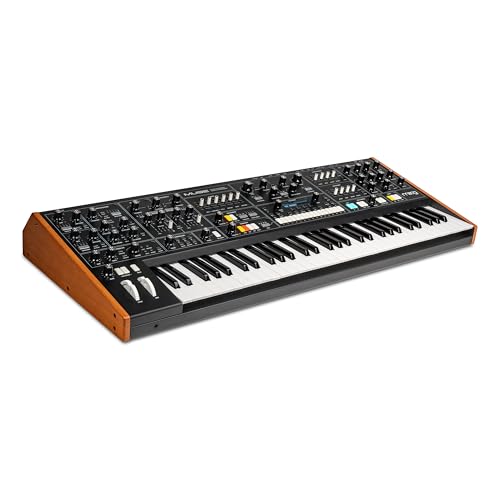
- Eight-voice analog architecture with dual filters
- 61 keys, bi-timbral operation, and hands-on controls
- Sequencer, chord memory, arpeggiator, and diffusion delay
Best For: Studio producers and performing musicians wanting a deep analog centerpiece
FM Sound Design Specialist

- 64 voices with true six-operator FM synthesis
- Six synthesis styles and 30 onboard effects
- Motion sequencing, randomization, and deep modulation
Best For: Electronic sound designers seeking broad digital synthesis options
High-Voice Analog Workhorse
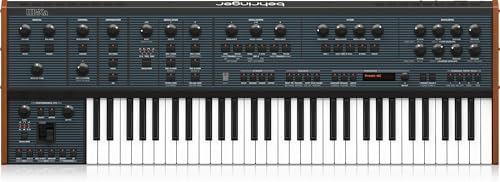
- 16 analog voices and 32 oscillators
- Bi-timbral design for layered keyboard parts
- DIN MIDI In, Out, and Thru connectivity
Best For: Players needing broad analog polyphony for chords and layered sounds
Interactive Modeling Performer

- 60 voices with four stacked oscillators
- Built-in KAOSS Pad and Kaoss Physics
- Motion sequencing, layered sounds, and extensive modulation
Best For: Live performers and sound designers pursuing evolving textures
Best Hybrid Value
Arturia MiniFreak 37-Key Synthesizer

- Six-voice hybrid synthesis
- Portable 37-key design
- Includes MiniFreak VST counterpart
Best For: Beginners seeking a portable hybrid synthesizer
Best Analog Control
Sequential Fourm Compact Polyphonic Synthesizer

- Two-VCO analog architecture
- Sequencer and arpeggiator included
- Polyphonic aftertouch
Best For: Players wanting expressive analog sound design
Best Vocoder Features

- Two 31-mode sound engines
- Advanced vocoder effects engines
- Velocity and aftertouch keyboard
Best For: Advanced users exploring expressive hybrid synthesis
Classic Analog Powerhouse

- Eight-voice analog polyphony
- Two VCOs per voice
- 400 memories, sequencer, and arpeggiator
Best For: Chord-rich analog patches and vintage-style sound design
Compact Analog All-Rounder

- Four-voice analog polyphony
- 200 presets and editable sounds
- Polyphonic step and motion sequencer
Best For: Accessible analog synthesis in a compact 37-key format
Fat-Key Performance Synth

- Four VCOs for thick analog tones
- Four voice modes including polyphonic
- 37 full-size velocity-sensitive keys
Best For: Expressive live performance, bass, leads, and rich analog textures
Flagship Analog Centerpiece – MOOG Muse
The MOOG Muse is a premium choice for musicians seeking a centerpiece among polyphonic synthesizers. Its eight analog voices, 61-key keyboard, knob-per-function layout, and bi-timbral design suit both detailed studio work and live performance.
Best For: Players and producers who want deep analog sound design, hands-on controls, and built-in sequencing.
Pros:
- Eight analog voices with two VCOs, a modulation VCO, dual filters, and stereo VCAs per voice.
- Performance-focused controls, chord memory, arpeggiator, and polyphonic sequencer.
- Includes diffusion delay, 256 patch locations, and 64-step sequencing.
Cons:
- At 32 pounds, it is less convenient to move than compact synthesizers.
- Only two of the 16 patch banks are reserved for user patches.
The Muse is built for players who value tactile control and expansive analog architecture. Its combination of classic-inspired circuitry and modern sequencing makes it a substantial studio or stage investment.
FM Sound Design Specialist – Korg opsix MKII
The Korg opsix MKII offers a flexible digital approach to polyphonic synthesizers, combining true six-operator FM with multiple synthesis styles. Its 64 voices, 37 velocity-sensitive keys, effects, and modulation tools make it well suited to varied electronic sound design.
Best For: Sound designers and keyboardists who want FM synthesis plus modern modulation, sequencing, and effects.
Pros:
- 64-voice polyphony with six synthesis styles, including FM, waveshaping, and additive synthesis.
- Includes 250 presets, 250 user programs, and a comprehensive modulation matrix.
- Features motion sequencing, a step sequencer, randomizer, dice function, and 30 effects.
Cons:
- Its digital FM-focused workflow may be less appealing to players seeking purely analog circuitry.
- The 37-key format provides less playing range than a full-size keyboard.
The opsix MKII is a strong fit when versatility and programmable digital tones matter more than traditional analog signal paths. Its high voice count and synthesis variety support layered, evolving arrangements.
High-Voice Analog Workhorse – Behringer UB-Xa
The Behringer UB-Xa is designed for players who need generous polyphony from an analog instrument. With 16 voices, 32 oscillators, and bi-timbral operation, it is a practical option for full chords, layered parts, and broad keyboard arrangements.
Best For: Keyboardists and producers who prioritize high analog polyphony and bi-timbral performance.
Pros:
- 16-voice polyphonic analog architecture with 32 oscillators.
- Bi-timbral operation supports two sound parts in one instrument.
- Provides 5-pin DIN MIDI In, Out, and Thru plus three TRS footswitch jacks.
Cons:
- Its large dimensions may require substantial space in a studio or performance setup.
- The supplied notes provide limited detail about its onboard sequencing or effects.
The UB-Xa focuses on foundational analog polyphony rather than an extensive list of modern performance features. It makes the most sense for players who want many simultaneous analog voices and straightforward MIDI connectivity.
Interactive Modeling Performer – Korg multipoly
Korg multipoly Analog Modeling Synthesizer w/Four Oscillators, 60 Voices and built-in KAOSS Pad
Check Price On AmazonThe Korg multipoly brings an experimental performance focus to polyphonic synthesizers through four stacked oscillators, flexible routing, and a built-in KAOSS Pad. Its 60 voices and motion-oriented controls suit players who want evolving textures in a compact format.
Best For: Performers and sound designers creating animated, interactive, and vintage-inspired modeled sounds.
Pros:
- 60-voice analog modeling with four oscillators, dual filters, and flexible X-mod and sync routing.
- Built-in KAOSS Pad and Kaoss Physics provide expressive sound manipulation.
- Includes four envelopes, five LFOs, six modulation processors, insert effects, and Motion Sequencing 2.0.
Cons:
- Its plastic body may feel less substantial than a metal-bodied instrument.
- Warranty information must be obtained directly from the seller or manufacturer.
The multipoly is a compelling choice for hands-on experimentation rather than strictly traditional subtractive synthesis. Its oscillator layering, motion sequencing, and Kaoss controls encourage evolving patches and expressive live interaction.
Best Hybrid Value – Arturia MiniFreak 37-Key Synthesizer
Arturia MiniFreak 37 Key Polyphonic 6-Voice Hybrid Synthesizer Keyboard (Standard, 37 Key)
Check Price On AmazonThe Arturia MiniFreak is a practical choice for musicians seeking versatile polyphonic synthesizers with a hybrid digital-and-analog sound profile. Its 37-key format, portable design, USB connectivity, and included MiniFreak VST counterpart make it suitable for both hands-on playing and computer-based production.
Best For: Beginners and players who want a portable, flexible hybrid synthesizer.
Pros:
- Six-voice polyphonic hybrid synthesis.
- 37-key keyboard in a portable 2.94 kg design.
- USB connectivity and included MiniFreak VST counterpart.
- Two-year manufacturer warranty.
Cons:
- Uses corded electric power rather than battery operation.
- The supplied specifications do not detail onboard vocoder features or advanced performance controls.
The MiniFreak stands out as an approachable entry into polyphonic synthesizers, especially when portability and hybrid sound design matter more than a large keyboard or extensive listed connectivity.
Best Analog Control – Sequential Fourm Compact Polyphonic Synthesizer
The Sequential Fourm is aimed at players comparing polyphonic synthesizers with an analog-focused workflow. It combines a 37-key format with two VCOs, a sequencer/arpeggiator, polyphonic aftertouch, a modulation matrix, and two ADSR envelopes for hands-on sound shaping.
Best For: Synth players who prioritize analog architecture and expressive sequencing features.
Pros:
- Polyphonic analog synthesis with two VCOs.
- Built-in sequencer and arpeggiator.
- Polyphonic aftertouch and modulation matrix.
- Two ADSR envelopes for sound shaping.
Cons:
- At 28 x 13.4 x 6.9 inches, it is less compact than some portable options.
- The supplied specifications list an HDMI connector, which may require checking compatibility with your setup.
With its analog voice architecture and performance-oriented controls, the Fourm is a compelling option for experienced users who want sequencing and expressive keyboard features in a 37-key instrument.
Best Vocoder Features – Arturia MiniFreak Vocoder
Arturia MiniFreak 37 Key Polyphonic 6-Voice Hybrid Synthesizer Keyboard (White, MiniFreak Vocoder)
Check Price On AmazonThe white Arturia MiniFreak Vocoder is a feature-rich option among polyphonic synthesizers, pairing a 37-note keyboard with velocity and aftertouch, two sound engines with 31 modes each, and two advanced vocoder effects engines. Its USB and stereo audio connections support both hardware performance and software-based workflows.
Best For: Intermediate, advanced, and professional users who want hybrid synthesis with vocoder capabilities.
Pros:
- 37-note keyboard with velocity and aftertouch.
- Two sound engines with 31 modes each.
- Two advanced vocoder effects engines.
- Offers 12-voice paraphonic, unison, and mono modes.
Cons:
- Its broader feature set may be more than beginners need.
- Requires corded electric power.
- Provides a 3.5 mm headphone output rather than the listed 1/4-inch stereo line output format.
The MiniFreak Vocoder is the strongest fit here for detailed electronic sound design and vocal processing, particularly if aftertouch, multiple synthesis modes, and flexible audio outputs are priorities.
Classic Analog Powerhouse – Behringer PRO-800
The Behringer PRO-800 is a strong option for musicians seeking polyphonic synthesizers with classic analog character. Its eight-voice architecture, two VCOs per voice, authentic VCO/VCF/VCA designs, and 400 program memories make it suited to layered chords, detuned textures, and repeatable studio setups.
Best For: Players who want broad eight-voice analog polyphony, vintage-inspired sound design, and extensive preset storage in a Eurorack-format instrument.
Pros:
- Eight-voice polyphonic design supports fuller chord arrangements.
- Two VCOs per voice provide fat and detuned sounds.
- Includes an arpeggiator, sequencer, and 400 program memories.
- Unison mode enables 16-oscillator lead and bass sounds.
Cons:
- The Eurorack format may be less convenient for players seeking a traditional keyboard instrument.
- Its listed dimensions and stainless-steel/alloy construction may make it less portable than compact alternatives.
The PRO-800 stands out when voice count and vintage-style analog flexibility matter most. Choose it for chord-heavy arrangements and sound designers who value substantial oscillator resources and onboard memory.
Compact Analog All-Rounder – Korg minilogue
The Korg minilogue is a practical choice among polyphonic synthesizers for players who want warm analog tones in a compact 37-key format. Four-voice polyphony, 200 presets, a polyphonic step and motion sequencer, and a built-in tape-style delay give it useful studio and performance flexibility.
Best For: Beginners and experienced musicians who want an accessible four-voice analog synthesizer with sequencing, preset recall, and compact slim-key playability.
Pros:
- Four-voice polyphony handles layered chords and arrangements.
- Includes 200 preset sounds plus editable sound-design controls.
- Polyphonic step and motion sequencer supports recording and live use.
- Onboard tape-style delay adds depth and texture.
Cons:
- Four voices provide less polyphony than eight-voice alternatives.
- Slim keys may not suit players who prefer full-size key action.
- The compact design includes fewer voices for especially complex arrangements.
The minilogue balances hands-on synthesis and approachable sequencing without requiring a larger instrument. It is a sensible fit when portability, preset variety, and warm analog sound are higher priorities than maximum voice count.
Fat-Key Performance Synth – Behringer POLY D
The Behringer POLY D targets players who want polyphonic synthesizers with especially thick analog voices and a performance-oriented keyboard. Its four VCOs, four-voice polyphonic/paraphonic design, 37 velocity-sensitive full-size keys, ladder filter, stereo chorus, distortion, sequencer, and arpeggiator support both bass-heavy patches and hands-on live playing.
Best For: Performers and producers seeking powerful analog tones, full-size velocity-sensitive keys, and multiple performance effects in one instrument.
Pros:
- Quadruple-VCO design supports exceptionally fat analog sounds.
- Offers mono, unison, polyphonic, and paraphonic modes.
- 37 full-size semi-weighted keys include velocity functionality.
- Built-in chorus, distortion, 32-step sequencer, and arpeggiator expand performance options.
Cons:
- At 26.1 pounds, it is considerably less portable than lighter compact synthesizers.
- Its four-voice design offers less polyphony than eight-voice models.
- The large footprint may require substantial desk or stand space.
The POLY D is compelling for players who prioritize oscillator density and expressive full-size keys over portability. Its flexible voice modes and onboard effects make it particularly suitable for hands-on bass, lead, and chord performance.
How We Picked the Best Polyphonic Synthesizers
We evaluated these instruments by looking at the features that matter most in real studio and performance use: available voices, synthesis architecture, sound-shaping flexibility, keyboard and control layout, sequencing tools, connectivity, and overall value. Because “polyphonic” covers several different approaches, the list includes classic analog designs alongside digital, hybrid, and analog-modeling instruments.
Voice count is only one part of the decision. A four-voice synth can be an excellent choice for bass, chords, and hands-on sound design, while a 16-voice instrument may be better suited to layered parts, sustained pads, and multitimbral arrangements.
Quick Comparison
- For premium analog sound: MOOG Muse, Sequential Fourm, or Behringer UB-Xa.
- For FM synthesis and digital versatility: Korg opsix MKII.
- For modern hybrid sounds: Arturia MiniFreak.
- For maximum hands-on experimentation: Korg multipoly.
- For affordable classic analog tones: Korg minilogue, Behringer PRO-800, or Behringer POLY D.
Key Buying Factors for Polyphonic Synthesizers
Voice Count and Playing Style
More voices help when you play wide chords, use long release times, layer sounds, or sequence several notes at once. Lower voice counts can still work well for basslines, arpeggios, compact chord parts, and focused sound design. Also check whether the instrument is bitimbral or multitimbral if you want separate sounds at the same time.
Synthesis Engine
Analog synthesizers are often chosen for their direct controls and distinctive oscillator and filter character. FM instruments offer precise, glassy, metallic, and complex timbres. Hybrid and modeling synths can provide broader digital textures, effects, modulation options, and preset variety in a compact format.
Sequencing, Effects, and Performance Controls
A built-in sequencer, arpeggiator, motion recording, effects section, or performance pad can significantly change how quickly you develop ideas. Prioritize these features if the synth will be used live or as a central songwriting instrument rather than only for sound design.
Keyboard, Size, and Connectivity
Consider whether you need full-size keys, a compact 37-key layout, velocity and aftertouch, or a desktop-friendly footprint. MIDI, USB, CV/Gate, and audio connectivity should match your existing setup. Check the available outputs and synchronization options before buying for a hardware-heavy studio.
Who Should Buy Which Polyphonic Synthesizers?
Choose the MOOG Muse or Sequential Fourm if premium analog sound design and performance control are your priorities. The Behringer UB-Xa is a strong fit for players who want many analog voices and a larger, more traditional polyphonic layout.
The Korg opsix MKII suits producers who want deep FM synthesis without giving up sequencing and modern workflow features. The Arturia MiniFreak is a practical choice for electronic musicians seeking varied hybrid sounds in a compact keyboard.
For hands-on experimentation and broad built-in functionality, consider the Korg multipoly. Buyers seeking affordable analog entry points should look at the Korg minilogue, Behringer PRO-800, or Behringer POLY D, depending on whether they value compact sequencing, classic polyphonic character, or four-oscillator architecture most.