The right amplifier can give a home theater more authority, cleaner dynamics, and better control at demanding volume levels. But the best match depends on your speaker layout, room size, source components, and whether you need dedicated channels or an all-in-one receiver.
We selected 10 options across multi-channel home theater, stereo listening, subwoofer duty, streaming, and budget-friendly entertainment systems. Use the guide below to narrow the list by power needs, connectivity, and installation goals.
Best 10 Power Amplifiers for Home Theater Picks for 2026
Reference Theater Power
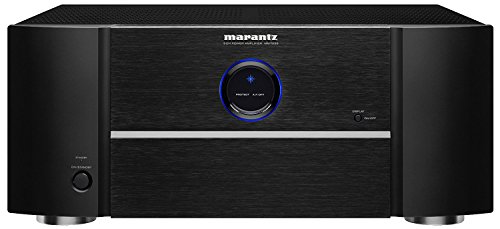
- Five-channel, 140-watt-per-channel design
- XLR and RCA inputs
- HDAM circuitry and gold-plated terminals
Best For: Dedicated five-channel home theater systems
Versatile Stereo Control

- Coaxial and optical digital inputs
- Speaker A/B and A+B selection
- Subwoofer output included
Best For: Flexible two-channel stereo systems
Feature-Packed Party Theater

- Five-channel design with stated 200-watt output
- Bluetooth, USB, SD, and FM features
- Dual-mic karaoke connectivity
Best For: Casual theater and karaoke entertainment rooms
Compact Bass Specialist

- Mono amplifier for passive subwoofers
- Up to 100 watts of output
- Low-pass filter and bass controls
Best For: Adding dedicated power to a passive subwoofer
Best All-in-One Choice

- 100W per channel in stereo; 80W in 3-channel LCR mode
- HDMI eARC, BluOS streaming, AirPlay 2, and Bluetooth
- Dirac Live ready with expandable wireless PULSE support
Best For: Streaming-focused compact home theaters
Best Budget Feature Set
Pyle PDA77BU 4-Channel Receiver

- 800W peak output with stereo audio configuration
- Bluetooth, USB, SD, FM, AUX, RCA, and 3.5mm inputs
- Dual microphone inputs with karaoke controls
Best For: Budget home audio and karaoke setups
Best for Karaoke Surround Sound

- 5.1-channel surround sound with an independent subwoofer channel
- Three microphone inputs for karaoke and events
- USB/SD playback, RCA inputs, equalizer, and remote control
Best For: Small surround setups with karaoke needs
Best Budget-Friendly Pick

- 100W RMS two-channel stereo output
- Bluetooth, RCA, USB, SD, FM, and mic inputs
- Compact design with EQ controls and remote
Best For: Compact stereo home theater and karaoke setups
Best Feature-Rich Stereo Option

- 50W+50W rated two-channel output
- Optical, coaxial, Bluetooth 5.0, RCA, and AUX inputs
- Supports passive speakers and an active subwoofer
Best For: Flexible stereo theater and TV audio systems
Best for Multi-Speaker Setups

- Four independently controlled channels
- 440W listed peak power for speaker groups
- Bluetooth 5.0, dual mic, RCA, USB, SD, and AUX inputs
Best For: Multi-speaker audio, karaoke, and presentation systems
Reference Theater Power – Marantz MM7055
The Marantz MM7055 is a five-channel option for shoppers comparing power amplifiers for home theater. It delivers 140 watts per channel at 8 ohms from a current-feedback design with Marantz HDAM circuitry, and provides both XLR and RCA inputs for system integration.
Best For: Dedicated five-channel home theater systems needing substantial amplification and flexible balanced or unbalanced connections.
Pros:
- Five channels rated at 140 watts each at 8 ohms.
- Offers both XLR and RCA inputs across five channels.
- Includes Marantz HDAM circuitry and gold-plated terminals.
- Three-year parts and labor warranty is listed.
Cons:
- At 37 pounds, it is considerably heavier than compact amplifier options.
- Its five-channel configuration may be more than needed for a simple stereo setup.
The MM7055 is a substantial, purpose-built choice when five channels, high output capability, and installation-friendly connectivity matter more than minimizing size or weight.
Versatile Stereo Control – Yamaha A-S301BL
The Yamaha A-S301BL is an integrated stereo amplifier for listeners who want straightforward two-channel system control. It combines digital coaxial and optical inputs with analog connections, speaker A/B selection, and a subwoofer output.
Best For: Stereo music systems that need both digital source inputs and flexible speaker connections.
Pros:
- Includes digital coaxial and optical inputs.
- Provides analog inputs for traditional sources.
- Supports speakers A, B, or A+B.
- Includes a dedicated subwoofer output.
Cons:
- It is a stereo integrated amplifier rather than a multichannel home theater power amplifier.
- The supplied notes do not specify a maximum output rating.
The A-S301BL makes the most sense for a compact stereo-focused setup. Its varied inputs and speaker-selection options offer practical flexibility, but shoppers seeking five-channel theater amplification should consider a different design.
Feature-Packed Party Theater – Pyle PDA7BU
The Pyle PDA7BU combines five-channel amplification with Bluetooth streaming, USB and SD playback, an FM tuner, and karaoke features. For buyers comparing power amplifiers for home theater, its stated 200-watt output and 5.1 channel configuration come alongside a broad set of convenient source and microphone connections.
Best For: Casual home theater, entertainment rooms, and karaoke-oriented setups that value built-in playback and wireless convenience.
Pros:
- Five-channel, 5.1-channel design with stated 200-watt output.
- Supports Bluetooth, USB-A, SD, RCA, and front 3.5mm auxiliary input.
- Includes two 6.35mm microphone inputs with adjustable echo and mic volume.
- Comes with a remote, FM antenna, and detachable rack mounts.
Cons:
- The supplied notes do not define how the 200-watt rating is distributed across channels.
- Its broad karaoke and media features may be unnecessary for a strictly hi-fi theater system.
- At 7.4 pounds, it is much lighter than more substantial theater amplifiers.
The PDA7BU prioritizes convenience and entertainment versatility over specialized amplification features. It is a practical all-in-one receiver for users who want streaming, media playback, radio, and karaoke in the same compact chassis.
Compact Bass Specialist – Fosi Audio M04 Subwoofer Amp
The Fosi Audio M04 is a compact mono amplifier designed to add power to a passive subwoofer or speaker. Its Class D design provides up to 100 watts, while the selectable subwoofer/full-frequency modes, built-in low-pass filter, and sub-frequency control make it especially useful for low-frequency system upgrades.
Best For: Adding dedicated amplification and adjustable bass control to a passive subwoofer in a home theater system.
Pros:
- Dedicated mono design for passive subwoofers or speakers.
- Offers up to 100 watts of output power.
- Includes a low-pass filter and sub-frequency control.
- Compact 5.2-by-3.5-by-1.4-inch Class D chassis.
Cons:
- One channel is not suitable as the main amplifier for a multichannel theater system.
- Its listed output is specified at 2 ohms, so speaker or subwoofer compatibility should be checked.
- It uses a 19V/4.74A power supply rather than a conventional full-size amplifier power section.
The M04 is best viewed as a focused bass-amplification solution rather than a complete home theater power amplifier. Its small footprint and built-in filtering make it a practical way to supplement a passive subwoofer.
Best All-in-One Choice – Bluesound Powernode (2025)
For shoppers seeking power amplifiers for home theater without a bulky receiver, the Bluesound Powernode combines TV connectivity, streaming, room correction, and flexible speaker support in a compact system. It delivers 100 watts per channel in stereo or 80 watts per channel in 3-channel LCR mode.
Best For: Streaming-focused home theaters, compact living rooms, and listeners who want music and movie playback in one system.
Pros:
- Supports HDMI eARC and 3-channel LCR operation for a streamlined TV setup.
- Offers BluOS access to more than 23 licensed services, plus AirPlay 2 and aptX Adaptive Bluetooth.
- Includes Dirac Live Room Correction readiness and a THX AAA headphone amplifier.
- Can expand with wireless PULSE speakers and a PULSE SUB+.
Cons:
- Its home-theater expansion centers on the Bluesound ecosystem and wireless PULSE products.
- The listed power rating is 80 watts per channel in 3-channel LCR mode, rather than 100 watts per channel.
The Powernode is the most versatile option here for buyers prioritizing high-resolution streaming and a clean, simplified setup. Its broad connectivity and room-correction support make it a strong fit when convenience matters as much as amplification.
Best Budget Feature Set – Pyle PDA77BU 4-Channel Receiver
If you want power amplifiers for home theater with plenty of built-in playback and party features, the Pyle PDA77BU offers Bluetooth, USB, SD, FM radio, and multiple wired inputs. Its listed 800-watt peak output and stereo configuration make it suited to straightforward home audio setups.
Best For: Budget-conscious users who want karaoke functions, wireless streaming, and flexible source connections.
Pros:
- Provides Bluetooth 5.0 connectivity with a stated range of more than 30 feet.
- Includes USB, SD card, FM radio, AUX, RCA, and 3.5mm input options.
- Dual microphone inputs include independent controls for karaoke or presentations.
- Front-panel controls, an LED display, and a remote simplify operation.
Cons:
- The supplied specifications identify the audio output mode as stereo and the surround configuration as 2-channel.
- The advertised 800-watt figure is peak output; the details also list 500 watts of wattage.
- It does not offer the dedicated home-theater features or room correction listed for the Bluesound model.
The Pyle is a practical choice for casual listening and karaoke rather than a specialized cinematic surround system. Its appeal is the combination of source flexibility and microphone controls at a generally accessible feature level.
Best for Karaoke Surround Sound – Viprh 5.1-Channel Amplifier
For buyers comparing power amplifiers for home theater and small entertainment spaces, this Viprh amplifier focuses on 5.1-channel playback with an independent subwoofer channel. It also adds USB/SD playback, three microphone inputs, and a remote for karaoke-oriented use.
Best For: Home theaters, living rooms, and small gatherings that need surround sound plus microphone mixing.
Pros:
- Provides a 5.1-channel surround configuration with a dedicated subwoofer channel.
- Three microphone inputs support karaoke, announcements, and family events.
- Accepts audio from TVs, computers, and CD players through standard inputs.
- Includes USB/SD playback, equalizer controls, remote operation, and built-in protection features.
Cons:
- The stated 3000-watt peak figure should be viewed alongside the listed 1500-watt output specification.
- The subwoofer and speaker output is designed for active subwoofers or active speakers only.
- Connectivity details are comparatively limited, with RCA and USB listed rather than HDMI.
This model stands out when 5.1 playback and karaoke are equally important. Buyers should confirm that their system uses active subwoofer or speaker components and that RCA-based connectivity fits their source devices.
Best Budget-Friendly Pick – Pyle PDA29BU.5
If you want straightforward power amplifiers for home theater, the Pyle PDA29BU.5 combines two-channel stereo output with a compact footprint and several convenient playback options. It delivers 100 watts of RMS continuous power, with 200 watts listed as peak power, and supports Bluetooth, RCA, USB, SD, FM radio, AUX, and microphone input.
Best For: Small home theater, karaoke, computer audio, and users who want flexible wired and wireless inputs in a compact amplifier.
Pros:
- Supports Bluetooth streaming, RCA, USB, SD, FM radio, and microphone input.
- Provides 100 watts of RMS continuous power for two stereo speakers.
- Includes bass, treble, microphone, and master-volume controls.
- Compact design includes an LED display, remote control, and FM antenna.
Cons:
- Offers two-channel stereo rather than a multichannel surround configuration.
- Peak power and RMS power are substantially different, so buyers should size expectations around the 100-watt RMS rating.
Choose this model when simplicity and source flexibility matter more than advanced theater processing. Its two-channel design makes it better suited to stereo systems, compact rooms, and mixed-use audio setups than to full surround-sound installations.
Best Feature-Rich Stereo Option – Romicta AK55
The Romicta AK55 is one of the more versatile power amplifiers for home theater if you need modern digital inputs alongside Bluetooth streaming. It uses a two-channel design with 50 watts plus 50 watts of rated power, while also supporting passive speakers and an active subwoofer.
Best For: Stereo home theater systems, TV audio, karaoke, and compact rooms that need optical, coaxial, Bluetooth, and active-subwoofer connectivity.
Pros:
- Includes Bluetooth 5.0, optical, coaxial, RCA, AUX, USB, SD, and microphone inputs.
- Supports both passive speakers and an active subwoofer.
- Offers independent volume, bass, and treble controls.
- Compact form factor suits bookshelves and A/V cabinets.
Cons:
- It is a two-channel stereo amplifier, not a discrete multichannel surround receiver.
- The listed 500W-plus-500W figure is peak power; rated output is 50W-plus-50W.
- Bluetooth range guidance is limited to about 30 feet without walls, or about 15 feet for TV or PC connections.
The AK55 stands out for connection flexibility and its active-subwoofer support. It is a practical choice for a stereo-focused theater or TV setup, particularly when digital inputs and easy source switching are priorities.
Best for Multi-Speaker Setups – Donner MAMP5
For shoppers comparing power amplifiers for home theater with broader speaker coverage, the Donner MAMP5 offers four independently controlled channels and 440 watts of listed peak power. It also adds Bluetooth 5.0, dual microphone inputs, multiple wired sources, and support for four groups of 8- to 16-ohm speakers.
Best For: Multi-speaker stereo installations, karaoke, presentations, studios, and home setups that need independent four-channel control.
Pros:
- Four independently controlled channels can support four groups of speakers.
- Includes Bluetooth 5.0, USB, SD, RCA, AUX, FM radio, and two microphone inputs.
- Provides bass, treble, and microphone-volume controls.
- Includes an LED display, FM antenna, and remote control.
Cons:
- The 440-watt figure is peak power, while the listed output power is 110 watts.
- Requires passive speakers to play audio.
- The remote control only adjusts MP3, Bluetooth, and FM volume according to the supplied notes.
The MAMP5 is the strongest fit here for systems needing more than a simple left-and-right stereo arrangement. Its four-channel architecture is useful for distributed speakers and event-style audio, though it should not be confused with a conventional multichannel surround processor.
How We Picked the Best Power Amplifiers for Home Theater
We compared these amplifiers by channel configuration, stated power, connectivity, system flexibility, and intended use. The lineup includes dedicated multi-channel amplification, stereo integrated amplifiers, subwoofer-specific models, and compact wireless amplifiers. Because published wattage can be measured under different conditions, treat maximum or peak ratings as general indicators rather than direct performance comparisons.
We also considered practical features such as HDMI or optical compatibility where available, Bluetooth and network streaming, USB and SD playback, microphone inputs, subwoofer outputs, remote controls, and the ability to integrate with an existing AV receiver or preamp.
Quick Comparison
| Best For | Recommended Type | What to Prioritize |
|---|---|---|
| Dedicated surround sound | Five-channel power amplifier | Clean output, matching channels, preamp compatibility |
| Two-channel music and movies | Stereo integrated amplifier | Speaker impedance support, inputs, subwoofer connection |
| Adding bass control | Mono subwoofer amplifier | Low-frequency power, filtering, passive-subwoofer compatibility |
| Streaming-focused systems | Wireless or network amplifier | App support, multi-room features, codec and service compatibility |
| Karaoke or casual entertainment | Feature-rich receiver | Microphone inputs, media playback, simple controls |
Key Buying Factors for Power Amplifiers for Home Theater
Channel Count and System Design
Match the amplifier to the speakers you actually plan to drive. A five-channel model suits a front-and-surround setup, while a stereo amplifier is better for left and right speakers. If your AV receiver already has preamp outputs, a dedicated power amp can add headroom without replacing the processor.
Power, Impedance, and Headroom
Check continuous power ratings at the impedance of your speakers, not only the largest advertised peak number. Speakers that dip to low impedance can demand more current. Extra headroom helps reduce clipping during action scenes, but excessive power does not compensate for poor speaker placement or inadequate ventilation.
Inputs and Compatibility
Confirm that the amplifier accepts the signal your system provides. Dedicated power amplifiers generally need line-level or preamp outputs, while integrated models may include RCA, optical, Bluetooth, USB, or network inputs. A standard amplifier usually will not decode HDMI surround formats by itself.
Subwoofer and Installation Needs
For passive subwoofers, look for a suitable mono amplifier with appropriate low-frequency filtering. Allow room for airflow, use properly rated speaker wire, and verify whether the unit supports the connectors and control method you prefer.
Who Should Buy Which Power Amplifiers for Home Theater?
Choose the Marantz if you are building a serious multi-channel system around a separate processor. The Yamaha is a stronger fit for listeners who want a conventional stereo amplifier for music and two-channel movie playback. The Bluesound is appealing for streamlined wireless and multi-room listening.
Consider the Fosi Audio when you specifically need a compact amplifier for a passive subwoofer. Pyle, Romica, and Donner models are better suited to flexible, budget-conscious systems that value Bluetooth, USB or SD playback, microphones, and straightforward controls over premium theater processing.
Before buying, verify speaker impedance, available preamp outputs, channel requirements, and the amplifier’s true continuous rating. Those checks matter more than a headline wattage figure and will help ensure the selected model fits your room and existing equipment.