The best synthesizers for live performances balance expressive control, dependable connectivity, fast sound changes, and a format that fits your stage setup. The right choice depends on whether you need a full performance keyboard, a dedicated bass or lead voice, a groovebox, or a portable instrument for experimental sets.
This roundup compares 10 distinctive options across analog, digital, hybrid, portable, and vocoder-equipped designs. Use the buying guide below to narrow the list by workflow, portability, sound design, and live-control requirements.
Best 10 Synthesizers for Live Performances Picks for 2026
Stage-Ready Preset Power

- 61-key stage keyboard with built-in virtual synthesis
- Over 1,300 stated presets and 34 instruments
- DAW-free workflow with USB and Analog Lab Pro
Best For: Performers seeking broad sounds in a streamlined stage keyboard
Sequencing Command Center

- Four synth machines across 16 tracks
- 16-voice polyphony and extensive modulation
- 128-step sequencer with parameter locks and probability
Best For: Hardware-focused electronic performers building intricate live patterns
Sound Design Foundations
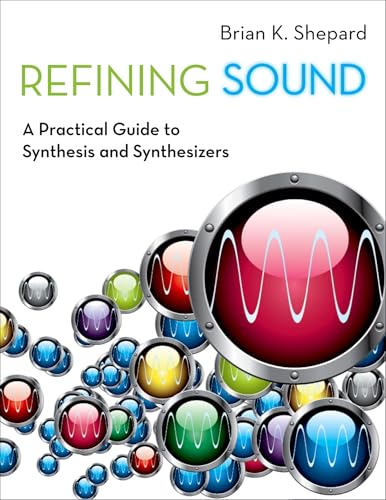
- Practical guide to synthesis fundamentals
- Guided projects and 40+ interactive demonstrations
- Step-by-step examples for creating synth sounds
Best For: Musicians learning to design and refine synthesizer patches
Expressive Analog Lead Voice

- Monophonic analog design with two wavefolding VCOs
- 32 full-size keys with velocity and aftertouch
- 64-step sequencer, arpeggiator, CV, and MIDI connectivity
Best For: Performers seeking tactile analog bass and lead sounds
Expressive All-Rounder

- 37 full-size keys for expressive performance
- Loop recorder and vocal processor included
- Portable design with intuitive color display
Best For: Live performers combining synth parts with vocal effects
Acid Bass Specialist

- Analog bass engine for classic acid tones
- 128 patterns plus Song Mode chaining
- Haptic pads, arpeggiator, saturation, and delay
Best For: Live electronic sets centered on sequenced basslines
Evolving Sound Workstation

- Wave Sequencing 2.0 for evolving sounds
- 64 stereo voices and 14 simultaneous effects
- Set Lists and Smooth Sound Transitions for stages
Best For: Live players building complex layered textures
Portable Analog Soundcraft

- Battery-powered with built-in speaker
- Analog sound shaping and delay
- CV/Gate outputs for hardware rigs
Best For: Expressive portable performers and modular setups
FM Performance Powerhouse
M-VAVE Wireless FM Synthesizer

- Six-operator FM synthesis
- Effects, arpeggiator, and sequencer
- USB, Bluetooth, and 3.5 mm MIDI
Best For: Mobile performers needing versatile FM and MIDI tools
Expressive Novelty Performer

- Touch-sensitive sliding pitch control
- Wah and vibrato performance effects
- 3.5 mm output for amps and speakers
Best For: Novelty acts and visually engaging live performances
Stage-Ready Preset Power – AstroLab 61
For musicians looking at synthesizers for live performances, the Arturia AstroLab offers a streamlined 61-key setup with built-in virtual synthesis, extensive presets, and controls designed for playing rather than managing a complicated rig. Its DAW-free workflow can also help bridge studio and stage work.
Best For: Performers who want a broad palette of classic and modern sounds in a portable stage keyboard.
Pros:
- 61 keys with over 1,300 stated presets and 34 instruments to explore.
- Built-in virtual synthesis supports DAW-free live performance.
- Includes essential controls and Analog Lab Pro software.
- USB connectivity and a portable design suit studio-to-stage setups.
Cons:
- Its 13.22 kg weight may be substantial for some performers to transport.
- The feature set and preset ecosystem may take time to learn fully.
AstroLab is a strong choice when variety, immediate access to sounds, and a simplified live setup matter more than building a rig from separate instruments.
Sequencing Command Center – Elektron Digitone II
The Elektron Digitone II is a compact option among synthesizers for live performances, combining four synth machines, 16-voice polyphony, deep modulation, effects, and a highly programmable 128-step sequencer. It is particularly suited to performers who build arrangements and sound changes directly from hardware.
Best For: Electronic performers who want hands-on sequencing, parameter locks, and flexible digital sound design.
Pros:
- Four synth machines can be used across 16 tracks.
- 16-voice polyphony supports layered and harmonic parts.
- Sequencer includes parameter locks, probability, micro-timing, and Euclidean mode.
- USB Audio and Overbridge support integration with a DAW setup.
Cons:
- The extensive sequencing and modulation options may have a steep learning curve.
- Its compact form emphasizes sequencing control rather than a traditional full-size keyboard experience.
Digitone II stands out for live sets built around evolving patterns, detailed automation, and self-contained electronic arrangements rather than conventional keyboard-led performance alone.
Sound Design Foundations – Refining Sound
Although it is not a synthesizer, Refining Sound can be useful alongside synthesizers for live performances by explaining how synthesis components shape a finished sound. Its guided projects, illustrations, and interactive demonstrations provide a practical foundation for creating and modifying patches.
Best For: Electronic musicians, students, and performers who want to understand synthesis before designing their own sounds.
Pros:
- Explains synthesis in a chronological progression from waveforms through effects.
- Includes guided “Your Turn” projects and more than 40 interactive demonstrations.
- Final chapters provide step-by-step examples for common synthesizer sounds.
Cons:
- It is a 2013 synthesis guide, so it is not a hardware performance instrument.
- Readers need a synthesizer or related tools to apply the techniques directly.
This book is best viewed as a learning companion: it can help performers make more intentional patch choices, even though it does not provide live controls or onboard sounds.
Expressive Analog Lead Voice – Moog Messenger
For players comparing synthesizers for live performances, the Moog Messenger provides a focused monophonic analog voice with two wavefolding VCOs, a sub-oscillator, knob-per-function controls, and full-size expressive keys. Its sequencer, arpeggiator, presets, and broad connectivity add performance flexibility.
Best For: Performers who want hands-on Moog-style bass, lead, and melodic lines from a dedicated monosynth.
Pros:
- Two continuously variable-shape VCOs include sync and frequency modulation, plus a sub-oscillator.
- 32 semi-weighted full-size keys offer velocity and aftertouch.
- Integrated 64-step sequencer and arpeggiator support live movement.
- Includes CV patch points, MIDI DIN, MIDI over USB-C, and external audio input.
Cons:
- Monophonic architecture is designed for one-note-at-a-time parts, not chords.
- At 5.14 kg, it is less lightweight than some compact desktop instruments.
- Its 32-key range may be limiting for performers seeking a larger keyboard.
Messenger is a compelling performance instrument for expressive analog lines, especially when tactile control, aftertouch, sequencing, and CV integration are central to the live setup.
Expressive All-Rounder – Korg MicroKorg2
For musicians seeking synthesizers for live performances, the Korg MicroKorg2 combines 37 full-size keys with hands-on sound editing, a loop recorder, and a vocal processor. Its portable design and intuitive display make it practical for stage setups that require both synth parts and vocal effects.
Best For: Performers who want a portable keyboard synthesizer with vocal processing and live sound-shaping tools.
Pros:
- 37 full-size keys support expressive playing.
- 2.8-inch full-color display, animated parameter guides, and sound categories simplify editing.
- Loop recorder and vocal processor add useful performance capabilities.
- USB connectivity and a portable aluminum design suit mobile setups.
Cons:
- Four-voice polyphony may limit large layered arrangements.
- The feature set may take time to learn for players seeking a simpler instrument.
The MicroKorg2 is a versatile choice when live performers need expressive keys, accessible editing, and integrated vocal effects in one transportable instrument.
Acid Bass Specialist – Donner Essential B1
The Donner Essential B1 is a focused option among synthesizers for live performances, built around an analog bass engine, intuitive step sequencing, and performance-oriented haptic pads. Its pattern memory, arpeggiator, and onboard effects make it well suited to hands-on acid basslines and compact electronic setups.
Best For: Electronic musicians who want an approachable analog bass synthesizer and sequencer for live pattern performance.
Pros:
- Fully analog 1 VCO, 1 VCF, and 1 VCA signal path delivers a straightforward bass-focused design.
- 128 pattern memories and Song Mode support longer musical phrases.
- Haptic performance pads and an eight-mode arpeggiator encourage real-time playing.
- Built-in saturation and delay effects add warmth and character without external pedals.
Cons:
- Its single-oscillator bass-focused architecture is less versatile for broad polyphonic work.
- The compact unit does not provide a traditional keyboard for melodic playing.
The Essential B1 makes the most sense for performers who prioritize sequenced analog bass, quick pattern access, and tactile control over a wider range of synthesis duties.
Evolving Sound Workstation – Korg wavestate
For players comparing synthesizers for live performances, the Korg wavestate offers evolving textures through Wave Sequencing 2.0, extensive modulation, and hands-on knobs and sliders. Its 37 full-size keys, Set Lists, and Smooth Sound Transitions are particularly useful for moving between complex sounds onstage.
Best For: Performers and composers who need evolving layered sounds, deep modulation, and seamless patch changes.
Pros:
- Wave Sequencing 2.0 creates detailed, evolving sound textures.
- 64 stereo voices and 14 simultaneous effects support complex arrangements.
- Set Lists and Smooth Sound Transitions help streamline live set changes.
- 37 full-size keys and hands-on controls balance portability with performance control.
Cons:
- Its advanced sequencing, modulation, and effects may be demanding for beginners.
- The focus on layered sound design may be more than needed for simple lead or bass parts.
The wavestate is a strong stage option for musicians who value rich, evolving patches and smooth transitions, especially when a single compact keyboard must cover sophisticated arrangements.
Portable Analog Soundcraft – Stylophone GENX-2
For musicians seeking synthesizers for live performances, the Stylophone GENX-2 stands out as a battery-powered, speaker-equipped instrument with hands-on analog controls. Its stylus keyboard, expression strip, delay, and CV/Gate outputs make it suitable for spontaneous playing and hardware-based setups.
Best For: Portable live performers and synth players building expressive analog or modular rigs.
Pros:
- Battery operation and built-in speaker support playing away from a studio.
- LFO, resonant low-pass filter, envelope, PWM, and dual sub-octave controls enable detailed tone shaping.
- CV/Gate outputs connect it to modular and semi-modular equipment.
- Expression strip and stylus keyboard allow pitch bends, modulation, and filter sweeps.
Cons:
- Its compact two-octave format may be limiting for players who need a conventional full-range keyboard.
- The stylus-based interface has a different playing feel from standard synthesizer keys.
The GENX-2 is a strong choice when portability, distinctive analog character, and expressive control matter more than traditional keyboard ergonomics. Headphone and audio outputs also make it adaptable for quiet practice or connection to external amplification.
FM Performance Powerhouse – M-VAVE Wireless FM Synthesizer
The M-VAVE FM Synthesizer is a compact option for synthesizers for live performances, combining battery operation, a built-in speaker, onboard effects, sequencing, and several MIDI connection options. Its 27-key layout and preset library make it accessible for live sketching and quick sound selection.
Best For: Portable performers who want FM sounds, sequencing, effects, and flexible MIDI connectivity.
Pros:
- Six-operator FM engine with 32 algorithms supports detailed classic FM tones.
- Includes 128 presets, six effects, an arpeggiator, and a 16-step sequencer.
- USB MIDI, wireless Bluetooth MIDI, and 3.5 mm MIDI input support multiple workflows.
- Battery power, built-in speaker, and compact dimensions suit mobile use.
Cons:
- The silicone keys may feel less conventional than standard synth-action keyboards.
- Its compact design may not suit performers needing extensive hands-on keyboard range.
Choose the M-VAVE when variety and portability are priorities. The combination of FM editing, onboard performance tools, and three MIDI interfaces gives it a broad role as either a standalone instrument, controller, or sound module.
Expressive Novelty Performer – Otamatone Deluxe
The Otamatone Deluxe is an unconventional choice among synthesizers for live performances, using a touch-sensitive stem and facial controls instead of a conventional keyboard. Its wider neck, roughly four octaves per pitch setting, and 3.5 mm stereo output make it practical for playful stage appearances and amplified performance.
Best For: Entertainers, novelty acts, and musicians who want a distinctive visual and expressive performance instrument.
Pros:
- Touch-sensitive stem enables sliding pitch control across a broad note range.
- Face-squeezing wah effect and stem-shaking vibrato add theatrical expression.
- 3.5 mm stereo jack connects to headphones, speakers, and amplifiers.
- Deluxe model includes a wider neck, strap, batteries, and auxiliary cable.
Cons:
- Its unusual stem-based interface is less suited to conventional keyboard-style playing.
- The instrument’s playful design may not fit formal or traditional performance settings.
The Otamatone Deluxe works best when stage personality and visual interaction are part of the performance. It is less of a general-purpose synthesizer than the other options here, but its pitch slides, wah effect, vibrato, and amplifier compatibility give it a memorable live role.
How We Picked the Best Synthesizers for Live Performances
We evaluated these instruments for the demands of real-time performance rather than studio sound design alone. Key considerations included hands-on controls, patch and pattern access, keyboard or touch expressiveness, sequencing capabilities, audio outputs, portability, and how easily each synthesizer can fit into a broader MIDI or hardware rig.
The selection spans full-size stage keyboards, multitimbral digital instruments, analog monosynths, bass-focused sequencers, portable FM and analogue units, and unconventional performance tools. Because these products serve different roles, the best option for one performer may not be the best choice for another.
Quick Comparison
- Best for broad stage versatility: Arturia AstroLab Stage Keyboard
- Best for electronic sequencing: Elektron Digitone II
- Best for analog bass and leads: Moog Messenger
- Best compact keyboard/vocoder: Korg microKORG2
- Best for bass patterns: Donner Essential B1
- Best for evolving digital textures: Korg wavestate
- Best ultra-portable analogue option: Stylophone GENX-2
- Best portable FM experimenter: M-VAVE Wireless FM Synthesizer
- Best novelty performance instrument: Otamatone Deluxe
- Best for learning synthesis concepts: Refining Sound
Key Buying Factors for Synthesizers for Live Performances
Controls and Playability
Look for controls you can reach without menu-diving. Knobs, faders, pads, modulation controls, and a responsive keyboard can make filter sweeps, transitions, and expressive parts easier during a set. Monophonic instruments are excellent for bass and lead lines, while polyphonic models better support chords and layered arrangements.
Sound Architecture and Workflow
Consider whether you prefer immediate analogue synthesis, flexible digital engines, FM tones, wavetable-style movement, or sample-based versatility. Preset depth matters when you need quick changes, while sequencing, pattern memory, and automation are valuable for solo performers and electronic acts.
Connectivity and Stage Reliability
Check the available audio outputs, MIDI connections, USB support, CV/Gate compatibility, headphone monitoring, and power requirements. Battery operation and built-in speakers help with portability, but dedicated line outputs and robust controls are generally more important for amplified performance.
Size, Weight, and Setup Time
A 61-key stage instrument can replace several devices but takes more space. Compact units are easier to transport and can complement a master keyboard, mixer, or sequencer. Confirm that the instrument’s control layout and display are practical under stage lighting.
Who Should Buy Which Synthesizers for Live Performances?
Choose the Arturia AstroLab if you want one polished keyboard for varied live duties. The Elektron Digitone II suits producers who build performances around sequencing, FM synthesis, and intricate electronic patterns. Pick the Moog Messenger for hands-on analogue basses and leads, or the microKORG2 if you want compact keys plus vocal processing.
The Donner Essential B1 is a practical choice for bass-driven sets, while the Korg wavestate is better for expansive, evolving textures. Choose the Stylophone GENX-2 or M-VAVE FM Synthesizer when portability and experimentation matter most. The Otamatone Deluxe is aimed at playful, unconventional performances rather than conventional keyboard replacement. Finally, Refining Sound is most useful for performers who want to strengthen their synthesis knowledge before investing in or mastering new hardware.