COMICA Revo S Wireless Handheld Microphone review: this is a simple, speech-first wireless mic for interviews, reporting, and mobile content.
It focuses on clear voice capture, fast setup, and enough flexibility to move between phones, tablets, and computers.
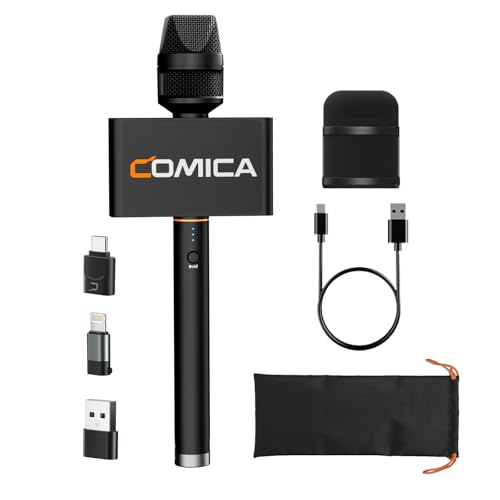
COMICA Revo S Review Summary
If you want a handheld wireless mic that feels made for real-world creator work, the COMICA Revo S Wireless Handheld Microphone makes a strong case for itself.
It is best suited to reporters, vloggers, podcasters, and interviewers who want a more natural “grab it and start talking” workflow than a lavalier kit can provide.
What stands out most is the way COMICA prioritizes speech clarity, device flexibility, and portability over gimmicks.
The 14mm condenser capsule, cardioid pickup, 48kHz/24-bit recording, and one-key CalMix denoise all point to a mic designed to keep voices intelligible in everyday environments, whether you are filming on a busy street, recording campus interviews, or hosting a live stream from a laptop.
The trade-off is straightforward: this is not a full studio solution, and it is not built for multi-speaker recording without extra planning.
Still, for solo presenters and field interviewers, the COMICA Revo S Wireless Handheld Microphone feels like a well-considered tool with practical strengths that matter more than flashy specs.
Scorecard
| Category | Score | Why it matters |
|---|---|---|
| Audio clarity | 9.0 | 14mm condenser capsule with 48kHz/24-bit capture helps deliver detailed, clean speech. |
| Noise reduction | 8.0 | One-key CalMix denoise helps reduce background distraction in interviews and vlogs. |
| Voice pickup focus | 8.0 | Cardioid, unidirectional pickup isolates the speaker and limits off-axis sound. |
| Device compatibility | 9.0 | USB-C receiver plus adapters support phones, tablets, laptops, and PCs. |
| Battery life | 9.0 | Up to 15 hours of use is excellent for long shoots and all-day sessions. |
| Gain control | 8.0 | Three gain levels make it easier to match voice volume and recording distance. |
| Portability and kit | 8.0 | Handheld format with mic flag, sponge, bag, and cable makes it field-ready. |
Bottom line: if you want a versatile handheld wireless mic for speech recording, the COMICA Revo S Wireless Handheld Microphone is a smart buy for mobile creators who value convenience without giving up vocal clarity.
Key Features and Specifications of COMICA Revo S
The COMICA Revo S Wireless Handheld Microphone is built around a simple creator-friendly idea: make voice recording easier without forcing you into a complicated setup.
Here are the key specs and features that shape the buying decision.
| Specification | Details |
|---|---|
| Brand | COMICA |
| Model | Revo S |
| Microphone form factor | Handheld |
| Connectivity technology | USB |
| Connector type | USB Type-C |
| Polar pattern | Unidirectional / cardioid |
| Power source | Battery powered |
| Battery capacity | Approx. 350mAh lithium battery |
| Battery life | Up to 15 hours |
| Number of channels | 1 |
| Compatible devices | Laptop, smartphone, tablet, PC |
| Enclosure material | Metal and plastic |
| Color | Black |
- 14mm condenser capsule for detailed speech pickup
- 48kHz/24-bit recording for cleaner, more refined voice capture
- One-key CalMix denoise to help reduce environmental noise
- 3-level gain adjustment for easier level matching
- Built-in lithium battery for cable-free mobility
- USB-C receiver with included Lightning and Type-A adapters
- Includes microphone flag, mic sponge, charging cable, and carrying bag
From a category perspective, those specifications line up exactly with the job this microphone is trying to do.
It is not a general-purpose music microphone.
It is a voice-focused wireless handheld mic for creators who care more about clear dialogue than about wide ambient capture or advanced studio routing.
Pros and Cons of COMICA Revo S
Every buyer should evaluate the COMICA Revo S Wireless Handheld Microphone pros and cons before deciding.
Its strengths are easy to spot, but the limitations also matter depending on how you record.
| Pros | Cons |
|---|---|
| Clear speech-focused sound from the 14mm condenser and cardioid pickup | Lightning users may need an extra OTG-compatible adapter in some setups |
| Useful denoise feature for noisier public environments | Single-channel design is not ideal for two-person or multi-mic workflows |
| Three gain levels simplify quick level adjustment | Best suited to speech rather than music or immersive ambient recording |
| Strong battery life for longer shoots | The handheld form factor is less discreet than a lavalier mic |
| Broad compatibility with modern mobile and computer devices | Cardioid pickup requires good mic positioning for best results |
| Helpful accessory bundle for field use | Not the best choice if you need simultaneous dual-speaker capture |
The biggest strength is simplicity. The biggest drawback is that it is purpose-built, so it does not try to solve every recording scenario.
Who Should Buy COMICA Revo S?
The COMICA Revo S Wireless Handheld Microphone fits buyers who want an easy path to better voice capture without carrying a full camera audio rig.
It is especially attractive if you record on a phone, move between devices often, or need a microphone that can be shared across different workflows.
- Reporters and interviewers who need a dependable handheld mic for on-location speech capture
- Vloggers and YouTubers who want a more polished on-camera presentation
- Podcasters and live streamers who work from laptops, tablets, or phones
- Students, educators, and event presenters who need a portable mic for speaking to camera
- Mobile creators who switch between smartphones, tablets, and computers
You should probably skip it if you need hands-free operation, want to record two speakers at once without extra gear, or need a microphone mainly for music.
In those cases, a lavalier system, dual-channel wireless set, or desktop USB mic may be the better fit.
How It Performs for Interviews and Reporting
This is the most important category for the COMICA Revo S Wireless Handheld Microphone, and it performs well where it counts.
The handheld design is a major advantage for street interviews, news-style reporting, campus coverage, and conversational content because the speaker can naturally hold the mic close to the mouth.
That proximity matters.
In practice, handheld interview microphones usually sound fuller and more present than budget clip-on options because the source stays consistent.
COMICA reinforces that advantage with a cardioid, unidirectional pickup pattern, which helps emphasize the speaker and reduce sound from the sides and rear.
The CalMix denoise feature is also relevant here.
In a real-world interview environment, background hum, traffic, room echo, and casual crowd noise are common.
One-key noise reduction will not remove every problem, but it can make dialogue more usable and save you time in post-production.
For reporting, the main practical benefit is confidence.
You can hand the mic to a subject, keep the audio source obvious on camera, and avoid the awkwardness of clipping a mic onto clothing.
That makes the COMICA Revo S Wireless Handheld Microphone a strong fit for creators who want a more broadcast-style workflow.
Compatibility With Phones, Tablets, and Computers
Compatibility is one of the Revo S’s best selling points.
The included USB-C receiver makes it relevant for a wide range of modern devices, and the included adapters extend its usefulness across multiple setups.
It is designed to work with iPhone 16, iPhone 15, Android smartphones, iPads, laptops, computers, and tablets.
That broad device support is a big deal because many wireless mic kits are tied too tightly to one port type or one ecosystem.
The main caution is simple: confirm that your device supports USB-C audio input or OTG where required.
Lightning-based devices may need a separate adapter solution, and buyers should not assume every phone or tablet will work identically out of the box.
For modern USB-C phones and computers, though, the setup should be far less restrictive than older wireless systems.
If you create content across multiple devices, this flexibility can be more valuable than a narrow feature upgrade elsewhere.
It is one of the reasons the COMICA Revo S Wireless Handheld Microphone review trends positive for mobile-first buyers.
Battery Life and On-Location Usability
Battery life is another clear win.
COMICA rates the built-in battery for up to 15 hours of use, which is excellent for a handheld wireless mic in this class.
A long battery window matters more than many buyers realize, especially if you record interviews, events, or full-day content shoots.
The approximate 350mAh lithium battery is not the headline feature by itself, but the usable runtime is what matters.
Long sessions become easier when you do not have to think about charging between every recording block.
That is especially useful for journalists, educators, and creators covering multiple locations in a single day.
The included carrying bag, mic sponge, microphone flag, and charging cable also improve portability.
This is not just a microphone; it is a small field kit.
That matters when your gear needs to travel, be shared, or be packed quickly between shoots.
For mobile use, the Revo S is genuinely convenient. It gives you enough battery confidence and accessory support to feel like a practical everyday tool instead of a niche gadget.
Using the CalMix Denoise and Gain Controls
The Revo S gives you three gain levels, and that simple control choice is a good one.
Too many low-cost microphones make level matching harder than it should be, which leads to clipped voices or recordings that are too quiet.
Here, you get a straightforward way to adapt to different speakers and environments.
That is useful when interview subjects speak softly, when a host has a louder delivery, or when you move from a quiet room to a busier outdoor area.
You may not get the precision of a full mixer, but you do get enough control to stay in a usable range without complicated setup.
The CalMix denoise function is similarly practical.
Think of it as a first-pass cleanup tool, not a miracle fix.
It is best used to tame background noise rather than replace proper mic technique.
If you keep the speaker in front of the cardioid capsule and stay reasonably close, the results should be noticeably better than leaving noise untreated.
That combination of gain control plus denoise is important because it makes the microphone easier to recommend to beginners.
You do not need to be an audio engineer to get decent speech recordings, which is exactly what many buyers want from a wireless handheld microphone.
What’s Included in the Box
A good accessories bundle can change how useful a microphone feels on day one, and the COMICA Revo S Wireless Handheld Microphone includes enough to get started quickly.
- Wireless handheld microphone
- USB-C receiver
- Lightning adapter
- Type-A adapter
- USB-C charging cable
- Microphone flag
- Microphone sponge
- Carrying bag
That package is especially appealing for field users.
The mic flag helps with a more broadcast-style look, the sponge can help reduce handling and airflow issues, and the bag makes it easier to keep everything together.
For buyers comparing wireless mic kits, this bundle gives the Revo S a more complete feel than barebones options.
Comparisons and Alternatives to Consider
If you are deciding whether the COMICA Revo S Wireless Handheld Microphone is the right buy, it helps to compare it against other common audio categories.
The right choice depends less on brand loyalty and more on how you actually record.
- Wireless lavalier microphone kits such as DJI Mic or Rode Wireless line options are better if you want hands-free movement and a smaller on-camera footprint.
- Shotgun microphones are a better match for camera-mounted directional recording and controlled filming setups.
- Dual-channel wireless mic systems are more suitable for two-speaker interviews or podcasts with multiple voices.
- USB desktop microphones are better for studio streaming, voiceovers, and podcasting from a fixed desk.
Compared with those alternatives, the Revo S stands out because it blends handheld confidence, portable convenience, and broad device support.
If your content style involves asking questions, handing the mic to someone, or recording on the move, this format can be more natural than a lav or desk mic.
If you want to compare similar listings, you can also look at COMICA Revo S Wireless Handheld Microphone, wireless lavalier microphone kit, dual-channel wireless microphone system, and USB desktop microphone.
Is COMICA Revo S Worth It?
Yes, for the right buyer, the COMICA Revo S Wireless Handheld Microphone is worth it.
It is a practical, creator-friendly solution for interviews, reporting, mobile video, and speech-first content where clear voice capture matters more than fancy studio features.
What makes it appealing is the balance of good audio fundamentals, easy compatibility, long battery life, and useful accessories.
It does not try to be everything, and that is actually a strength.
The handheld design, cardioid pickup, 48kHz/24-bit recording, CalMix denoise, and 3-level gain control all support one clear purpose: making speech recording easier and more dependable.
The limitations are also clear.
It is not the best choice for two-person interviews without extra planning, it is not ideal for music, and some Lightning users may need to check adapter compatibility carefully.
But if your goal is clean dialogue on phones, tablets, laptops, or PCs, those trade-offs are reasonable.
Final verdict: the COMICA Revo S Wireless Handheld Microphone is a strong buy for mobile creators who want an uncomplicated wireless mic with real-world versatility.
If you want a handheld interview mic that is easy to use and built for speech, this one deserves a close look.