If you need to feed multiple headphones from one source without sacrificing control or clarity, compact headphone distribution amplifiers are an easy fix. They’re especially useful in small studios, podcast setups, and rehearsal rooms where space is limited.
This roundup focuses on compact, practical options that make it simpler to share monitoring, manage levels, and keep setups organized.
Best 10 Compact Headphone Distribution Amplifiers Picks for 2026
Compact Desktop 4-Channel Splitter
Mackie HM-4 4-Channel Headphone Amplifier

- Four independent headphone outputs
- Works with 1/4-inch or 1/8-inch sources
- Compact metal body for easy placement
Best For: Small studios and rehearsal monitoring
Stackable Studio Four-Channel Amp
ART HeadAMP4 Eight Output Stereo Headphone Amplifier

- Four-channel stereo headphone amp
- 1/8-inch and 1/4-inch I/O support
- Stackable metal case for studio use
Best For: Home and project studios
Dual-Input Monitoring Hub
Samson QH4 4-Channel Headphone Amplifier

- Four independent stereo headphone channels
- Two balanced inputs plus aux in/out
- Individual volume control for each listener
Best For: Music production and podcast monitoring
Mini Road-Ready Four-Output Amp
Pyle PHA40 Portable Stereo Headphone Amplifier

- Four headphone outputs with individual level control
- Compact size for portable setups
- Ultra-low-noise audio performance
Best For: On-stage and portable studio monitoring
Compact 4-Channel Metal Pick
Rockville RHPA4 4-Channel Headphone Amp

- Supports up to 8 headphones across 4 channels
- Stereo/mono switch with individual volume knobs
- Compact metal body with USB-A power
Best For: Small studios and portable monitoring setups
Mini Stage-Ready Monitor Pick
HA400 4-Channel Metal Stereo Audio Amplifier
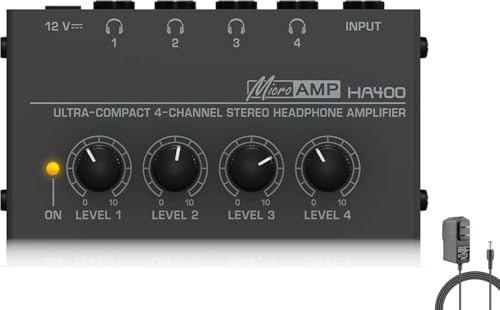
- Compact 4-channel design for portable monitoring
- Low-noise chip with independent volume control
- Powered by included 12V DC adapter
Best For: Stage, studio, karaoke, and travel monitoring
Most Flexible Input Pick
4-Channel Stereo/Mono Amp Splitter with RCA

- RCA, 3.5mm, and 6.35mm inputs for broad compatibility
- Four channels with separate volume and mute controls
- Stereo/mono switching in an aluminum alloy body
Best For: Recording spaces needing flexible source connections
Rack-Mount Monitor Hub
8-Channel Headphone Mixing Distribution Amp

- 8 channels with 16 headphone outputs
- Mono/Stereo modes and independent channel control
- 1U rack design with LED metering
Best For: studio and live monitoring racks
Portable 8-Output Splitter
Headphone Amp with Mono/Stereo

- 8 stereo channels with independent volume knobs
- Includes 6.35mm to 3.5mm adapter plugs
- Compact metal build for travel and studio use
Best For: portable studio, stage, and rehearsal sharing
Ultra-Compact 4-Channel Pick
Mini Metal Stereo Headphone Amp

- Four headphone outputs from one stereo input
- Independent volume control on each channel
- Ultra-compact metal body for desktop setups
Best For: small studios and home monitoring
Compact Desktop 4-Channel Splitter – Mackie HM-4 4-Channel Headphone Amplifier
For compact headphone distribution amplifiers, the Mackie HM-4 keeps things simple: it takes a 1/4-inch or 1/8-inch source and feeds up to four listeners, each with their own volume control. It is built for tracking sessions and rehearsals where everyone needs a personal mix knob without adding much bulk to the setup.
Best For: Small studios, rehearsals, and shared monitoring setups that need an ultra-compact four-output amp.
Pros:
- Drives four headphones from either 1/4-inch or 1/8-inch outputs
- Independent level control for each listener
- Very compact metal build for desk, rack, or stand mounting
- Plug-and-play operation with no power supply hassle
Cons:
- Limited to four outputs
- Basic splitter-style design rather than a feature-heavy mixer
If you want a straightforward way to distribute headphone audio in a tight space, the HM-4 is one of the easiest options to place and use.
Stackable Studio Four-Channel Amp – ART HeadAMP4 Eight Output Stereo Headphone Amplifier
The ART HeadAMP4 is a practical pick in compact headphone distribution amplifiers if you want a low-noise, low-distortion way to feed multiple listeners. It supports 1/8-inch and 1/4-inch inputs and outputs, and its stackable metal case makes it easy to fit into a home or project studio.
Best For: Home and project studios that want a sturdy, stereo four-channel headphone amp with flexible connectors.
Pros:
- 8 output stereo headphone amp with four channels
- 1/8-inch and 1/4-inch inputs and outputs
- Lower noise and lower distortion design
- Stackable extruded metal enclosure
Cons:
- Not the most compact unit in the group
- Wired power only
For studios that value flexible connections and a durable chassis, the HeadAMP4 is a dependable distribution amp with a straightforward layout.
Dual-Input Monitoring Hub – Samson QH4 4-Channel Headphone Amplifier
Among compact headphone distribution amplifiers, the Samson QH4 stands out for straightforward four-channel monitoring with individual volume control on each headphone output. It adds two balanced 1/4-inch inputs plus a stereo 1/8-inch aux input and output, making it a flexible option for music production, podcasting, or shared listening.
Best For: Creators who want a lightweight four-channel amp with multiple input options and separate listener volume control.
Pros:
- Four independent 1/4-inch stereo headphone channels
- Individual volume control for each output
- Two balanced 1/4-inch inputs plus 1/8-inch aux in/out
- Lightweight design with a 2-year limited warranty
Cons:
- Wired-only operation
- No advanced noise-control features listed
If you need a clean, flexible monitoring box for a shared session, the QH4 offers the input/output options and per-channel control that matter most.
Mini Road-Ready Four-Output Amp – Pyle PHA40 Portable Stereo Headphone Amplifier
If you need compact headphone distribution amplifiers for portable use, the Pyle PHA40 is built to power up to four headphones from a single source while keeping the chassis small. Each output has its own level control, and the unit is sized for road work, on-stage monitoring, or a cramped studio desk.
Best For: Portable monitoring setups and small studios that need four headphone feeds in a compact enclosure.
Pros:
- Powers up to four headphones at once
- Independent volume control for each output
- Compact 4.07 x 1.18 x 2.24-inch size
- Ultra-low-noise design for solid audio quality
Cons:
- Plastic enclosure instead of metal
- Uses a 1/4-inch TRS source input only
- Tube amplifier type may not suit every user preference
For performers and engineers who need a small, easy-to-carry distribution amp, the PHA40 gives you the core features without taking much space.
Compact 4-Channel Metal Pick – Rockville RHPA4 4-Channel Headphone Amp
If you need compact headphone distribution amplifiers for a small studio, podcast setup, or portable recording rig, the Rockville RHPA4 keeps things simple and practical. It gives you four channels, stereo/mono switching, and dual headphone outputs per channel so multiple listeners can monitor from one source.
Best For: Small teams that need a rugged, USB-powered headphone amp with flexible stereo/mono monitoring and individual level control.
Pros:
- Four channels with both 1/4" and 3.5mm outputs, supporting up to 8 headphones.
- Individual volume knob on each channel for user-specific monitoring levels.
- Stereo/mono toggle adds flexibility for studio or live use.
- Compact metal housing with rubber feet makes it easy to place on a desk or rack surface.
Cons:
- USB-A power makes it better suited to desk, laptop, or adapter-based setups than fully standalone use.
- No extra input format options are listed beyond its monitoring-focused design.
Overall, the RHPA4 is a straightforward choice when you want a durable, small-format headphone distribution amp for shared monitoring. Its mix of compact size, dual outputs, and per-channel control makes it especially useful in simple studio and podcast environments.
Mini Stage-Ready Monitor Pick – HA400 4-Channel Metal Stereo Audio Amplifier
For buyers comparing compact headphone distribution amplifiers, this HA400-style 4-channel unit stands out for its tiny footprint and stage-friendly power setup. It is designed to power up to four pairs of headphones, with individual volume control and a low-noise operational chip for cleaner monitoring.
Best For: Musicians and creators who want a small, metal headphone amp for studio, stage, karaoke, or travel use.
Pros:
- Ultra-compact size makes it easy to carry for road or stage use.
- Supports up to four headphones with independent volume control.
- Low-noise JRC4580 operational chip is aimed at cleaner, higher-fidelity output.
- Included 12V DC adapter keeps the setup simple for studio and live applications.
Cons:
- Only one headphone jack format is listed, so it may not suit mixed-plug setups.
- Its feature set is focused on core monitoring rather than broad input flexibility.
This model is a practical pick if portability matters as much as monitoring performance. It offers the basic features most users need in a compact distribution amp without taking much room on a desk or gig bag.
Most Flexible Input Pick – 4-Channel Stereo/Mono Amp Splitter with RCA
If you want compact headphone distribution amplifiers with lots of connection options, this 4-channel model is the most flexible of the group. It accepts RCA, 3.5mm, and 6.35mm inputs, then feeds four 3.5mm and four 6.35mm outputs with separate volume and mute controls per channel.
Best For: Users who need a small headphone amp with broad input compatibility and detailed control for recording or rehearsal.
Pros:
- RCA, 3.5mm, and 6.35mm inputs make it easy to connect to different audio sources.
- Four independent volume knobs give each channel its own listening level.
- Stereo/mono switching and separate mute buttons add practical control.
- Aluminum alloy construction and 5V adapter power support a stable, portable setup.
Cons:
- Its broader feature set may be more than needed for very basic headphone sharing.
- At 4.5 x 9 x 2 inches, it is still compact but not the smallest option here.
For buyers who care about connectivity as much as channel count, this unit offers the most adaptable front end. It fits well in recording rooms and rehearsal spaces where different devices may need to feed the same monitoring system.
Rack-Mount Monitor Hub – 8-Channel Headphone Mixing Distribution Amp
If you need compact headphone distribution amplifiers for a studio or live rack, this 8-channel unit is built for flexible multi-listener monitoring. It offers dual input modes, independent channel control, and 16 headphone outputs so multiple people can hear different mixes with clean routing and real-time level visibility.
Best For: Studio engineers, live sound setups, and mobile racks that need multiple discrete headphone feeds.
Pros:
- 8 high-power amplifier channels with up to 16 headphone outputs
- Mono/Stereo switching and dedicated rear inputs for flexible routing
- 6-segment LED meters on all 8 channels for quick level checks
- 1U rack-mount design for professional integration
Cons:
- Rack-mount form factor may be less convenient for simple desktop use
- Built for wired monitoring only
- More capable than needed if you only need a basic 2- or 4-output splitter
This is the most feature-rich option in the group, with stronger focus on routing flexibility and monitoring control than on portability. If your priority is managing several headphone feeds in a professional setup, it stands out as a practical distribution hub.
Portable 8-Output Splitter – Headphone Amp with Mono/Stereo
For buyers comparing compact headphone distribution amplifiers, this 8-channel model focuses on portability and straightforward multi-user listening. It works as both a headphone amp and audio distributor, with independent volume control per output and mono/stereo switching for flexible use in studio, stage, or mobile setups.
Best For: Portable recording, rehearsals, and shared listening situations where independent output volume matters.
Pros:
- 8 stereo amplifier channels with independent volume control
- Supports 1/4" and 1/8" plugs with included 6.35mm to 3.5mm adapters
- Mono/Stereo switch for different source types
- Metal aluminum-alloy build with a portable footprint
Cons:
- Uses a single audio input feeding 8 outputs, so it is more splitter than mixer
- 1/8" devices require a conversion plug
- No built-in rack-mount design
This model is a solid choice when you want simple, portable distribution without giving up individual volume trims. It is less elaborate than a rack system, but that can be an advantage if your setup needs to stay small and easy to move.
Ultra-Compact 4-Channel Pick – Mini Metal Stereo Headphone Amp
If you want compact headphone distribution amplifiers for a smaller setup, this 4-channel unit keeps things simple and space-saving. It takes one stereo input and sends it to four TRS headphone outputs, making it a practical fit for desktop monitoring, small recording sessions, and casual group listening.
Best For: Small studios, podcast setups, band practice, and home users who only need four headphone feeds.
Pros:
- Four TRS outputs from one stereo input
- Independent volume control on each channel
- Low-noise JRC4580 op amp for clear stereo sound
- Very compact metal design at 90 × 55 × 40 mm
Cons:
- Only supports up to four headphone pairs
- Best suited to 32–100Ω headphones
- More limited than larger distribution amps for expanded monitoring rigs
This is the most space-conscious option here, and it makes sense when the priority is a small footprint rather than maximum routing flexibility. For basic multi-headphone sharing with individual level control, it covers the essentials well.
How We Picked These Compact Headphone Distribution Amplifiers
We focused on Compact Headphone Distribution Amplifiers that make sense for real-world use: small footprints, enough outputs for typical sessions, straightforward connectivity, and dependable power for shared monitoring. Priority also went to models that offer practical input choices, sturdy builds, and controls that help avoid constant cable swapping.
Quick Comparison
For simple two- to four-person monitoring, smaller units are usually the most flexible and easiest to place on a desk or rack shelf. If you regularly record bands, panels, or classes, an 8-channel option may be worth the extra size because it reduces the need for splitters and daisy-chaining. In general, more outputs mean more convenience, but also more attention to gain staging and cable management.
Key Buying Factors for Compact Headphone Distribution Amplifiers
Channel Count and Output Type
Choose a unit with enough independent outputs for your normal sessions, plus a little headroom. Check whether the outputs are 1/4-inch, 3.5mm, or a mix, since that affects compatibility with consumer headphones and studio models.
Input Flexibility
Many Compact Headphone Distribution Amplifiers support 1/4-inch, 3.5mm, RCA, or multiple input formats. More options make integration easier with interfaces, mixers, and portable playback devices.
Stereo Vs. Mono Support
If you only need a shared cue mix, mono can be fine. For music tracking, editing, or immersive playback, stereo support is usually the better choice. Units with stereo/mono switching offer the most flexibility.
Power, Noise, and Headroom
Look for enough output power to drive your headphones cleanly at comfortable levels. A good distribution amp should stay quiet, avoid harsh distortion, and preserve the mix even when multiple listeners are connected.
Build and Placement
Metal housings, compact footprints, and optional mounting features can matter more than they seem. In tight workspaces, a durable chassis and easy-access controls make the system simpler to live with.
Who Should Buy Which Compact Headphone Distribution Amplifiers?
Solo creators and small teams usually do best with 4-channel units, especially if portability matters. Home studios and podcast rooms benefit from compact models that are easy to move and set up quickly. Larger rehearsal spaces, classrooms, and production rooms should consider higher-channel headphone distribution amplifiers for better scalability and less cable clutter.
If your priority is convenience, choose the smallest model that comfortably covers your normal group size. If your priority is growth, step up one tier so you do not outgrow the system too quickly.