The best RAID enclosures turn separate SATA drives into a more manageable external storage system for backups, media libraries, workstation files, and expandable desktop storage.
This roundup compares 10 RAID enclosures across two- to eight-bay designs, with attention to RAID options, connection speeds, cooling, compatibility, and everyday usability.
Best 10 Raid Enclosures Picks for 2026
Compact RAID Companion
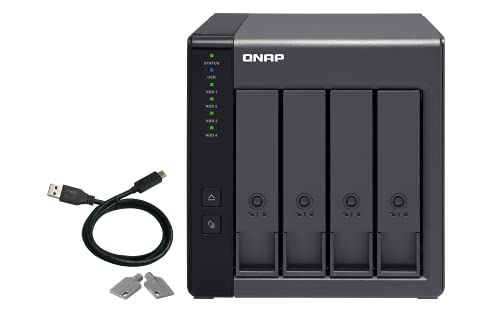
- Four-bay USB Type-C DAS with hardware RAID
- Supports RAID 0, 1, 5, JBOD, and individual disks
- Works with Windows, macOS, Linux, and compatible QNAP NAS devices
Best For: QNAP users and general-purpose external RAID storage
High-Capacity Five-Bay Pick

- Eight RAID and disk-management modes, including RAID 5
- Five 3.5-inch bays support up to 110TB total
- 80mm cooling fan and built-in 150W power supply
Best For: Large media collections and capacity-heavy desktop storage
Fast Individual-Disk DAS

- USB 3.2 Gen 2 Type-C connectivity up to 10Gbps
- Four independent disks with no RAID function
- Tool-free, hot-swappable trays and quieter cooling design
Best For: Fast plug-and-play storage expansion without RAID
Flexible Four-Bay RAID Value

- Eight modes include RAID 0, 1, 3, 5, 1/10, Clone, and JBOD
- Up to 96TB across four 3.5-inch SATA drives
- Dual switch-controlled fans and USB A/C connectivity
Best For: Power users needing configurable RAID and active cooling
High-Capacity Pick
ORICO 5-Bay 20Gbps RAID Enclosure
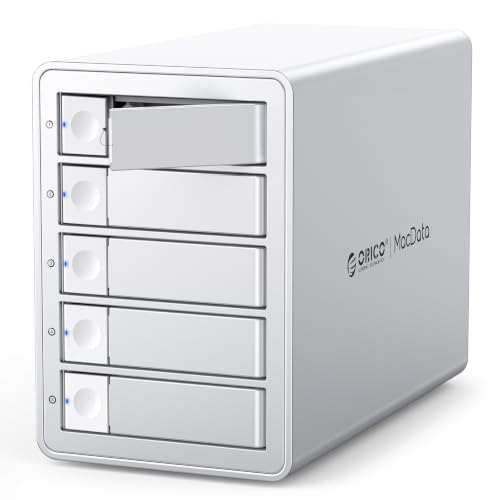
- Five bays and up to 130TB total capacity
- Six RAID modes, including RAID 5 and RAID 10
- USB 3.2 Gen 2x2 with hot-swapping and 150W power
Best For: Large media libraries, professional storage, and enterprise-style workflows
Compact Choice
CENMATE 2-Bay 10Gbps RAID Enclosure

- Two bays for 2.5-inch or 3.5-inch SATA drives
- Four RAID modes with 10Gbps USB connectivity
- Up to 20TB per drive and USB-A/USB-C cables
Best For: Personal storage and small-business desktop setups
Flexible Expansion Pick

- Eight modes, including RAID 5, RAID 10, and CLONE
- Up to 88TB using four 22TB 3.5-inch drives
- 150W power supply and 80mm cooling fan
Best For: High-capacity backups and multi-drive direct-attached storage
Best Compact Four-Bay RAID Enclosure
CENMATE 4-Bay Aluminum RAID Enclosure

- Four bays for 2.5- and 3.5-inch SATA drives
- Eight selectable RAID and storage modes
- USB 3.0, eSATA, cooling fans, and 80TB capacity
Best For: Compact personal or small-office DAS storage
Best High-Capacity Five-Bay RAID Enclosure

- Five bays with up to 110TB stated capacity
- Eight hardware RAID and storage modes
- 150W internal power supply with 80mm cooling fan
Best For: Large backups, media libraries, and workstation storage
Best Eight-Bay RAID Enclosure
CENMATE 8-Bay Aluminum RAID Enclosure

- Eight bays and up to 160TB stated capacity
- Eight selectable RAID and storage modes
- Dual fans, USB 3.0, and high-current power adapter
Best For: High-capacity desktop DAS and multi-drive storage
Compact RAID Companion – QNAP TR-004
QNAP TR-004 4 Bay USB Type-C Direct Attached Storage (DAS) with hardware RAID (Diskless)
Check Price On AmazonThe QNAP TR-004 is a practical choice among raid enclosures for users who want four drive bays, hardware RAID, and direct USB storage without setting up a NAS. It works with Windows, macOS, and Linux and can also provide external backup or capacity expansion for a compatible QNAP NAS.
Best For: Home users, small offices, and QNAP owners who need flexible four-drive external storage.
Pros:
- Hardware RAID supports RAID 0, 1, 5, JBOD, and individual disks.
- USB Type-C direct-attached connectivity works with Windows, macOS, and Linux.
- Lockable bays and a metal enclosure add practical durability and drive security.
- Supports four 3.5-inch SATA drives and includes both Type-C-to-Type-A connectivity and mounting screws.
Cons:
- It is diskless, so drives must be purchased separately.
- It has compatibility and usage limitations with certain QNAP NAS models and cannot combine its storage pool with the connected NAS.
- NAS applications cannot be installed on the enclosure.
The TR-004 stands out for straightforward hardware RAID and QNAP integration. Check NAS compatibility carefully if you plan to use it as an expansion unit rather than as a computer-connected DAS.
High-Capacity Five-Bay Pick – ORICO 5-Bay RAID Enclosure
The ORICO five-bay model is one of the more flexible raid enclosures for expanding desktop storage. It supports eight modes, including RAID 5, and can house five 3.5-inch SATA drives for up to 110TB when configured with supported disks.
Best For: Video libraries, engineering projects, and users who need substantial multi-drive capacity with RAID flexibility.
Pros:
- Offers eight modes: RAID 0, 1, 3, 5, 10, JBOD, CLONE, and CLEAR.
- Five bays support 3.5-inch SATA disks and up to 22TB per disk.
- An 80mm fan, front and rear vents, and an aluminum enclosure support heat management.
- Includes a 150W built-in power supply and works with Windows, macOS, and Linux.
Cons:
- It uses USB 3.0, with a stated transfer rate of up to 5Gbps.
- Changing RAID modes may require data backup beforehand.
- The one-year warranty is shorter than some alternatives in this roundup.
With five bays and RAID 5 support, the ORICO enclosure is aimed at capacity-focused setups. Its cooling and integrated power supply make it suitable for sustained desktop use, while the broad mode selection rewards careful configuration.
Fast Individual-Disk DAS – TerraMaster D4-320
The TerraMaster D4-320 is a strong option among raid enclosures when speed and simple individual-disk access matter more than RAID. Its USB 3.2 Gen 2 Type-C connection supports up to 10Gbps, while four bays provide a large, plug-and-play storage expansion for Windows, Mac, and Linux systems.
Best For: Users who want fast external access to up to four separate SATA drives without managing a RAID array.
Pros:
- USB 3.2 Gen 2 supports up to 10Gbps and can reach high combined speeds with four drives.
- Supports four individual disks, including 3.5-inch SATA HDDs, 2.5-inch SATA HDDs, and 2.5-inch SATA SSDs.
- Tool-free trays, push-lock retention, and hot swapping simplify drive management.
- Temperature-controlled cooling, sound-absorbing panels, and vibration damping help reduce operating noise.
Cons:
- It has no RAID function, so it does not provide RAID redundancy or pooling.
- The enclosure is diskless and requires separate drives.
- Actual performance depends on the installed drives and connected computer interface.
The D4-320 is best understood as a fast four-bay DAS rather than a traditional RAID solution. Choose it for flexible, independent disks and convenient hot swapping; select a RAID-capable enclosure if redundancy is essential.
Flexible Four-Bay RAID Value – MAIWO 4-Bay RAID Enclosure
The MAIWO four-bay unit is a versatile choice among raid enclosures, combining eight configuration modes with USB-C connectivity and cooling for 3.5-inch SATA drives. It can accommodate up to four 24TB disks, giving it a stated maximum capacity of 96TB.
Best For: Professionals, businesses, and power users building a flexible external storage or backup system.
Pros:
- Supports Normal, RAID 0, 1, 3, 5, 1/10, Clone, and Large/JBOD modes.
- USB A/C 3.1 connectivity provides transfer speeds up to 5Gbps.
- Two switch-controlled cooling fans help manage temperatures during intensive use.
- Includes USB-A-to-USB-C and USB-C-to-USB-C cables, plus a screwdriver and screws.
Cons:
- It is limited to four 3.5-inch SATA drives and is diskless.
- The stated interface speed is up to 5Gbps, below newer 10Gbps DAS options.
- Warranty and return terms include specific reporting, packaging, and possible return-shipping requirements.
The MAIWO is appealing when configuration flexibility and cooling are priorities. Its multiple RAID modes suit varied workflows, but buyers should review the supplied warranty and return conditions before purchasing.
High-Capacity Pick – ORICO 5-Bay 20Gbps RAID Enclosure
For demanding storage setups, this ORICO enclosure is one of the most capable RAID enclosures in the group. It combines five drive bays, a USB 3.2 Gen 2×2 interface, six RAID modes, and support for up to 130TB across 3.5-inch SATA drives. Note that Thunderbolt connections may limit storage performance to around 10Gbps, while USB4 can support the enclosure’s full 20Gbps bandwidth.
Best For: Video editors, enterprise IT teams, AI and research professionals, and users managing large multi-drive archives.
Pros:
- Supports RAID 0, 1, 5, 10, JBOD, and Normal modes.
- Five bays can accommodate up to 130TB total using drives up to 26TB each.
- Built-in 150W power supply, hot-swapping, and multi-layer cooling design.
- Works with Windows, macOS, and Linux and supports 2.5-inch and 3.5-inch SATA drives.
Cons:
- Changing or configuring RAID modes erases drive contents, so backups are essential.
- Full 20Gbps performance requires a compatible USB4 connection; Thunderbolt may be limited to about 10Gbps.
- The built-in fan is rated at 45dB, which may be noticeable in quiet spaces.
This is the strongest choice here for capacity, RAID flexibility, and demanding workflows. Its five-bay design and professional feature set make it more appropriate for serious storage expansion than for a basic desktop backup setup.
Compact Choice – CENMATE 2-Bay 10Gbps RAID Enclosure
This CENMATE model is a practical two-drive option for shoppers who want RAID functionality without a larger multi-bay enclosure. Among these RAID enclosures, it stands out for its ASM1352R chip, 10Gbps USB connectivity, tool-free design, and support for both 2.5-inch and 3.5-inch SATA HDDs and SSDs.
Best For: Individuals and small businesses that need compact mirrored or expanded external storage.
Pros:
- Offers RAID 0, RAID 1, Normal, and JBOD modes.
- Supports two drives with capacities up to 20TB per disk.
- Includes USB-A and USB-C connectivity and supports Windows, Mac, and Linux.
- Aluminum construction and a built-in fan help manage drive temperatures.
Cons:
- Changing the RAID array can cause data loss, and the reset button must be held for five seconds after resetting the array.
- macOS does not provide RAID software support according to the supplied notes.
- Fan noise is approximately 40–50dB and may bother noise-sensitive users.
Choose this enclosure when two bays are sufficient and you value a straightforward, space-saving setup. It provides useful RAID basics, though its smaller capacity and noticeable fan make it less suited to large or silent workstation environments.
Flexible Expansion Pick – ORICO 4-Bay RAID Enclosure
This four-bay ORICO unit offers broad configuration flexibility for users who need more capacity than a two-bay enclosure but do not require a 20Gbps interface. It supports eight modes, including RAID 0, 1, 3, 5, 10, JBOD, CLONE, and CLEAR, with up to 88TB of total storage from four 3.5-inch SATA drives.
Best For: Large backups, engineering projects, high-definition video storage, and multi-drive direct-attached expansion.
Pros:
- Eight configuration modes provide more flexibility than the other listed models.
- Supports up to 22TB per disk and 88TB total capacity.
- Built-in 150W power supply supports multi-drive reading without a large external adapter.
- 80mm cooling fan, front and rear vents, trayless access, and an independent safety lock.
Cons:
- USB 3.0 connectivity is rated at up to 235MB/s, below the 10Gbps and 20Gbps interfaces in the other options.
- It supports 3.5-inch drives rather than the 2.5-inch and 3.5-inch compatibility offered by the other listed enclosures.
- RAID mode changes and drive configuration should be approached carefully to protect stored data.
This is a sensible middle ground for capacity-focused buyers who prioritize RAID versatility and cooling over maximum interface speed. The CLONE mode, high total capacity, and safety lock make it particularly useful for backup-oriented direct-attached storage.
Best Compact Four-Bay RAID Enclosure – CENMATE 4-Bay Aluminum RAID Enclosure
For shoppers comparing raid enclosures for personal or small-office storage, this CENMATE model combines four SATA drive bays with USB 3.0 and eSATA connectivity. It supports 2.5- and 3.5-inch HDDs or SSDs, offers up to 80TB of stated capacity, and includes eight hardware-selectable modes.
Best For: Users who need a compact four-drive DAS enclosure with flexible RAID modes and broad Windows, Mac, and Linux compatibility.
Pros:
- Supports up to four 2.5- or 3.5-inch SATA drives and 80TB total capacity.
- Offers RAID 0/1/3/5/10, Clone, Large, and Normal modes.
- Includes USB-A/C 3.0 and eSATA cables, plus aluminum construction and cooling fans.
Cons:
- Hot-swapping is not supported.
- The fans produce approximately 40–50 dB of noise.
- Multiple bays over eSATA require a computer port that supports RAID; RAID changes can result in data loss.
This is a practical choice when four bays are sufficient and you want hardware RAID flexibility without moving to a larger enclosure. Confirm your host’s eSATA capabilities and plan a full backup before changing modes.
Best High-Capacity Five-Bay RAID Enclosure – ORICO 5-Bay RAID DAS
The ORICO 5-bay enclosure is one of the more capacity-focused raid enclosures in this roundup. It accepts 2.5- and 3.5-inch SATA HDDs or SSDs, supports several hardware RAID configurations, and uses a built-in 150W power supply for multi-drive operation.
Best For: Video editors, media-library owners, and backup users who need five bays, high stated capacity, and a built-in power supply.
Pros:
- Supports five SATA drives and up to 110TB according to the supplied specifications.
- Provides RAID 0/1/3/5/10, JBOD, Clone, and Clear modes through hardware controls.
- Includes a 150W internal power supply, aluminum-alloy shell, and 80mm cooling fan.
- Offers plug-and-play USB 3.0 compatibility with Windows, Mac, and Linux.
Cons:
- Connectivity is limited to USB 3.0 Type-A.
- The stated transfer rate is up to 230MB/s, so performance depends on the connected system and drives.
- Like other RAID enclosures, changing configurations should be approached with a current backup.
Choose this model when five bays and simplified power management matter more than USB-C connectivity. Its cooling design and internal power supply also make it well suited to sustained desktop storage workloads.
Best Eight-Bay RAID Enclosure – CENMATE 8-Bay Aluminum RAID Enclosure
For buyers who need maximum bay count among these raid enclosures, the CENMATE eight-bay model supports 2.5- and 3.5-inch SATA drives with up to 160TB of stated capacity. It includes two cooling fans, USB 3.0 connectivity, and eight storage or RAID modes, but setup requires careful attention to drive placement and configuration.
Best For: Users building a high-capacity desktop DAS for large collections, backups, or multi-drive RAID layouts.
Pros:
- Provides eight bays and up to 160TB total capacity with supported drives.
- Offers Clone, Large, Normal, RAID 0, RAID 5, RAID 50, and related selectable modes.
- Uses an aluminum enclosure with two 2.9-inch fans and a 12V 20A power adapter.
- Supports USB-A/C 3.0 and Windows, Mac, and Linux systems.
Cons:
- At least two drives are required, with one in each four-bay group.
- The fans produce approximately 40–50 dB of noise.
- Changing RAID modes can format drives and cause data loss; the product also notes incompatibility with WD 20TB drives.
This enclosure offers the most expansion headroom of the three, but it is less forgiving to configure. Install and test drives individually first, follow the grouping requirements, and create a reliable backup before selecting a RAID mode.
How We Picked the Best Raid Enclosures
We selected these models to cover the main ways shoppers use external RAID storage: compact two-bay enclosures, flexible four-bay systems, high-capacity five-bay designs, and larger eight-bay units. We looked for meaningful differences in drive capacity, supported RAID modes, host connectivity, cooling, installation, and operating flexibility.
Because these products vary from simple direct-attached storage (DAS) devices to more configurable hardware-Raid Enclosures, the right choice depends on your drives and workflow. A higher bay count is not automatically better if you only need mirrored storage or have limited desk space.
Quick Comparison
- Best for a balanced four-drive setup: QNAP TR-004, with a recognized brand and hardware RAID support.
- Best for maximum desktop capacity: The CENMATE eight-bay enclosure, provided your workspace and drive budget can support it.
- Best for compact mirrored storage: A two-bay CENMATE enclosure for RAID 1 and a smaller footprint.
- Best for fast transfers: Models offering USB 3.2 Gen 2 or Gen 2×2, assuming your computer supports the same standard.
- Best for flexible drive combinations: Four- and five-bay designs with multiple RAID modes and support for both 2.5- and 3.5-inch SATA drives.
Key Buying Factors for Raid Enclosures
Bay Count and Usable Capacity
Count the drives you have now and the expansion you expect later. Two bays suit mirrored backups, while four or more bays provide better capacity, RAID 5 options, and room to grow. Remember that RAID reduces usable capacity for redundancy; RAID 1 typically provides roughly the capacity of one drive, while RAID 5 uses the equivalent of one drive for parity.
RAID Modes and Management
Check whether the enclosure supports the level you need, such as RAID 0 for speed, RAID 1 for mirroring, RAID 5 for capacity and redundancy, or JBOD for treating drives separately. Hardware RAID can simplify management across computers, but confirm how the enclosure handles drive replacement and recovery before trusting it with important data.
Connection Speed
USB 3.0 is sufficient for many hard-drive arrays, but USB 10Gbps or 20Gbps can reduce bottlenecks with SSDs or faster multi-drive configurations. The computer, cable, and enclosure must all support the same standard to achieve the advertised rate.
Cooling, Noise, and Compatibility
Large arrays generate heat, so a built-in fan is valuable for sustained transfers. Check fan noise if the enclosure will sit near your desk. Confirm support for 3.5-inch HDDs, 2.5-inch drives, or both, along with the operating system and included cables.
Who Should Buy Which Raid Enclosures?
Choose a two-bay enclosure if you want straightforward mirrored backups or a compact external storage setup. A four-bay model is the most versatile option for photographers, video editors, home offices, and users who want redundancy plus expansion. Five-bay enclosures are a practical middle ground for larger media libraries and RAID 5 arrays. An eight-bay enclosure makes sense for heavy storage users who need substantial capacity, multiple drive configurations, and a permanent desktop installation.
Whichever model you choose, RAID is not a substitute for a separate backup. Keep an additional copy of irreplaceable files on another device or location.