The right guitar tuner makes every practice session, rehearsal, and performance easier. This roundup compares 10 popular options, from compact clip-on models to pedal and automatic tuners.
We focus on tuning accuracy, display readability, versatility, power, portability, and overall convenience so you can choose a tuner that fits your instrument and playing routine.
Best 10 Guitar Tuners Picks for 2026
Best Budget Pick
Snark SN5X Clip-On Chromatic Tuner

- Full-color display
- Guitar-and-bass frequency range
- Front or back headstock placement
Best For: Affordable everyday tuning for guitar and bass
Best Discreet Design
D'Addario Micro Headstock Tuner
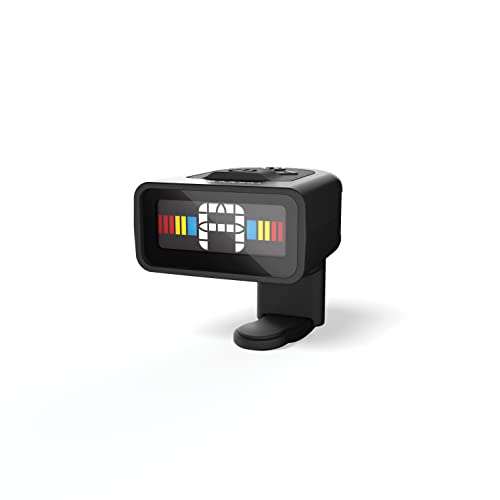
- Ultra-compact headstock design
- Vibration-based piezo sensing
- Tri-color backlit display
Best For: Discreet tuning across several stringed instruments
Best Multi-Instrument Option

- Five dedicated tuning modes
- Vibration sensing for noisy spaces
- Color LCD needle display
Best For: Players who tune guitar, bass, ukulele, or violin
Best Stage Pedal
BOSS TU-3 Compact Chromatic Tuner

- Rugged stompbox construction
- High-brightness 21-segment meter
- Silent tuning with drop-tuning support
Best For: Stage and pedalboard-based guitar or bass setups
Best Rechargeable Pick

- Up to 24 hours per charge
- 360-degree rotating bright display
- 415–465Hz adjustable calibration
Best For: Players who want a rechargeable everyday clip-on tuner
Best Automatic Tuner

- Automatic tuning in under 10 seconds
- 150+ tunings and custom presets
- Built-in winder and metronome
Best For: Multi-instrumentalists and players who change tunings often
Best Simple Clip-On
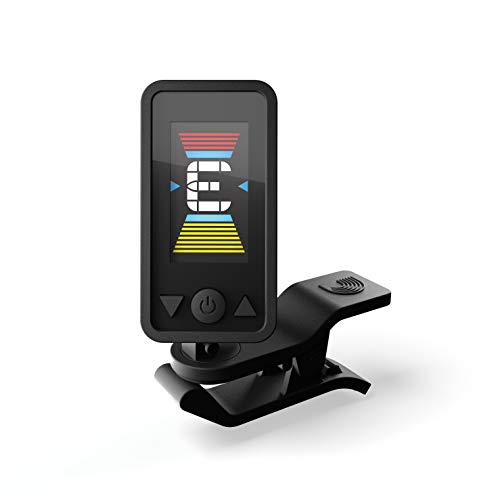
- Full-color adjustable display
- Dual swivels for flexible positioning
- Works with guitar, bass, and ukulele
Best For: Players seeking a simple tuner for multiple string instruments
Best with Extra Features
Snark SNARK2 Rechargeable Clip-On Tuner

- Rechargeable battery can last weeks or months
- Bright display for easy reading
- Includes case, USB cable, and cleaning cloth
Best For: Players who prefer rechargeable convenience
Best Simple Design
Donner DT-2 Clip-On Chromatic Tuner

- One-button operation
- Rotational bright display
- Sensitive vibration clip for fast tuning
Best For: Beginners and multi-instrument players
Best Multi-Instrument Value
Clip-On String Instrument Tuner

- Supports guitar, bass, ukulele, violin, and banjo
- 360-degree rotatable screen
- Automatic shutoff after three minutes
Best For: Players who tune multiple stringed instruments
Best Budget Pick – Snark SN5X Clip-On Chromatic Tuner
If you want a straightforward option among guitar tuners, the Snark SN5X offers a full-color display and a frequency range tailored to guitar and bass. Its clip-on design can be positioned on either the front or back of the headstock.
Best For: Guitarists and bassists who want an affordable, easy-to-read clip-on tuner.
Pros:
- Full-color display provides clear tuning feedback.
- Frequency range is tailored to guitar and bass.
- Can be used on the front or back of the headstock.
- Includes the required lithium battery.
Cons:
- Plastic body may be less rugged than a stage-style pedal tuner.
- Its guitar-and-bass focus is less versatile than multi-instrument models.
The SN5X is a practical pick for everyday practice and basic setup work, especially if display visibility and simple headstock placement matter most.
Best Discreet Design – D'Addario Micro Headstock Tuner
The D’Addario Micro is one of the more discreet guitar tuners, hiding behind the headstock while remaining on the instrument during storage. Its piezo transducer detects vibration rather than relying on room sound, and the tri-color display shows whether you are out of tune, close, or in tune.
Best For: Players who prioritize a compact, unobtrusive tuner for multiple stringed instruments.
Pros:
- Compact design measures about 1.25 inches and weighs 0.32 ounces.
- Piezo sensing picks up instrument vibration for precise tuning.
- Tri-color backlit display is easy to interpret.
- 360-degree swivel and adjustable padded clamp support flexible positioning.
Cons:
- The tiny form factor may be less immediately visible than a larger tuner.
- Battery information in the supplied specifications is inconsistent, so verify the replacement type before buying.
With broad 410–480Hz calibration and support for guitar, bass, mandolin, banjo, and ukulele, this is a strong choice when discreet storage and multi-instrument use are priorities.
Best Multi-Instrument Option – Fender FCT-2 Clip-On Tuner
Fender FCT-2 Professional Multi-Instrument Clip-On Tuner for Guitar, Bass, Ukulele, and Violin
Check Price On AmazonThe Fender FCT-2 is a versatile choice among guitar tuners, with dedicated modes for guitar, bass, ukulele, violin, and chromatic tuning. Its vibration sensing supports accurate tuning in both noisy venues and quiet practice spaces, while the color LCD needle gives quick visual feedback.
Best For: Musicians who need one clip-on tuner for guitar and several other instruments.
Pros:
- Dedicated modes cover guitar, bass, ukulele, violin, and chromatic tuning.
- Vibration-based operation works in varied sound environments.
- Color LCD needle display responds quickly and clearly.
- Dual-hinge clip adjusts for viewing on either side of the headstock.
Cons:
- Its molded-plastic construction may not feel as substantial as a pedal tuner.
- It is more feature-rich than needed for players tuning only one guitar.
The FCT-2 balances flexible instrument support with simple operation, making it a sensible all-purpose tuner for players who switch between instruments.
Best Stage Pedal – BOSS TU-3 Compact Chromatic Tuner
For live performers, the BOSS TU-3 is a stage-focused alternative to clip-on guitar tuners. Its durable stompbox housing, high-brightness 21-segment LED meter, and automatic signal muting are designed for confident, silent tuning under changing stage-light conditions.
Best For: Gigging guitarists and bassists who want a rugged pedal tuner with clear visibility and silent tuning.
Pros:
- Tank-tough BOSS stompbox construction suits stage use.
- 21-segment LED meter includes brightness control and high-brightness mode.
- Accuracy is specified at +/- one cent.
- Supports guitar, bass, drop tuning, and up to seven-string guitars or six-string basses.
Cons:
- Requires a 9-volt power source rather than a simple clip-on battery setup.
- Its larger pedal format is less convenient for casual, portable practice.
- The supplied warranty information lists only 90 days.
The TU-3 makes the most sense in a pedalboard or performance rig, particularly for players who value silent signal muting, drop-tuning support, and visibility in bright conditions.
Best Rechargeable Pick – Nexxus 360 Clip-On Tuner
The D’Addario Nexxus 360 is a practical choice for guitarists who want quick, accurate tuning without regularly replacing batteries. Its bright rotating display, adjustable calibration, and secure clamp make it a versatile option for acoustic and electric guitar setups.
Best For: Players seeking a rechargeable clip-on tuner with flexible viewing angles and dependable everyday performance.
Pros:
- Provides up to 24 hours of tuning per charge.
- Bright display and clamp rotate 360 degrees for easier viewing.
- Wide 415–465Hz calibration range supports precise tuning.
- Strong clamp can mount anywhere on the headstock without slipping.
Cons:
- Requires access to USB power for recharging.
- It is designed primarily as a tuner rather than an all-in-one practice tool.
For most players comparing guitar tuners, the Nexxus 360 balances portability, visibility, and low-maintenance rechargeable power particularly well.
Best Automatic Tuner – Roadie 4 Automatic Tuner
The Roadie 4 is an advanced option for guitarists who want automatic string tuning and extensive setup control. Its vibration detection, motorized tuning mechanism, custom tuning library, and app connectivity make it suited to players who regularly switch instruments or tunings.
Best For: Multi-instrumentalists and performers who want fast automatic tuning, custom presets, and built-in practice features.
Pros:
- Can tune compatible geared-peg instruments in under 10 seconds.
- Supports 150+ tunings, custom tunings, capo tuning, and adjustable reference pitch.
- Includes a three-speed motorized string winder.
- Long-life USB-C battery, Bluetooth 5.0, app support, and customizable metronome.
Cons:
- More complex and heavier than a basic clip-on tuner.
- Not intended for bass guitars; the notes specify using Roadie Bass instead.
- Its advanced features may be unnecessary for players who only need standard tuning.
Among guitar tuners, the Roadie 4 stands out for automation and versatility, though its broader feature set makes it better suited to demanding setups than simple tuning needs.
Best Simple Clip-On – Eclipse Headstock Tuner
The D’Addario Eclipse is a straightforward clip-on choice for guitarists who want quick tuning in a compact format. Its full-color vertical screen, dual swivels, and secure clamp make it easy to position on acoustic guitars, electric guitars, basses, and ukuleles.
Best For: Players who want an affordable, easy-to-read clip-on tuner for several common string instruments.
Pros:
- Full-color display offers clear visibility from multiple angles.
- Dual swivels accommodate left- or right-handed positioning.
- Adjustable 435–450Hz calibration supports precise tuning.
- Works with acoustic guitars, electric guitars, bass guitars, and ukuleles.
Cons:
- Uses a CR2 battery rather than rechargeable power.
- Its calibration range is narrower than the Nexxus 360’s listed range.
- Does not include automatic tuning, app connectivity, or other advanced features.
The Eclipse is one of the more practical guitar tuners for basic, reliable use, especially when clear positioning and broad instrument compatibility matter more than extras.
Best with Extra Features – Snark SNARK2 Rechargeable Clip-On Tuner
If you want guitar tuners without regularly replacing coin-cell batteries, the Snark SNARK2 is a practical rechargeable option. Its bright display is easy to read, while the included case and cleaning cloth add useful extras for storage and upkeep.
Best For: Guitarists who prefer a rechargeable clip-on tuner for regular practice and playing.
Pros:
- Quick charge can last for weeks or months.
- Super-bright display improves visibility.
- Vulcanized rubber joints are designed for durability.
- Includes a USB charging cable, protective case, and cleaning cloth.
Cons:
- Requires charging rather than a replaceable coin-cell battery.
- Heavier than the Donner tuner listed here at 4 ounces.
The SNARK2 stands out for players who value long battery intervals and a bright readout. Its included accessories also make it a convenient all-in-one choice.
Best Simple Design – Donner DT-2 Clip-On Chromatic Tuner
Donner Guitar Tuner Clip on-Accurate Chromatic,Acoustic Guitar Bass Violin Ukulele Tuner DT-2
Check Price On AmazonThe Donner DT-2 is one of the more straightforward guitar tuners for beginners and working musicians. Its one-button operation, sensitive vibration clip, and rotating display are designed to make setup and tuning quick.
Best For: Beginners and players who want a compact, easy-to-operate tuner for multiple stringed instruments.
Pros:
- One-button control keeps operation simple.
- Rotational display supports multiple viewing angles.
- Sensitive vibration detection is designed for fast, precise tuning.
- Works with guitar, bass, violin, and ukulele.
Cons:
- Uses a CR2032 battery, which must be replaced when depleted.
- Includes a six-month guarantee rather than a longer stated coverage period.
With its small design and uncomplicated controls, the DT-2 is a sensible pick for players who want essential tuning functions without extra features. The rotating clip is especially useful when viewing space is limited.
Best Multi-Instrument Value – Clip-On String Instrument Tuner
Guitar Tuner Clip On 1 Pack Tuners for Acoustic Electric Guitar Bass Ukulele Violin banjo Tuning
Check Price On AmazonThis compact clip-on model is a flexible choice among guitar tuners, supporting acoustic and electric guitar, bass, ukulele, violin, and banjo. Its vibration sensor is designed to help with tuning in noisy surroundings, while the 360-degree screen makes the display easier to position.
Best For: String-instrument players who want one compact tuner for several instruments.
Pros:
- Designed for accurate, rapid tuning through vibration sensing.
- Supports guitar, bass, ukulele, violin, banjo, and other stringed instruments.
- 360-degree rotatable screen allows flexible viewing.
- Automatic shutoff activates after three minutes without continual operation.
Cons:
- Plastic construction may feel less substantial than a metal-bodied design.
- Supplied notes do not mention included batteries or a protective case.
This tuner is a practical fit for musicians who move between several stringed instruments. Its adjustable screen and automatic shutoff add convenience without making the design complicated.
How We Picked the Best Guitar Tuners
We evaluated these Guitar Tuners using the features that matter most in everyday use: tuning accuracy, response speed, display visibility, instrument compatibility, power source, physical durability, and ease of operation. We also considered different use cases, including casual home practice, acoustic performances, electric guitar rigs, travel, and multi-instrument setups.
The selection includes clip-on chromatic tuners, a pedal tuner, rechargeable models, and an automatic tuning option. That variety matters because the best choice depends on whether you prioritize minimal size, hands-free stage use, long battery life, or the fastest possible tuning process.
Quick Comparison
- Best for basic everyday tuning: Snark SN5X or D’Addario Eclipse
- Best for multi-instrument use: Fender FCT-2 or Donner DT-2
- Best for pedalboards: BOSS TU-3
- Best rechargeable option: D’Addario Nexxus 360 or Snark SNARK2
- Best automatic tuning experience: Roadie 4
- Best for a simple budget backup: the one-pack clip-on tuner
Key Buying Factors for Guitar Tuners
Accuracy and Tuning Modes
A chromatic tuner is the most flexible choice because it can detect every note, including alternate tunings. Look for a responsive needle or clear center indicator, especially if you tune in noisy environments. Automatic tuners add convenience but typically cost more and may be unnecessary for players who prefer manual control.
Clip-On, Pedal, or Automatic Design
Clip-on Guitar Tuners read vibration through the headstock and are convenient for acoustic or electric guitars. They are compact and usually affordable, but screen visibility can vary. Pedal tuners are better for electric players who need a dedicated mute-and-tune function onstage. Automatic systems are useful for fast retuning and players who frequently change instruments or tunings.
Display, Visibility, and Controls
A large, bright display is helpful during rehearsals and live performances. Rotating screens and simple buttons make a tuner easier to use from different playing positions. If you commonly perform under bright stage lighting, prioritize strong contrast and a responsive display rather than the smallest possible design.
Power and Portability
Battery-powered models are convenient for travel, while rechargeable tuners reduce disposable battery use and can be topped up before a rehearsal. Check battery access, charging requirements, auto-shutoff behavior, and whether the tuner is small enough to remain attached to your instrument case or headstock.
Who Should Buy Which Guitar Tuners?
Beginners and casual players should start with an affordable clip-on chromatic tuner that has straightforward controls. Gigging acoustic players will likely prefer a bright, secure clip-on model with dependable battery life. Electric guitarists with pedalboards should consider a dedicated pedal tuner for silent tuning between songs.
Multi-instrument musicians can benefit from a tuner that supports guitar, bass, ukulele, violin, and other instruments. Players who change tunings often may appreciate an automatic tuner such as the Roadie 4, while traveling musicians should focus on a lightweight rechargeable or compact clip-on design.