Finding the right guitar effects processor under $200 can give you a surprisingly broad range of tones without the cost and complexity of a premium floorboard. The models in this roundup cover essential effects, amp and cab modeling, looping, rhythm patterns, expression control, and USB or app-based editing.
Use the product sections below to compare features, then match your choice to your playing style, setup, and priorities. A compact practice unit may be ideal for beginners, while a model with IR loading, more footswitches, or deeper routing can better support recording and live use.
Best 10 Guitar Effects Processors Under 200 Picks for 2026
Practice-Ready Tone Explorer

- 71 effects and 13 amp models
- 30-second looper with 68 rhythm patterns
- Built-in expression pedal and headphone support
Best For: Practice, songwriting, and versatile entry-level tone exploration
Compact Modeling Workstation
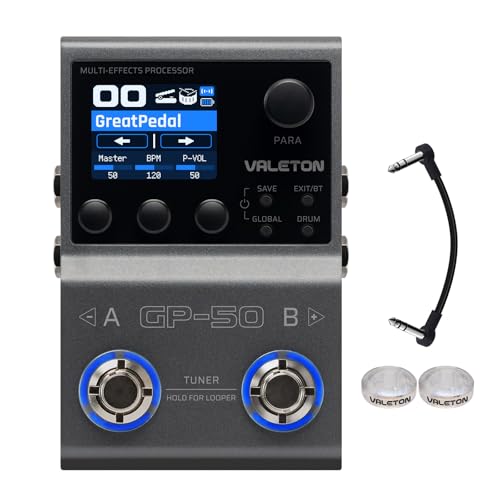
- 100+ effects with nine simultaneous modules
- NAM and third-party IR loading
- Bluetooth app control and USB audio
Best For: Portable modeling, recording, and expandable digital rigs
Learning-Friendly Practice Pedal

- 66 effects with 80 factory and 80 user patches
- 180-second looper and drum machine
- Assignable expression pedal and learning functions
Best For: Beginners, practice sessions, and guided tone experimentation
All-in-One Rechargeable Rig

- 300+ effects with amp, cab, and IR modeling
- 7-hour battery with looper and drum rhythms
- XLR, USB audio, Bluetooth, and re-amping support
Best For: Portable practice, recording, and live-performance workflows
AI Tone Explorer

- 240 effects with amp modeling and IR support
- 3.5-inch display with AI and app editing
- Looper, drums, Bluetooth, and USB-C
Best For: Tone exploration, recording, and flexible practice setups
Wireless-Ready Practice Rig
SORAN Dual Stomp Multi-Effects

- 99 presets and 125 effects with 11 modules
- Integrated wah and volume expression pedal
- Rechargeable battery and USB audio recording
Best For: Portable practice, streaming, and extensive tone shaping
Most Versatile
Valeton GP-150 Multi-Effects Processor

- 200+ effects with up to 12 modules at once
- IR and NAM support for extensive tone customization
- Rechargeable battery, looper, USB audio, Bluetooth, and MIDI
Best For: Players seeking maximum flexibility for practice, recording, and live use
Best Portable Value
Master Tone MT-01 Multi-Effects Pedal

- 125 effects, 99 presets, and 11 modules per preset
- Rechargeable battery with up to six hours of runtime
- Looper, drum rhythms, expression pedal, and USB recording
Best For: Portable practice and small-gig setups with beginner-friendly controls
Best for Live Control
MOOER GE150 Pro Multi-Effects Processor

- 170 effects, 200 presets, 55 amps, and 26 cabinet simulations
- Four multifunction footswitches and expression pedal
- MNRS support, looper, drum machine, and USB OTG recording
Best For: Live players who need hands-on patch switching and performance control
Practice-Ready Tone Explorer – Zoom G1X Four
The Zoom G1X Four is a practical choice among guitar effects processors under 200 for players who want broad sound variety, an integrated expression pedal, and useful practice tools in one compact unit. Its 71 effects, 13 amp models, looper, rhythm patterns, tuner, and headphone support cover practice, songwriting, recording, and live experimentation.
Best For: Guitarists who want an affordable, versatile practice and effects platform with an expression pedal included.
Pros:
- Offers 71 built-in effects and 13 amp models for varied tone shaping.
- Includes a 30-second looper and 68 rhythm patterns for practice and songwriting.
- Supports auxiliary audio, headphones, battery power, and Guitar Lab editing software.
Cons:
- The looper is limited to 30 seconds.
- Its listed signal format is analog, so it may not offer the digital connectivity of newer processors.
The G1X Four stands out as a straightforward, feature-packed option for learning, rehearsing, and exploring tones without assembling multiple pedals. The built-in expression pedal adds hands-on control, while Guitar Lab provides additional patch-editing flexibility.
Compact Modeling Workstation – Valeton GP-50
The Valeton GP-50 is one of the more advanced guitar effects processors under 200 for players who want NAM and cabinet IR loading in a compact format. It combines more than 100 HD effects with nine simultaneous modules, Bluetooth app control, USB audio, and rechargeable battery operation.
Best For: Guitarists and bassists who want flexible digital modeling, third-party tone support, and portable recording or performance connectivity.
Pros:
- Provides over 100 effects with up to nine modules operating simultaneously.
- Supports up to 20 third-party cabinet IR files and 80 NAM files.
- Includes Bluetooth 5.0, 2-in/2-out USB audio, USB MIDI, stereo outputs, and headphone connectivity.
Cons:
- Its deeper NAM, IR, and routing features may require more setup than a basic multi-effects pedal.
- The compact unit has dual footswitches, which may offer less hands-on control than larger floor processors.
With its color display, app editing, rechargeable battery, and broad connection options, the GP-50 is aimed at players who want a small but expandable rig. It is especially appealing if importing amp or cabinet files is part of your tone-building workflow.
Learning-Friendly Practice Pedal – MOOER GE100
The MOOER GE100 is a practical pick among guitar effects processors under 200 for players who value presets, an assignable expression pedal, and built-in practice functions. It includes 66 effect types, 80 factory patches, 80 user patches, a 180-second looper, drum rhythms, and scale and chord learning features.
Best For: Beginners and practicing guitarists who want guided learning tools alongside core multi-effects features.
Pros:
- Offers 80 preset patches and 80 user patches for storing tones.
- Includes 66 effects across eight modules and six assignable expression-pedal parameters.
- Features a 180-second looper, drum machine, headphone output, tuner, and learning functions.
Cons:
- The listed dimensions and 730-gram weight make it less compact than some newer processors.
- Its connectivity is centered on a 1/4-inch mono jack rather than modern USB or Bluetooth features.
The GE100 focuses on approachable operation and useful practice support rather than advanced file loading or app connectivity. Its long looper, drum rhythms, and scale and chord lessons make it a well-rounded option for building technique and experimenting with sounds.
All-in-One Rechargeable Rig – LEKATO TANK PRO
The LEKATO TANK PRO is a feature-heavy option among guitar effects processors under 200, combining 300-plus effects, amp and cabinet modeling, IR support, recording connectivity, and rechargeable operation. Its extensive workflow includes a 150.8-second looper, 100 drum rhythms, Bluetooth audio, XLR output, and USB audio with re-amping support.
Best For: Players who want a portable all-in-one workstation for practice, tone design, recording, and live use.
Pros:
- Includes 300-plus effects, 90 amp models, 90 cab simulations, and 10 customizable modules.
- Provides 120 patch slots, third-party WAV IR support, a long looper, and 100 drum rhythms.
- Offers a 7-hour rechargeable battery, XLR output, Bluetooth audio, USB audio, OTG recording, and re-amping.
Cons:
- Its large feature set may take time to learn and configure.
- At 1.8 pounds, it is heavier than some compact multi-effects units.
- The supplied notes do not specify included power-adapter details beyond the USB cable.
The TANK PRO is designed as a complete portable rig rather than a simple effects pedal. Its display, flexible routing, balanced output, modeling, recording tools, and battery make it particularly suitable for players who want one device to cover practice, creation, and performance tasks.
AI Tone Explorer – MOOER GE100 Pro
The MOOER GE100 Pro is a versatile choice for guitar effects processors under 200, combining amp modeling, extensive effects, app and desktop editing, and modern connectivity. Its 3.5-inch color display, AI tone assistant, and support for MNRS, NAM A2, and third-party IR files make it especially appealing to players who want deep tone customization without a large setup.
Best For: Home practice, recording, live performance, and players who want expandable amp and cabinet tones.
Pros:
- Includes 240 effects, realistic amp modeling, and support for MNRS, NAM A2, and third-party IR files.
- Offers a 3.5-inch color screen, RGB lighting, Bluetooth audio, USB-C, and mobile or desktop editing.
- Built-in 80-second stereo looper, drum rhythms, metronome patterns, and expression pedal support broaden its practice and performance tools.
Cons:
- Requires an AC adapter, so the standard version is less convenient for fully mobile use than the battery-powered variant.
- The wide range of editing and loading options may take time to learn.
For players comparing guitar effects processors under 200, the GE100 Pro stands out as a feature-rich, expandable unit. It is a strong fit if app-based editing, modern connectivity, and detailed tone creation matter as much as basic effects.
Minimalist Control – AME-200 Multi-Effects Processor
The AME-200 is a practical option among guitar effects processors under 200 for players who prefer a straightforward floor-based setup. It combines amp modeling, modulation, reverb, delay, a tuner, programmable footswitches, looping, and drum patterns so you can reduce the need to switch between multiple devices.
Best For: Players seeking simple foot control for practice, compact performance rigs, and basic recording.
Pros:
- Provides four programmable footswitches for direct control during playing.
- Includes amp modeling, reverb, delay, chorus, flanger, tuner, and support for external expression control.
- Offers 50 drum patterns, a 60-second recording loop, and global BPM settings.
Cons:
- External footswitch connection requires a TRS stereo cable with two 1/4-inch connectors.
- Its listed hardware interface is limited to 1/4-inch audio connections.
The AME-200 favors accessible control over an elaborate feature list. It makes sense for guitarists who want core multi-effects, looping, and rhythm functions in one foot-operated unit without making their rig unnecessarily complicated.
Wireless-Ready Practice Rig – SORAN Dual Stomp Multi-Effects
The SORAN Dual Stomp is a compelling option among guitar effects processors under 200 for players who want extensive preset flexibility and portable operation. It combines 99 presets, 125 effects, amp and cabinet models, USB audio, a built-in expression pedal, looping, drums, and a rechargeable battery in a compact dual-stomp format.
Best For: Mobile practice, streaming or recording, layered preset creation, and players who want integrated wah and volume control.
Pros:
- Provides 99 presets, 11 simultaneous modules, 125 effects, and 80 amp and cabinet models.
- Built-in expression pedal supports both wah and volume functions.
- Includes USB audio with ASIO support, a 40-second stereo looper, 100 drum patterns, and up to six hours of rechargeable operation.
Cons:
- The 2-inch color screen is smaller than the display on some larger multi-effects units.
- Its extensive preset, module, and import options may feel complex for beginners.
With its battery operation and USB audio capabilities, the Dual Stomp is well suited to flexible practice and mobile creative work. Choose it if built-in wah and volume control, plentiful effects, and portable recording are higher priorities than a larger interface.
Most Versatile – Valeton GP-150 Multi-Effects Processor
For guitarists comparing guitar effects processors under 200, the Valeton GP-150 stands out for its broad effects library, flexible routing, and support for third-party IR and NAM files. Its rechargeable battery, expression pedal, looper, and USB connectivity also make it suitable for practice, recording, and live use.
Best For: Players who want extensive tone-shaping options and portable, pedalboard-free flexibility.
Pros:
- Includes more than 200 effects and supports up to 12 effect modules simultaneously.
- Supports third-party cabinet IRs and NAM files, with storage for SnapTone and IR files.
- Built-in battery offers over six hours of playtime, while USB-C supports recording and editing.
- Includes a 180-second looper, drum patterns, tuner, Bluetooth, MIDI, and an expression pedal.
Cons:
- Its large feature set may take time for beginners to learn.
- Battery operation requires recharging for extended sessions.
The GP-150 is a strong all-around option when customization and connectivity matter most. It offers the deepest combination of effects, modeling support, and modern practice tools among these choices.
Best Portable Value – Master Tone MT-01 Multi-Effects Pedal
The Master Tone MT-01 is a practical choice among guitar effects processors under 200 for players who want a compact unit with essential modeling and practice features. It combines 125 effects, 99 presets, a rechargeable battery, drum rhythms, and a USB interface in a beginner-friendly design.
Best For: Home practice, rehearsals, small gigs, and players who prioritize portability.
Pros:
- Provides 125 effects, 99 presets, and up to 11 effect modules per preset.
- Includes 80 amp and cabinet simulations plus external amp and IR import support.
- Offers a 40-second stereo looper, 100 drum rhythms, and a dual-mode expression pedal.
- Rechargeable battery provides up to six hours of use, and the USB interface supports recording and streaming.
Cons:
- The 40-second looper is shorter than the loopers in some competing models.
- Its smaller effects library may appeal less to players seeking the broadest modeling collection.
With a color screen and straightforward feature set, the MT-01 balances usability and portability. It is especially appealing for guitarists who want an affordable practice-focused processor that can also handle recording and small performances.
Best for Live Control – MOOER GE150 Pro Multi-Effects Processor
The MOOER GE150 Pro is a compelling option for guitarists comparing guitar effects processors under 200 who need hands-on patch control. Its four footswitches, expression pedal, extensive preset library, MNRS support, and OTG recording features make it well suited to rehearsals and performance-oriented setups.
Best For: Gigging and practicing guitarists who want flexible foot control and broad amp-modeling options.
Pros:
- Includes 200 factory presets, 170 effects, 55 amp models, and 26 cabinet simulations.
- Four multifunction footswitches provide flexible patch browsing and performance control.
- Supports MNRS amp and cabinet samples with 20 slots for each relevant module.
- Includes an 80-second stereo looper, drum rhythms, metronome modes, AUX input, and USB OTG recording.
Cons:
- The standard GE150 Pro is corded rather than battery powered.
- Its feature-rich control system may require setup time for new users.
The GE150 Pro focuses on practical live operation, giving players more footswitch access than the other listed models. Choose it when patch navigation, expression control, and MNRS sample support are more important than built-in battery power.
How We Picked the Best Guitar Effects Processors Under 200
We focused on processors that offer meaningful value for players who want multiple effects in one unit. The selection considers the breadth and usability of the effect library, amp and cabinet modeling, preset capacity, footswitch layout, expression control, looping, drum patterns, connectivity, and portability.
Feature counts can be useful, but they do not tell the whole story. A processor with fewer effects may be easier to operate, while a unit with extensive modeling or IR support may provide more flexibility for direct recording. We also considered whether each model suits practice, home recording, rehearsals, or live performance.
Quick Comparison
For straightforward practice and learning, the Zoom G1X Four and MOOER GE100 offer accessible controls and familiar core effects. The GE100Pro, Valeton GP-50, and AME-200 add more modern editing or amp-modeling capabilities. Players seeking larger preset libraries, advanced modeling, IR or NAM support, and recording flexibility may prefer the Valeton GP-150 or MOOER GE150 Pro.
The LEKATO TANK PRO, SORAN Dual Stomp, and Master Tone units emphasize portability and broad feature sets, including combinations of effects, looping, rhythm functions, and expression control. Check the individual specifications carefully, especially if you need a particular connection such as XLR, USB OTG, Bluetooth, or a built-in battery.
Key Buying Factors for Guitar Effects Processors Under 200
Effects, Modeling, and IR Support
Decide whether you mainly need standard effects such as distortion, delay, chorus, and reverb or want amp and cabinet simulation for direct connection to headphones, an audio interface, a mixer, or powered speakers. IR and NAM support can expand tonal flexibility, but they are most valuable if you plan to use third-party captures or detailed signal-chain setups.
Controls and Preset Management
Look for enough footswitches and a clear display for changing patches without stopping to reach for the unit. An expression pedal is useful for wah, volume, pitch, or assignable parameters. Preset capacity matters more for live players than for casual practice, but simple patch organization is valuable for everyone.
Practice and Recording Features
A looper and drum machine can make practice more engaging, while USB audio, app control, Bluetooth, or USB OTG recording can simplify home recording. Confirm whether the processor supports the devices and operating systems you intend to use.
Power, Size, and Connections
Check the power requirements, included accessories, dimensions, and output options. Battery-powered models are convenient for portability, while dedicated outputs, headphone support, and an expression input may be more important in a fixed rig.
Who Should Buy Which Guitar Effects Processors Under 200?
Beginners and practice-focused players: Choose a model with intuitive navigation, core effects, a tuner, and useful looping or rhythm tools rather than paying for features you will not use.
Home recordists: Prioritize convincing modeling, IR or NAM support, USB connectivity, and quiet headphone operation. These features can reduce the need for additional hardware.
Live players: Look for reliable footswitch access, ample presets, expression control, fast patch changes, and outputs that match your amplifier, PA, or mixer.
Experimenters and tone builders: A processor with extensive effects, simultaneous modules, deeper editing, and third-party capture support offers more room to grow. Before buying, verify the workflow and connectivity as carefully as the headline effect count.