The best guitar effects processors for home studios make it easier to practice, record, and build complete tones without filling your room with amplifiers and pedals. Today’s units range from simple expression-pedal models to sophisticated workstations with amp modeling, impulse-response loading, USB audio, and MIDI control.
We’ve gathered 10 options for different budgets and workflows, including compact processors for quick sessions and feature-rich systems designed for detailed recording setups. Use the guide below to compare the features that matter most before choosing.
Best 10 Guitar Effects Processors for Home Studios Picks for 2026
Feature-Rich Practice Hub

- 200 presets with amp, cab, and sample-file support
- USB-C, OTG recording, AUX, and headphone connections
- Looper, drums, tuner, expression pedal, and four footswitches
Best For: Home-studio players seeking an all-in-one modeling and practice unit
Focused Effects Specialist

- 250-plus effects from the HX family
- 128 preset slots and Flux Controller automation
- Optional expression pedal or two external footswitches
Best For: Compact home rigs centered on varied HX effects
Studio-Ready Routing Power

- 240-plus effects and up to 11 movable modules
- 6-in/4-out USB-C interface with re-amping
- Balanced outputs, FX loop, MIDI, looper, and drums
Best For: Multi-instrument home studios needing flexible recording and routing
Pedalboard Command Center

- 100-plus HX effects with up to nine running at once
- Additional legacy effects from classic Line 6 series
- Footswitches with LED rings and scribble strips
Best For: Existing amp rigs needing centralized pedalboard control
Studio Command Center

- Amp and effects modeling with IR manager
- 7-inch touchscreen and song/set list mode
- Full-size corded workstation with USB
Best For: Detailed home-studio tone creation and organized setlists
Compact Pro Routing

- 32 amps and 170 BOSS effects
- Up to 15 assignable routing blocks
- Touch display, expression pedal, and USB-C
Best For: Portable, deeply customizable guitar or bass studio rigs
Practice and Ideas Machine

- 71 effects and 13 amp models
- 30-second looper and 68 rhythm patterns
- Battery powered with aux and headphone support
Best For: Affordable practice, songwriting, and portable home recording
Hands-On All-in-One
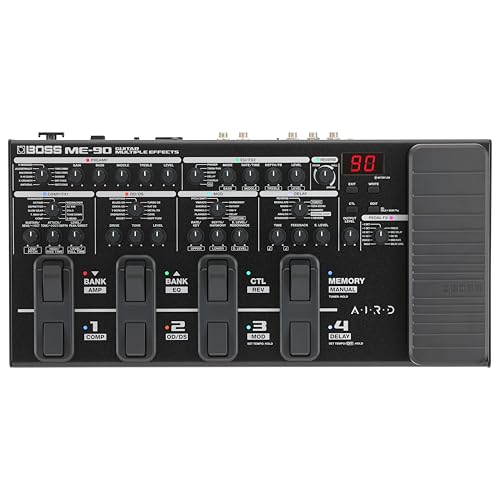
- 60 effects with 11 AIRD amp models
- IR loading, effects loop, and USB-C
- Eight footswitches plus expression pedal
Best For: Hands-on home-studio tone shaping and flexible practice or performance setups
Feature-Packed Recording Hub

- 240+ effects and 140+ amp/cab models
- 6-in/4-out USB audio with re-amping
- Looper, drum machine, and gig bag included
Best For: Home studios needing extensive modeling, USB routing, and practice features
Compact NAM Modeling Choice
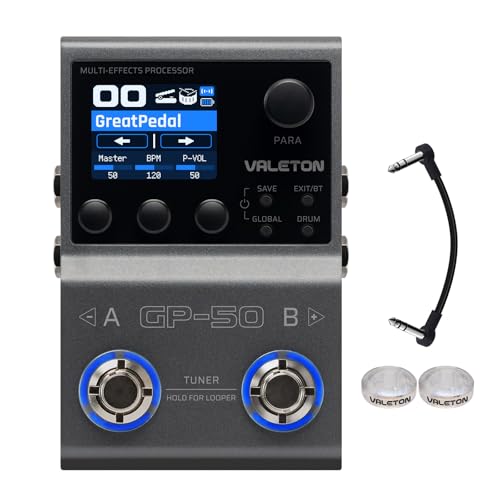
- 100+ effects with NAM and IR loading
- 2-in/2-out USB audio and re-amping
- Bluetooth control and rechargeable battery
Best For: Portable home-studio recording, headphone practice, and compact pedalboards
Feature-Rich Practice Hub – MOOER GE150 Pro
The MOOER GE150 Pro is a flexible choice for guitar effects processors for home studios, combining amp and cabinet modeling, effects, looping, drums, and USB-C connectivity in a compact floor unit. Its OTG support also lets you record or play audio with a phone.
Best For: Home-studio guitarists who want extensive preset options, practice tools, and direct recording features in one processor.
Pros:
- Includes 200 presets, 55 amp models, 26 cabinet simulations, and 20 AMP and CAB sample slots.
- USB-C supports editing, data management, firmware updates, and OTG recording.
- Built-in looper, drum machine, tuner, expression pedal, AUX input, and headphone output support practice and recording.
- Four multifunction footswitches provide flexible patch and feature control.
Cons:
- The standard model is corded and does not provide the battery operation of the GE150 Pro Li.
- Its large feature set may require time to organize and learn.
With its broad modeling library and home-recording connections, the GE150 Pro is a strong all-in-one option for players who want practice, tone creation, and quick mobile recording without adding multiple devices.
Focused Effects Specialist – Line 6 HX One
The Line 6 HX One is a compact option among guitar effects processors for home studios, offering more than 250 effects from the HX family in a straightforward pedal format. Its Flux Controller adds automated parameter changes, while presets help retain favorite setups.
Best For: Players who want a dedicated, compact effects unit with a broad HX effects library and simple hands-on control.
Pros:
- Provides 250-plus effects drawn from Line 6 HX family processors.
- Offers 128 preset slots for saving sounds and setups.
- Flux Controller can automate parameter changes.
- Supports adjustable input impedance and optional expression pedal or two external footswitches.
Cons:
- It is centered on effects rather than the amp, cabinet, looping, and recording feature set found on larger processors.
- Expression pedal and external footswitches are optional accessories.
The HX One makes sense when a home setup needs a wide selection of effects in a compact footprint, especially if you prefer selecting and editing sounds without committing to a larger multi-effects board.
Studio-Ready Routing Power – Valeton GP-200
Valeton GP-200 Multi-Effects Processor for Guitar & Bass, Expression Pedal, MIDI, USB Interface
Check Price On AmazonThe Valeton GP-200 is a comprehensive pick for guitar effects processors for home studios, with amp and cabinet models, freely movable effect modules, re-amping, balanced outputs, and a USB-C audio interface. It also supports guitar, bass, and acoustic applications.
Best For: Home-studio musicians who need extensive routing, recording, re-amping, and hands-on control for multiple instruments.
Pros:
- Includes 240-plus effects, 140-plus amp and cab models, and up to 11 modules per patch.
- USB-C provides a 6-in/4-out audio interface with re-amping.
- Offers balanced XLR and 1/4-inch outputs, FX loop, MIDI, AUX, and headphone connections.
- Includes an expression pedal, 20 IR slots, a 180-second looper, drum patterns, and eight footswitches.
Cons:
- It requires external power and does not support battery operation.
- The extensive routing and editing options may be more than a basic practice setup needs.
For recording-focused users, the GP-200 stands out through its interface functions, re-amping support, broad I/O, and large control surface. It is particularly practical for a studio shared by guitar, bass, and acoustic players.
Pedalboard Command Center – Line 6 HX Effects
The Line 6 HX Effects is a practical choice for guitar effects processors for home studios when you want a pedalboard-focused controller for an existing amp and rig. It provides more than 100 HX effects, legacy effects, and the ability to run up to nine simultaneously.
Best For: Guitarists building a pedalboard around an existing amplifier and needing centralized effects and rig control.
Pros:
- Runs up to nine HX effects simultaneously.
- Includes more than 100 HX effects plus legacy effects from several Line 6 series.
- Capacitive-sensing footswitches include LED rings and scribble strips for clear control.
- Designed to act as the command center for an amp and pedal rig.
Cons:
- Its supplied notes emphasize effects and rig control rather than amp modeling or USB recording features.
- It is a substantial pedal-format unit, so it may be more than a minimal home setup requires.
The HX Effects is best viewed as a control-and-effects centerpiece rather than a complete recording workstation. It is a strong fit for players who already have an amp and want organized access to a deep Line 6 effects library.
Studio Command Center – Fender Tone Master Pro
For guitarists building a flexible home setup, the Fender Tone Master Pro is a full-size option among guitar effects processors for home studios. Its amp and effects modeling, 7-inch touchscreen, IR manager, and song/set list mode support detailed tone creation and organized sessions.
Best For: Home-studio players who want an expansive workstation for modeling, preset organization, and hands-on control.
Pros:
- Combines amp modeling, effects modeling, and an IR manager in one workstation.
- 7-inch touchscreen provides touch-based control.
- Song/set list mode helps organize sounds for practice or performance.
- USB hardware connectivity supports integration with compatible studio equipment.
Cons:
- Its 20.4-inch length and 15.3-pound weight make it less convenient for compact desks or travel.
- Corded-electric power limits battery-free portability.
The Tone Master Pro makes the most sense when your priority is centralized control and a broad modeling workflow rather than a small, grab-and-go pedal.
Compact Pro Routing – BOSS GX-10
The BOSS GX-10 is a practical choice for guitarists and bassists comparing guitar effects processors for home studios. It pairs the GX-100 sound engine with a compact metal chassis, a color touch display, extensive effects, flexible routing, and USB-C connectivity.
Best For: Home-studio musicians who need deep signal-chain customization in a portable floor unit.
Pros:
- Offers 32 amplifier types, 170 BOSS effects, and up to 15 assignable blocks.
- Supports WAV speaker IR loading and multiple onboard speaker types.
- Includes an expression pedal, three multi-mode footswitches, and an effects loop.
- Uses 24-bit AD, 32-bit DA, 32-bit floating-point processing, and 48 kHz sampling.
Cons:
- Its extensive routing and sound library may take time to configure.
- Three footswitches provide less immediate control than a larger workstation.
With its compact footprint and unusually broad routing options, the GX-10 is a strong fit when studio flexibility matters but desk and travel space are limited.
Practice and Ideas Machine – Zoom G1X Four
The Zoom G1X Four is a budget-conscious, portable entry in guitar effects processors for home studios. It provides 71 effects, 13 amp models, a looper, rhythm patterns, an expression pedal, and headphone or auxiliary connections for practice and basic recording workflows.
Best For: Beginners, songwriters, and home players who want many sounds plus built-in practice tools.
Pros:
- Includes 71 effects and 13 amp models for broad tonal experimentation.
- 30-second looper supports layered riffs and songwriting ideas.
- 68 rhythm patterns provide accompaniment for practice.
- Battery-powered operation, aux input, and headphone monitoring support flexible use.
Cons:
- Its 30-second looper is more limited than longer looping solutions.
- The supplied notes specify USB Micro-B rather than a newer USB-C connection.
- It offers fewer amp models and effects than the larger processors in this roundup.
The G1X Four stands out as a compact practice and idea-capture tool, especially if rhythm accompaniment, looping, and battery operation are more important than advanced routing.
Hands-On All-in-One – BOSS ME-90
BOSS ME-90 Guitar Multi-Effects Guitar Processor | All-In-One Guitar Processor
Check Price On AmazonThe BOSS ME-90 is a practical choice for guitar effects processors for home studios when you want broad effects coverage without a complicated interface. Its knob-based controls, AIRD amp models, IR loading, USB-C connection, and effects loop support both quick practice adjustments and more detailed recording setups.
Best For: Guitarists who want hands-on control, a large effects library, and an integrated expression pedal for practice, recording, and performance.
Pros:
- Includes 60 effects and 11 AIRD amp models.
- Offers IR loading, an effects loop, and USB-C connectivity.
- Provides eight multifunction footswitches and an expression pedal.
- Supports 36 preset patches and 36 user patches.
Cons:
- Optional Bluetooth editing and audio streaming require an additional adaptor.
- Its larger footprint may be less convenient for very compact setups.
The ME-90 stands out for straightforward, stompbox-style editing paired with substantial processing capability. It is especially appealing if you prefer physical controls over menu-heavy operation.
Feature-Packed Recording Hub – Valeton GP-200
The Valeton GP-200 is a strong option among guitar effects processors for home studios, combining extensive amp and effect modeling with a 6-in/4-out USB audio interface. Its IR support, re-amping capability, looper, drum machine, and flexible routing make it useful for both recording and practice.
Best For: Guitarists and bassists who want a broad modeling system with USB recording, re-amping, practice tools, and substantial preset storage.
Pros:
- Includes over 240 effects and more than 140 amp and cabinet models.
- Provides a 6-in/4-out USB audio interface with loopback and re-amping.
- Offers 20 user cabinet IR slots and 256 total patch slots.
- Includes a 180-second looper, 100 drum patterns, and a chromatic tuner.
Cons:
- Its extensive feature set may take longer to learn than a simpler processor.
- The unit is relatively heavy at 2.37 kg.
With its large effect library and studio-friendly USB functions, the GP-200 is suited to musicians who want one central device for tones, tracking, routing, and practice. The included gig bag adds portability for moving the unit between spaces.
Compact NAM Modeling Choice – Valeton GP-50
The Valeton GP-50 is a compact pick for guitar effects processors for home studios, pairing over 100 HD effects with NAM and cabinet IR loading. Its 2-in/2-out USB audio, Bluetooth app control, headphone output, and rechargeable battery make it adaptable for quiet practice, mobile recording, and desktop setups.
Best For: Guitarists and bassists who want portable NAM and IR-based tone shaping with wireless editing and direct USB recording.
Pros:
- Supports over 100 effects, up to nine simultaneous modules, NAM files, and cabinet IRs.
- Provides 2-in/2-out USB audio with re-amping and USB MIDI support.
- Includes Bluetooth 5.0 app control and 100 drum patterns.
- Can run from DC 9V, USB 5V, or its built-in rechargeable battery.
Cons:
- Its 1.77-inch display and dual footswitch layout offer less physical control than larger units.
- It has fewer patch slots and fewer simultaneous modules than the GP-200.
The GP-50 prioritizes portability and modern capture-based modeling in a small format. It is a particularly practical fit when desk space, headphone use, wireless editing, or battery operation matters.
How We Picked These Guitar Effects Processors for Home Studios
We focused on features that have a direct impact on home recording and everyday usability: amp and cabinet modeling, impulse-response support, effects quality, preset management, USB audio, connectivity, expression control, and physical workflow. We also considered whether each processor suits beginners, creators who need flexible routing, or players building a more complete studio rig.
The selection includes multi-effects units, compact processors, and workstation-style systems so you can compare practical options rather than looking only at the highest feature count.
Quick Comparison
| Best For | What to Prioritize | Useful Features |
|---|---|---|
| First home setup | Simple editing and clear controls | Presets, tuner, USB, headphone output |
| Recording and reamping | Low-noise conversion and flexible routing | USB audio, amp models, IR loading |
| Live-to-studio versatility | Fast access to sounds | Footswitches, scenes, MIDI, expression pedal |
| Budget practice | Core effects and compact design | Looper, drum patterns, auxiliary input |
Key Buying Factors for Guitar Effects Processors for Home Studios
Amp Modeling and Cabinet Options
If you plan to record directly into an interface, amp and cab modeling are central features. Check how many models are included, whether signal chains can be customized, and whether the processor supports third-party impulse responses. IR loading can expand cabinet choices, but it may also require more setup and careful level matching.
USB Audio and Computer Integration
USB audio can let the processor function as a recording interface, reducing the number of devices in your signal chain. Look for the input and output configuration you need, dependable driver or software support, and easy monitoring through headphones or studio speakers.
Editing, Presets, and Foot Control
More effects do not always mean a faster workflow. A clear display, intuitive menus, assignable switches, scenes, and an expression pedal can matter more than a long effects list. Consider how often you will create sounds from scratch versus adjusting existing presets.
Connectivity and Expansion
MIDI, Bluetooth app control, external switches, and dedicated outputs are valuable if your setup may grow. A looper, tuner, auxiliary input, and headphone output are especially useful for practice and compact home recording sessions.
Who Should Buy Which Guitar Effects Processors for Home Studios?
Choose a compact unit such as the Zoom G1X Four or Valeton GP-50 if you want affordable practice features and a straightforward entry point. The MOOER GE150 Pro and BOSS ME-90 are strong choices for players who want broad effects coverage with accessible physical control.
For deeper editing, amp modeling, and studio integration, consider the Valeton GP-200, BOSS GX-10, Line 6 HX Effects, or Fender Tone Master Pro. The Line 6 HX One is better suited to players who want a focused, high-quality effect added to an existing pedalboard rather than a complete multi-effects rig.
Before buying, map your actual signal chain, decide whether you need USB recording, and confirm the number of simultaneous effects and foot controls required. The best choice is the processor that matches your workflow without making everyday tone creation unnecessarily complicated.