A good pop filter can make vocal recordings sound cleaner by reducing bursts of air from plosive sounds such as “P” and “B.” The right design also helps protect the microphone capsule from moisture and keeps performers positioned consistently.
This roundup compares 10 microphone pop filters for vocal recording, including mesh screens, foam-covered shields, gooseneck models, and isolation-style designs. Use the guide below to match the filter to your microphone, room, and recording setup.
Best 10 Microphone Pop Filters for Vocal Recording Picks for 2026
Three-Layer Mic Shield
PEMOTech Three-Layer Pop Filter

- Foam, metal mesh, and etamine layers reduce plosives and breath noise.
- Fits microphones measuring 45–61 mm in diameter.
- Not designed for Blue Yeti microphones.
Best For: Compatible handheld and studio microphones used for vocals, streaming, or video
Flexible Studio Filter
Samson PS04 Dual-Layer Pop Filter

- 4.75-inch dual-layer nylon screen reduces P-Pops.
- Flexible 8-inch gooseneck allows positioning adjustments.
- Steel construction and universal mic stand adapter.
Best For: Most microphones in a studio vocal-recording setup
Blue Yeti-Compatible Shield

- Dual screens disperse air pressure from plosive sounds.
- 360-degree gooseneck adjusts angle and microphone distance.
- Rotating clamp fits various tubular booms and stands.
Best For: Blue Yeti users, singers, streamers, and actors
Adjustable Stand Filter
NEEWER Professional Pop Filter Shield

- Dual-layer screen reduces plosives and harsh S sounds.
- Steel gooseneck adjusts the filter’s angle and distance.
- Rotating clamp fits a range of tubular booms and stands.
Best For: Flexible vocal, streaming, and spoken-word recording setups
Flexible Dual-Layer Choice
Adjustable Pop Filter for Vocal Recording
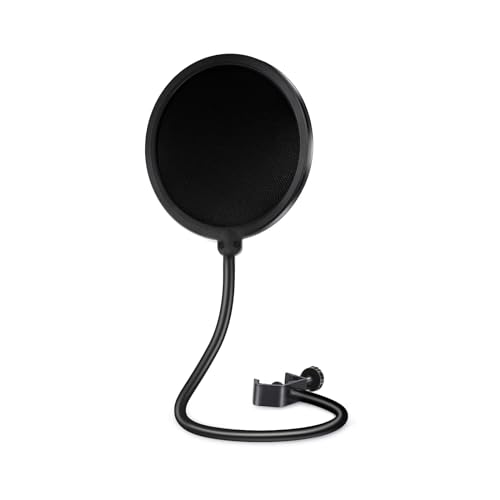
- Dual nylon mesh reduces plosives and wind interference
- 360° steel gooseneck supports precise positioning
- Useful for vocals, podcasts, streaming, and voiceover
Best For: Creators who want a flexible, adjustable filter for multiple recording scenarios
Isolation-Focused Design
Microphone Isolation Ball for Vocal Recording

- Five-sided foam design helps reduce noise and reflections
- Double-layer opening limits plosives and wind interference
- Fits removable-jacket mics measuring 50–75 mm
Best For: Recording users who want a more enclosed acoustic filter
Best for Comfort
Fitted Pop Filter for Vocal Recording
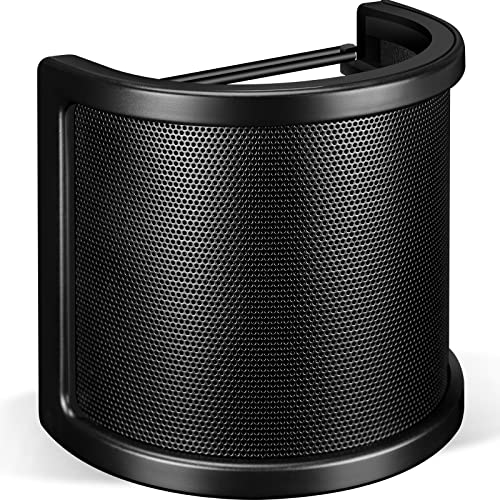
- Foam, metal mesh, and etamine layers reduce vocal artifacts
- Elastic bands and rubber ring secure the shield
- Fits many microphones measuring 45–63 mm
Best For: Owners of compatible cylindrical mics who prefer a fitted shield
Best Budget Pop Filter
Adjustable Double-Screen Pop Shield

- Double-screen design reduces plosives and hissing
- 360-degree swivel with flexible gooseneck
- Compatible with many USB microphones and stands
Best For: Affordable home and studio vocal recording
Best Three-Layer Filter

- Three-layer screen controls airflow and plosives
- Filter and gooseneck rotate 360 degrees
- Scratch-resistant clamp fits varied stand setups
Best For: Adjustable vocal, streaming, and acting setups
Three-Layer Mic Shield – PEMOTech Three-Layer Pop Filter
For vocalists seeking microphone pop filters for vocal recording, the PEMOTech uses foam, metal mesh, and etamine layers to reduce plosives, breath sounds, wind interference, and crackles. Its elastic-band and rubber-ring design fits microphones measuring 45–61 mm in diameter, though it is specifically not designed for Blue Yeti microphones.
Best For: Vocal recording with compatible cylindrical microphones such as the AT2020, Rode NT1A, Rode NT-USB, MXL 770, and similar models.
Pros:
- Three-layer construction targets plosives, breath sounds, and wind interference.
- Helps protect the microphone from saliva and maintain cleanliness.
- Quick to assemble and remove, with a firm elastic-and-rubber fit.
Cons:
- Not compatible with Blue Yeti microphones.
- Fit is limited to microphones between 45 and 61 mm in diameter.
- Microphone is not included.
The PEMOTech is a practical choice when your microphone falls within its specified diameter range and you want layered protection in a compact, directly mounted design. Confirm compatibility before buying.
Flexible Studio Filter – Samson PS04 Dual-Layer Pop Filter
The Samson PS04 is a straightforward option among microphone pop filters for vocal recording, using a 4.75-inch dual-layer nylon screen to reduce unwanted “P-Pops.” Its flexible 8-inch gooseneck makes it easy to position in front of most microphones on a studio stand.
Best For: Studio vocalists and speakers who want an adjustable nylon filter with a universal mic stand adapter.
Pros:
- Dual-layer nylon mesh helps reduce plosive sounds.
- Flexible 8-inch gooseneck supports easy position adjustments.
- Steel construction is designed for durability.
- Universal mic stand adapter works with most microphones in a studio setting.
Cons:
- The 4.75-inch screen is smaller than some larger pop-filter designs.
- Microphone and stand are not listed as included components.
The PS04 keeps the setup simple: attach it to a compatible stand, position the gooseneck, and record. It is a sensible fit for standard studio applications where reducing vocal plosives is the main goal.
Blue Yeti-Compatible Shield – Aokeo Dual-Layer Pop Filter
This Aokeo model is a useful option for microphone pop filters for vocal recording when you need broad stand compatibility, including Blue Yeti setups. Its two-screen design disperses air pressure between layers, while the 360-degree adjustable gooseneck lets you position the filter for singing, streaming, or spoken performance.
Best For: Blue Yeti owners, singers, streamers, and actors who need a clamp-mounted filter with flexible positioning.
Pros:
- Dual-layer screen helps contain air blasts from plosive sounds.
- 360-degree steel gooseneck supports adjustable distance and angle.
- Scratch-proof rotating clamp fits a variety of tubular booms and microphone stands.
- Helps reduce plosives and harsh S sounds while protecting against spit.
Cons:
- Requires a suitable tubular boom or stand for the clamp.
- Clamp-mounted positioning may take adjustment to achieve the preferred distance.
- Microphone is not included.
With its adjustable clamp and gooseneck, the Aokeo offers more placement flexibility than a fixed mic-mounted shield. It is especially compelling if you need a filter that can accommodate a Blue Yeti or multiple stand configurations.
Adjustable Stand Filter – NEEWER Professional Pop Filter Shield
The NEEWER Professional Pop Filter Shield is a versatile choice among microphone pop filters for vocal recording, combining a dual-layer screen with a steel gooseneck and rotating clamp. The design helps reduce plosives and harsh S sounds while allowing you to adjust the filter’s angle and distance from the microphone.
Best For: Singers, streamers, and actors using microphones mounted on compatible tubular booms or stands.
Pros:
- Dual-layer construction disperses and contains air blasts.
- Steel gooseneck supports flexible angle and distance adjustments.
- Scratch-proof rotating clamp accommodates various tubular booms and microphone stands.
- Swivel mount simplifies installation, removal, and repositioning.
Cons:
- Requires a compatible tubular boom or microphone stand for clamping.
- Its 8.3-ounce weight may need firm stand positioning.
- Microphone is not included.
The NEEWER is a practical stand-mounted solution for users who frequently reposition their microphone or filter. Its broad clamp compatibility and adjustable gooseneck make it well suited to flexible recording and streaming workstations.
Flexible Dual-Layer Choice – Adjustable Pop Filter for Vocal Recording
For vocal recording, this dual-layer microphone pop filter uses nylon mesh to help reduce plosives, wind interference, saliva spray, hissing, and lisping. Its flexible 360-degree gooseneck lets you position the 6.9-inch screen at a useful angle and distance from the microphone.
Best For: Singers, streamers, podcasters, voiceover artists, gamers, and broadcasters who want an adjustable filter for varied recording setups.
Pros:
- Dual nylon layers help reduce plosives, wind interference, and saliva spray.
- Steel gooseneck supports the screen and allows flexible positioning.
- Suitable for singing, podcasts, vlogging, voiceover, gaming, and live broadcasting.
Cons:
- The supplied notes do not specify the clamp’s mounting compatibility.
- At 10.2 ounces, it may be less convenient than lighter filter designs.
This is a practical all-purpose option when adjustability matters. The gooseneck makes it easier to fine-tune placement, while the dual-layer screen adds protection against saliva and common vocal-recording plosives.
Isolation-Focused Design – Microphone Isolation Ball for Vocal Recording
This microphone isolation ball takes a more enclosed approach to microphone pop filters for vocal recording. Its five-sided foam design is intended to reduce noise and reflections from multiple directions, while the double-layered opening helps limit plosives, wind interference, and saliva spray.
Best For: Home and professional recording setups, radio work, live recording, outdoor performance, and users seeking a more enclosed acoustic filter.
Pros:
- Five-sided seal design helps reduce noise and reflections from different directions.
- Double-layered opening helps control plosives, wind interference, and saliva spray.
- Lightweight 120-gram construction can mount to desktop stands, tripods, arms, and floor stands.
- Holder accommodates removable-jacket microphones measuring 50–75 mm in diameter.
Cons:
- Compatibility depends on the microphone fitting the stated 50–75 mm diameter range.
- The enclosed foam form factor may be less compact than a simple mesh screen.
Choose this model when reducing surrounding acoustic interference is a priority rather than simply adding a basic pop shield. Confirm your microphone’s diameter and mounting setup before buying.
Best for Comfort – Fitted Pop Filter for Vocal Recording
This three-layer microphone shield is designed for vocal recording with a foam layer, metal mesh, and etamine layer. The combination helps reduce plosives, pops, crackles, wind interference, and breath sounds while also helping keep saliva away from compatible microphones.
Best For: Owners of compatible 45–63 mm microphones, including many AT, Rode, MXL, CAD, and similar models used for vocals, streaming, and video.
Pros:
- Three-layer construction combines foam, metal mesh, and etamine filtering.
- Elastic bands and an inner rubber ring help secure it to the microphone.
- Broad stated compatibility with microphones measuring 45–63 mm in diameter.
- Helps protect the microphone from saliva and is designed for repeated use.
Cons:
- It is specifically noted as incompatible with the Blue Yeti.
- Fit depends on the microphone falling within the 45–63 mm diameter range.
- Its band-and-ring mounting system may be less flexible than a gooseneck filter.
This is a strong fit-oriented choice for users with a compatible cylindrical microphone. Check both the diameter and model compatibility—especially if you use a Blue Yeti—before choosing it for your vocal setup.
Best Budget Pop Filter – Adjustable Double-Screen Pop Shield
Pop Filter For Studio Microphone, Pop Shield Mic Wind Screen For Better Vocal Recordings
Check Price On AmazonIf you want an affordable option among microphone pop filters for vocal recording, this model focuses on the essentials: reducing plosives, hissing, and lisping while helping protect the microphone from spit. Its clamp, swivel mount, and flexible gooseneck make positioning straightforward for home or studio use.
Best For: Singers, home recordists, and USB microphone users who want an economical, broadly compatible pop filter.
Pros:
- Double-screen design helps reduce pops, hisses, and lisps.
- Flexible 13.5-inch gooseneck, 360-degree swivel, and adjustable clamp support precise placement.
- Compatible with many microphones and stands, including Blue Yeti, Rode PSA1, ATR2500, and MXL series models.
- Six-inch screen and secure screw are designed for stable positioning.
Cons:
- The microphone is not included.
- Its low-cost construction may be better suited to practical home recording than premium studio setups.
With a sturdy gooseneck and simple mounting hardware, this is a sensible entry-level choice when you need basic vocal protection without adding much cost.
Best Isolation Shield – Foldable Foam-Lined Recording Shield
This isolation shield is a different take on microphone pop filters for vocal recording, combining a pop shield with acoustic treatment. Its absorbent inner lining and vented metal back are designed to reduce sound reflections, while the folding panels allow you to adjust the recording angle and transport the unit more easily.
Best For: Vocalists, streamers, and home-recording users who need reflection control as well as a physical microphone shield.
Pros:
- Absorbing cotton insulation helps reduce sound reflection during recording.
- Foldable panels allow angle adjustment and easier portability.
- Steel construction and high-quality screws are intended for long-term sturdiness.
- Can be mounted to a microphone stand or fixed on a countertop or tabletop.
Cons:
- At 1.5 kg, it is substantially heavier than a simple mesh pop filter.
- The microphone, headphones, and stand are not included.
- Its isolation-shield format may require more setup space than a basic pop screen.
Choose this model when unwanted room reflections are a concern and you prefer a foldable, metal-bodied shield rather than a lightweight gooseneck filter alone.
Best Three-Layer Filter – 360-Degree Mic Mask Shield
For singers, streamers, and actors comparing microphone pop filters for vocal recording, this Aokeo model adds a three-layer screen to help control airflow, plosives, and harsh consonants. Its rotating filter, steel gooseneck, and scratch-resistant clamp provide flexible positioning around a wide range of microphone stands.
Best For: Performers who want a highly adjustable pop filter with a three-layer screen and universal-style stand compatibility.
Pros:
- Three-layer screen is designed to improve airflow blocking and noise control.
- Both the filter and steel gooseneck rotate 360 degrees for flexible placement.
- Adjustable right-angle mount and scratch-resistant clamp support varied stand setups.
- Helps address plosives from B, T, and P sounds, as well as S-related hiss and lisping.
Cons:
- The microphone and stand are not included.
- The multiple adjustment points may be more than needed for a simple fixed setup.
- The warranty is limited to one year.
This is a strong fit when positioning flexibility matters. The three-layer construction and rotating arm make it a versatile choice for changing vocal, streaming, or acting setups.
How We Picked the Best Microphone Pop Filters for Vocal Recording
We focused on the features that matter during real vocal sessions: effective plosive control, compatibility with common microphones, secure mounting, flexible positioning, and minimal interference with the performer’s workflow. The selection includes traditional mesh filters, dual- and three-layer designs, foam windshields, and larger isolation shields so different recording needs are represented.
We also considered whether a filter is better suited to a studio microphone, a USB mic such as the Blue Yeti, or a handheld microphone. A useful pop filter should stay in place, position easily between the singer and capsule, and avoid making the microphone difficult to access.
Quick Comparison
| Filter type | Best suited to | Main advantage |
|---|---|---|
| Metal or fabric mesh | Studio vocal recording | Clear monitoring and reliable plosive reduction |
| Dual- or three-layer screen | General home recording | Extra control for strong bursts of air |
| Foam windscreen | Handheld microphones and mobile setups | Simple, compact protection |
| Gooseneck clip filter | USB and stand-mounted microphones | Easy positioning and broad compatibility |
| Isolation shield | Reflective or untreated rooms | Some rear- and side-reflection control |
Key Buying Factors
Microphone and Mount Compatibility
Check how the filter attaches before buying. Clamp-on gooseneck models generally work with microphone stands, boom arms, and many USB microphone setups. Handheld foam covers are more portable, while isolation shields may require a sturdy stand or threaded mounting point.
Layer Construction
Mesh, fabric, foam, and multi-layer screens can all reduce plosives. Multiple layers may provide stronger protection, but they can also be bulkier. For most controlled studio vocals, a well-positioned single mesh screen is often sufficient; singers with forceful delivery may prefer a dual- or three-layer design.
Adjustment and Stability
A flexible gooseneck should hold its position without sagging. Look for a firm clamp, a useful reach, and enough rotation to place the screen several inches in front of the microphone without touching it.
Sound and Maintenance
The filter should reduce air blasts without noticeably dulling the vocal. Removable or washable surfaces are easier to maintain, especially for shared microphones. Keep the screen clean and allow adequate space between the performer, filter, and capsule.
Who Should Buy Which Microphone Pop Filters for Vocal Recording?
Home vocalists: Choose a dependable mesh or dual-layer gooseneck filter for an affordable, flexible setup.
USB microphone users: Prioritize broad clamp compatibility and a long, stable neck, particularly when using a Blue Yeti-style microphone on a desk or boom arm.
Handheld performers: A foam windscreen or handheld microphone shield is easier to carry and provides quick protection for spoken word, live vocals, and recording on the move.
Studio singers: A sturdy metal or fabric mesh filter offers repeatable placement and clear vocal capture. Add an isolation shield only when room reflections are also a concern.